
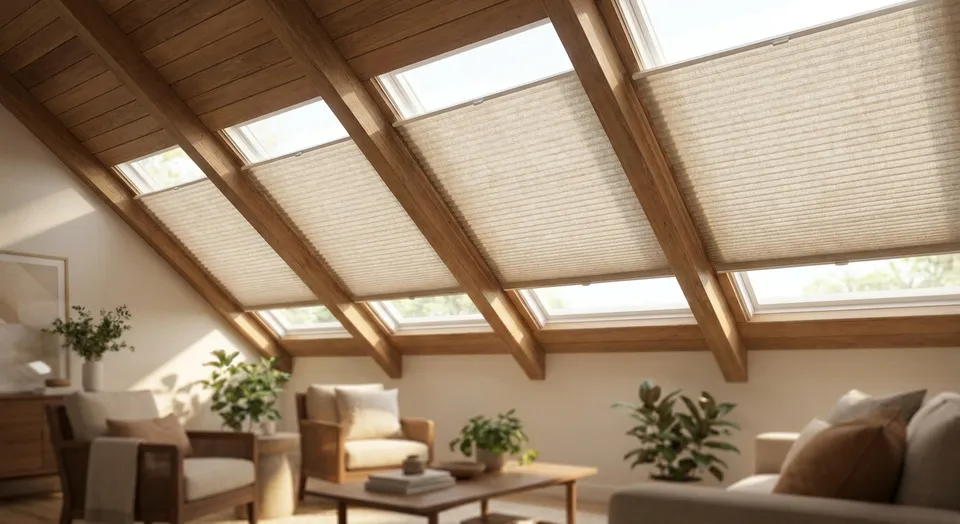
Skylight shades for vaulted ceilings solve a problem most window treatment guides skip entirely: how do you control glare and heat 12 to 20 feet overhead when a pull cord physically can't reach the glass? This guide breaks down what actually works on angled skylight glazing, what fails within a year, and which product line earns a Buy verdict for Seattle-area homes in 2026.
- Motorized cellular shades win for skylight shades on vaulted ceilings in 2026 - Buy for energy savings and reach.
- Skip pull-cord kits above 10 feet; remote or app control is the only practical option once glass is out of reach.
- Blackout cellular shades solve glare in south-facing skylight bedrooms; light filtering suits open living spaces.
- Battery-powered motors avoid running wire through vaulted drywall - check recharge schedules before buying.
Why this matters
Vaulted ceilings put skylight glass well above where a standard shade bracket or pull cord can work. A 15-foot ceiling means the shade mechanism needs a motor, a remote, or a wall switch - not a wand.
Skylight glazing also runs hotter than a vertical window because it faces the sun directly overhead for more hours of the day. Even under Seattle's cloud cover, a south- or west-facing skylight in Auburn, Bellevue, or Tacoma pushes real heat into a room by early afternoon in summer 2026.
Rainier Blinds measures a lot of vaulted-ceiling skylights across South King County, and the pattern is consistent: homeowners who buy off-the-shelf skylight shade kits without motorization end up not using them, because the pole or crank is a two-person job every time the sun moves. The skylight shades built for Auburn homes get used daily because they're operated by remote, not by a 10-foot pole leaned against a ladder.
Who this is for
This guide is for homeowners with vaulted or cathedral ceilings and skylight windows set 10 feet or higher above the floor - great rooms, primary bedrooms with overhead glass, sunrooms with pitched roof windows. If your skylight sits within arm's reach on a single-story addition, a lot of this still applies, but the motorization case gets weaker below 8 feet.
What to look for in skylight shades for vaulted ceilings
Reach and motorization
Anything above 10 feet needs a motor, a remote, or a wall switch - not a manual wand or cord. A motorized shade programmed correctly opens on a schedule tied to sunrise, so you're not climbing a ladder every morning to adjust glare.
Light control: blackout vs. light filtering
A skylight over a bed needs near-total light block; a skylight over a living room usually wants softened daylight, not darkness. Mixing the two wrong is the single most common regret homeowners report after installing skylight shades.
Heat and UV-blocking fabric
Skylight glass takes direct overhead sun longer than a vertical window does, so thin or sheer fabrics fade and sag within a year. A honeycomb or cellular fabric with a heat-blocking layer holds up through multiple Pacific Northwest summers without discoloring.
Mount type for angled glazing
Pitched or angled skylights need tracks or cables measured to the actual glazing pitch, not a stock rectangle. A shade sized for a flat skylight will gap at the corners on anything pitched.
Power source: battery vs. hardwired
Battery-powered motors skip running wire through vaulted drywall, which is the bigger renovation cost on most jobs. Hardwired units skip the recharge cycle entirely but require an electrician before installation, which adds time and cost to the project.
Top picks for skylight shades on vaulted ceilings
Motorized Cellular Shades - the safe pick. Honeycomb pockets trap a layer of still air against the glass, which is the main reason these outperform flat fabric on energy retention. Paired with a remote or app control, this is the pick most homeowners land on for skylights 10 feet and higher. See how cellular shades save energy in Rainier-area homes before you commit to a fabric. Verdict: Buy.
Motorized Roller Shades - the minimalist pick. A single flat fabric layer on a wide track spans openings up to 8 feet without a center seam, which matters on large rectangular skylights. Less insulating than cellular, but cleaner-looking on a modern vaulted ceiling. Verdict: Consider.
Blackout Cellular Shades - the bedroom fix. Built to block close to full light transmission, this is the right call for any skylight positioned over a bed, especially one facing south or west. Pair it with the guidance in best blackout shades for bedrooms if the room also has vertical windows to match. Verdict: Buy for bedrooms.
Light Filtering Roller Shades - the living room pick. Softens direct glare while keeping the room bright, which fits open-plan great rooms better than full blackout does. Not the answer for a media room or a nursery under a skylight. Verdict: Consider.
Manual crank shades - the wildcard. Cost-effective on skylights sitting 8 feet or lower where a pole genuinely reaches without a ladder. Above that height, this becomes the option homeowners stop using within a few months. Verdict: Wait, unless your skylight height qualifies.
Get skylight shades measured right
In-house crew measures pitch, height, and power access before you buy.
What to avoid
- Cordless controls avoid exposed operating pull cords. Follow the product safety instructions and keep beds, furniture, and other climbing objects away from windows.
- Sheer or uncoated thin fabrics. Skylight glazing runs hotter than vertical glass, and unlined fabric fades or sags within a year of direct overhead sun.
- Stock-size track kits bought without a pitch measurement. Angled skylights vary in pitch by roof, and a generic rectangular kit leaves gaps at the corners where heat and light leak through anyway.
Verdict comparison
| Pick | Best for | Key spec | Verdict |
|---|---|---|---|
| Motorized Cellular Shades | Energy retention, 10ft+ skylights | Honeycomb air-pocket construction | Buy |
| Motorized Roller Shades | Wide, flat skylights | Single-fabric track up to 8ft spans | Consider |
| Blackout Cellular Shades | Bedrooms under skylights | Near-total light block | Buy for bedrooms |
| Light Filtering Roller Shades | Open living/great rooms | Softened daylight, no blackout | Consider |
| Manual crank shades | Skylights under 8ft | Pole-operated, no motor | Wait |
Maintaining the motor matters as much as picking the right fabric. Battery units need a recharge schedule, covered in how to maintain motorized window shade batteries, so glare control doesn't quietly stop working six months after install.
FAQ
What are the best skylight shades for vaulted ceilings in 2026?
Motorized cellular shades are the best skylight shades for vaulted ceilings in 2026 because the honeycomb construction blocks heat while the motor handles skylights set 10 feet or higher. Blackout cellular shades are the better call specifically over a bed.
Can you motorize shades on a skylight that's 15 feet up?
Yes, a motorized shade with a remote or app control operates skylights at 15 feet the same as it would at 8 feet, since the mechanism never requires a physical reach. Battery or hardwired power both work; the choice depends on whether you want an electrician on the job.
Do skylight shades block heat as well as light?
Cellular shades with a heat-blocking layer reduce solar heat gain noticeably more than a flat roller fabric of the same opacity. South- and west-facing skylights get the most benefit since they take direct sun longer through the day.
Are cordless skylight shades safe for homes with kids?
Motorization can make a high skylight easier to adjust without reaching the window. Confirm the selected control, power supply, and safe maintenance access; product safety instructions still apply.
How much do motorized skylight shades cost installed?
Cost depends on skylight size, fabric choice, and whether the motor is battery or hardwired, so get a measured quote for an exact number. Skylight pitch and glazing count also change the mounting hardware needed.
What's the difference between cellular and roller shades for skylights?
Cellular shades use a honeycomb structure that traps air and improves insulation, while roller shades are a single flat fabric layer that's simpler and works well on wide, rectangular skylights. Cellular wins on energy retention; roller wins on a cleaner look.
How long do batteries last in motorized skylight shades?
Battery life depends on how often the shade cycles per day and the battery pack size, so check the maintenance schedule rather than assume a fixed number. Homes running the shade on a sunrise/sunset schedule recharge less often than ones opened and closed manually throughout the day.
Can skylight shades fit angled or pitched skylights?
Yes, but the track or cable system has to be measured to the actual pitch of the glazing, not bought as a stock rectangular kit. Pitched skylights vary by roof, and a mismatched kit leaves gaps at the corners.
One last thing
Homeowners assume Seattle's cloud cover means skylight heat isn't worth solving. It is: a south-facing skylight still delivers direct overhead sun for several hours on a clear afternoon, and cellular fabric with a heat-blocking layer is the one upgrade that pays off even on a mostly-overcast install. Get the shade measured to the skylight's actual pitch before you buy anything, motorized or not.