
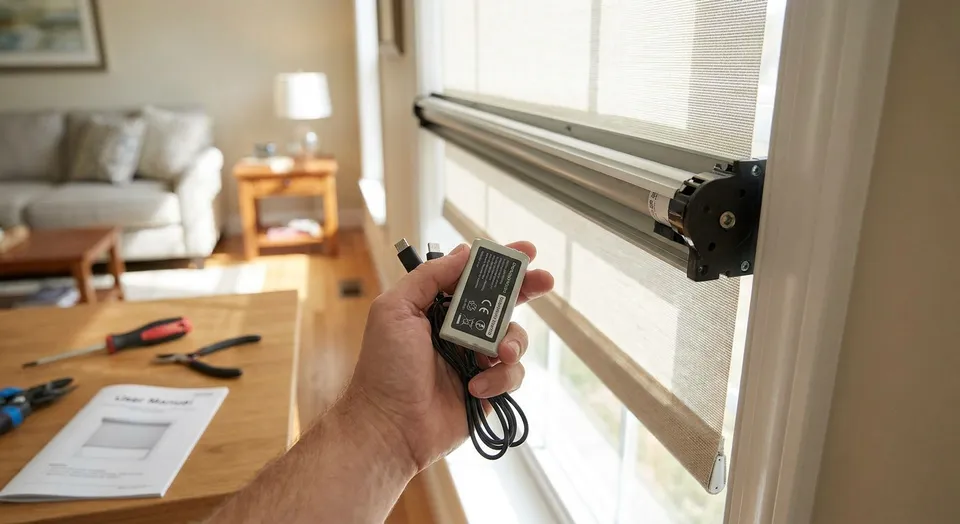
How to maintain motorized window shade batteries

Motorized shades run on rechargeable batteries, and most failures people blame on the motor are actually dead or poorly maintained battery packs. This guide covers the maintenance routine that keeps motorized shades running for years instead of months.

TL;DR
  • Charge lithium-ion shade batteries every 3-4 months even if you never use the shade — full discharge kills the cells.
  • A solar charging strip keeps south-facing windows topped off year-round in 2026 without a single manual charge.
  • Full recalibration after any battery swap fixes 90% of the 'shade stops mid-travel' complaints Rainier Blinds crews see in Auburn homes.
  • Verdict: lithium-ion packs from a reputable brand last 2-3 years with proper charging habits — replace, don't repair, once runtime drops below 30 days.

Why this matters

A motorized shade battery isn't like a phone battery you charge every night. It sits in a housing behind fabric, gets forgotten, and either drains to zero or sulfates from sitting fully charged too long. Either way, the motor looks broken when the pack is actually the problem.

Rainier Blinds installs motorized shades across Auburn, Kent, Renton, and the rest of the Greater Seattle Area, and battery complaints are the single most common service call after the first year. The fix is almost never a new motor. It's a $40-$80 battery pack and a five-minute recalibration, covered in detail in the motorized shades guide for anyone weighing motorized against manual before they buy.

What you'll need

  • The shade's remote or app (for recalibration after charging or battery swap)
  • A USB-C or proprietary charging cable matching your shade brand — check the battery compartment for the port type
  • A soft brush or microfiber cloth for the contact terminals
  • A replacement lithium-ion pack if the current one is 2+ years old or holds a charge for under 30 days
  • Optional: a solar charging strip for south- or west-facing windows that get regular direct sun

Most residential motorized shades installed since 2022 use rechargeable lithium-ion packs rather than AA battery wands, so this guide assumes that setup. If your shades still run on disposable AA batteries, skip to the troubleshooting section — the maintenance logic is different.

The steps

1. Check charge level every 90 days

Set a recurring reminder — not a mental note, an actual calendar alert — to check each shade's charge status through the app or a quick manual cycle. Lithium-ion cells degrade fastest when left at 0% for extended periods, and a shade that sits idle for six months can drop to zero without anyone noticing.

Common mistake: waiting until the shade stops responding to check the battery. By then the pack has likely sat at zero for weeks, which shortens its total lifespan even after recharging.

2. Charge to 100%, then disconnect

Plug the battery pack in and let it run to full charge, which typically takes 4-6 hours depending on pack size. Don't leave it connected indefinitely once full — trickle overcharging at 100% for days at a stretch accelerates cell wear the same way full discharge does.

Expected outcome: a healthy pack holds a working charge for 4-6 months of normal daily cycling (roughly 2 movements per day) before needing another charge in 2026's typical residential usage pattern.

3. Clean the contact terminals

Dust and drywall residue build up on the metal contacts inside the battery compartment, especially in newer construction where finish dust lingers for months after move-in. Wipe the terminals with a dry microfiber cloth every time you recharge — never use liquid cleaners near the contacts.

Why it matters: a dirty contact point causes intermittent charging failures that look exactly like a dead battery, leading people to replace a perfectly good pack.

4. Recalibrate after every charge cycle or battery swap

After reconnecting a charged or new battery, run the shade's calibration sequence through the app or wall remote — usually a full up-and-down cycle that resets the motor's position memory. Skipping this step is the top reason shades stop a few inches short of fully open or closed.

This takes under two minutes and resolves the majority of "the shade won't go all the way down" calls that come in for motorized window shades in Renton living rooms and similar installs.

5. Add solar charging on sun-facing windows

For any shade on a window that gets consistent direct sun, a solar charging strip mounted on the headrail eliminates manual charging entirely. It's a one-time install, roughly 15-20 minutes per window, and pays off within the first year for households running 6 or more motorized shades.

Common mistake: mounting the solar strip on a north-facing window expecting the same output — output drops by more than half without direct exposure, so it supplements rather than replaces manual charging on shaded windows.

6. Rotate spare batteries seasonally

If you own a spare pack, don't let it sit in a drawer at full charge for a year. Cycle it into active use every 3-4 months, discharge it partway, and recharge — this keeps the cells active instead of degrading in storage.

7. Replace the pack once runtime drops under 30 days

A lithium-ion shade battery reaching end-of-life shows a clear pattern: it charges fully but drains within 2-3 weeks instead of 4-6 months. At that point, repair isn't cost-effective. Buy a replacement pack — don't keep charging a degraded cell hoping it recovers, because degraded lithium-ion cells don't reverse.

Get your motorized shades serviced right

Rainier Blinds' own crew handles battery swaps and recalibration across the Seattle Area.

Get a quote

Troubleshooting

  • Shade won't respond to remote or app at all — check charge level first; a fully dead pack won't respond to any command until it gets at least a partial charge.
  • Shade stops a few inches short of full open/close — run recalibration (Step 4). This is a position memory issue, not a battery or motor failure.
  • Battery charges but drains within days — the cell is degraded. Replace the pack rather than continuing to cycle it.
  • Solar strip isn't holding a charge — confirm the window gets at least 4-6 hours of direct sun; partial shade cuts solar output dramatically.
  • Charging port won't accept the cable — clean the port with a dry brush first; drywall dust and pet hair are the most common culprits in homes under 3 years old.
  • Multiple shades on the same schedule drain faster than expected — check if they're all on the same app group running redundant scheduled cycles, which doubles motor engagement and battery draw.

Tools and resources

  • Manufacturer charging cable and app (check compatibility before buying a universal cable)
  • Soft microfiber cloth for terminal cleaning
  • Solar charging strip for sun-facing installs
  • A comparison of roller shades vs. cellular shades if you're weighing motorized upgrades against your current setup before investing in more battery-powered units

What to do next

Once the charging routine is set, the next decision most homeowners face is whether to add motorized shades to more rooms or stick with manual for windows that get less daily use. That tradeoff, along with real installed pricing for the Auburn area, is broken down in the custom window treatments guide for Auburn, WA.

FAQ

How often should I charge motorized shade batteries?

Charge lithium-ion shade batteries every 3-4 months even without heavy use, and always before the pack hits 0%. Full discharge for weeks at a time shortens the cell's total lifespan.

How long do motorized shade batteries last?

A quality lithium-ion pack lasts 2-3 years with proper charging habits before replacement makes more sense than continued charging. Runtime under 30 days per charge signals the cell is degraded.

Do solar chargers actually work for motorized shades?

Yes, on windows with 4-6 hours of direct sun a solar charging strip eliminates manual charging entirely. North-facing or heavily shaded windows won't generate enough output to rely on solar alone.

Why does my shade stop before reaching the bottom or top?

This is almost always a calibration issue, not a battery or motor problem. Running the shade's recalibration sequence after any charge or battery swap resolves it in under two minutes.

Is it better to replace or repair a motorized shade battery?

Replace it once charge time drops under 30 days between charges — degraded lithium-ion cells don't recover. A new pack typically runs $40-$80 depending on shade brand and size.

Can I use AA batteries instead of a rechargeable pack?

Some motorized shade models accept AA battery wands as an alternative to lithium-ion packs, but they require more frequent replacement and don't support solar charging strips.

What causes a motorized shade battery to drain fast?

Frequent scheduled movements, redundant app group commands, or a degraded cell are the top three causes. Check your app's schedule settings before assuming the battery itself has failed.

Do dirty battery contacts really cause charging problems?

Yes, dust and construction residue on the compartment's metal contacts cause intermittent charging failures that mimic a dead battery. Wiping the terminals with a dry cloth during each charge cycle prevents this.

One last thing

The detail most people miss in 2026: a battery pack left at 0% for more than a month loses roughly 20% of its total charge capacity permanently, even after recharging — so the 90-day check-in isn't a suggestion, it's the difference between a 3-year battery and an 18-month one.

Related guides