
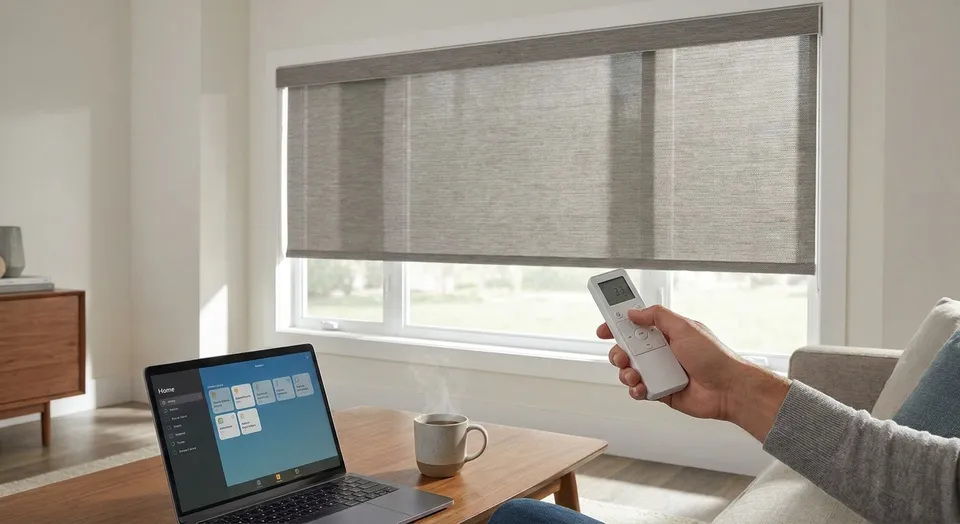
Programming motorized shades depends on the motor, remote, and any connected hub. A button sequence that pairs one model may reset another. This guide helps you prepare and check a setup; use the manufacturer's current instructions for the actual programming commands and timing.
- Identify the motor and remote before pressing a programming or reset button.
- Keep a record of channels and settings that already work.
- Set up and check one shade at a time using its model-specific guide.
- Confirm smart-home compatibility and required equipment before attempting app pairing.
1. Gather the model information and instructions
Find your order paperwork and the labels that are accessible without dismantling the shade. Record the remote model as well as the motor; a logo or similar-looking case does not establish that two controls use the same commands.
Locate the correct installation or programming guide. Check whether the task is adding a remote, changing a channel, adjusting a travel limit, or adding app control. These are different operations, and a factory reset should not be the starting point for every problem.
2. Record what already works
Note which remote channel controls each shade and whether the shade reaches its normal top and bottom positions. If the app works but the remote does not, or the reverse, record that distinction before changing settings.
Check the power and the ordinary user troubleshooting steps in the manual. Keep the area around the shade clear and stop if fabric catches, hardware moves, or operation appears abnormal. Do not pull the fabric to help a motor finish its travel.
3. Follow the pairing procedure for one shade
Use the procedure specified for that motor and compatible remote. Button names, press durations, and confirmation movements vary. Do not copy a generic five-second reset or repeated power-cycle sequence from a different product.
Keep track of the selected channel and which shade responds. If several shades respond unexpectedly, stop and consult the guide before continuing. Do not disconnect wiring or open the motor housing to isolate a shade unless the manufacturer's instructions assign that work to you.
4. Check direction and stopping positions
After pairing, use the normal control to check direction and the intended upper and lower stops. If a stop needs adjustment, follow the exact limit-setting procedure. A wrong stop can have more than one cause, so do not assume recalibration will fix every symptom.
If the shade binds, moves unevenly, or continues beyond the intended position, stop and seek help. Repeatedly running the same sequence is not a useful substitute for identifying the model or the problem.
5. Add groups and smart-home controls if supported
Confirm the system's supported groups, channels, and scenes before combining shades. Set up each shade individually first so you can identify it later. Choose names that clearly identify the room or window.
App and voice control depend on the selected motor and compatible equipment. For example, Google's Matter setup guidance requires an appropriate Google Home hub, and Thread devices also need a compatible Thread border router. That does not mean every motorized shade supports Matter.
Apple Home requirements also depend on the device and software; Apple's current pairing guidance describes supported setups. We confirm the chosen motor, equipment, and available features before ordering instead of promising universal compatibility.
6. Test the setup you will actually use
Check individual controls and any supported group or schedule. Make sure the result matches the room names and intended behavior. Record the final channel assignments and save the instructions with the order.
For Rainier-supplied shades, contact us with the model information and what changed if setup is unclear. We can identify the next step without guessing a reset sequence. We do not assume that an existing third-party shade can accept a Rainier motor or control.
Plan your shade controls
We can confirm the motor, power, and control options for shades supplied by Rainier Blinds.
Contact Rainier BlindsFAQ
Can I use one programming sequence for every motor?
No. Use the current instructions for the exact motor and compatible control. Similar buttons can perform different operations.
Should I factory-reset a shade that stops incorrectly?
Start with the model's troubleshooting guidance. Power, obstructions, settings, or a mechanical issue may need attention; a reset is not a universal fix.
Do motorized shades need internet access?
It depends on the controls and features. Some systems offer direct remote operation, while app, voice, and remote-access functions have their own requirements. Confirm the selected setup.