
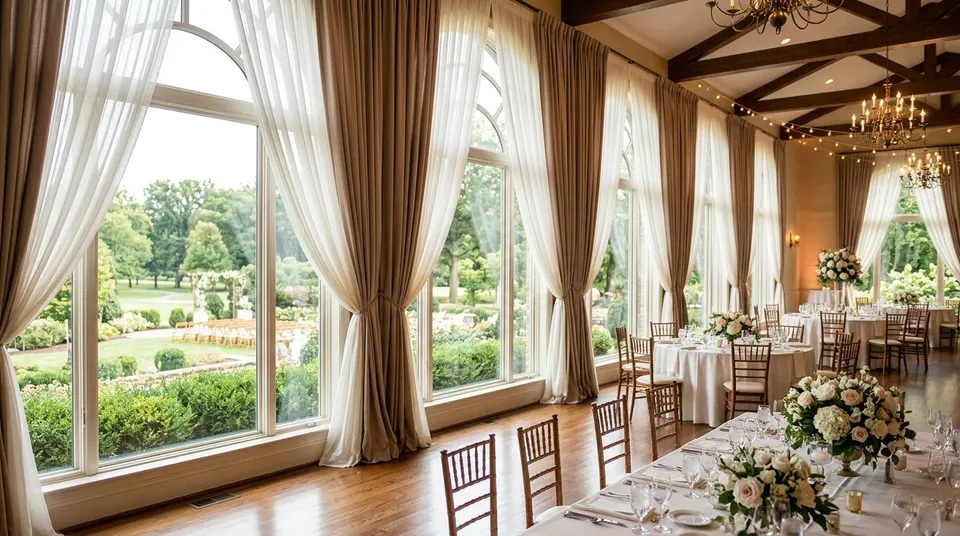
Window treatments for wedding venues need to do two jobs at once: control light for the camera and control light for the room, often in the same hour. A backyard tent wedding at 4pm and a ballroom reception at 9pm ask for opposite settings, and most venues run both in a single day.
- Motorized blackout roller shades handle the shift from daylight ceremony to evening reception without staff running room to room.
- Drapery panels soften hard walls and give photographers a clean backdrop that isn't a bare window.
- Zebra shades work best for multi-use event rooms that need both privacy and daylight in the same space.
- Outdoor zipper shades protect covered patios and tent-adjacent areas from wind and glare during cocktail hour.
- Rainier Blinds measures and installs all of these directly, with its own crew handling venues across the Seattle area in 2026.
Why window treatments matter for event venues
A wedding venue sells light as much as it sells square footage. Couples book a room because of how it photographs at golden hour, and they book the same room again for a reception that needs to go dark enough for uplighting and a first dance. Window treatments for wedding venues aren't decorative extras, they're the mechanism that lets one room serve two completely different events in the same afternoon.
Venues that get this wrong deal with glare in ceremony photos, guests squinting through a toast, or a maintenance crew manually cranking blinds between the 2pm rehearsal and the 6pm arrival. Venues that get it right have a system, usually motorized, that goes from full daylight to blackout on a schedule instead of a scramble.
Most commercial buyers researching window treatments for wedding venues in 2026 are also comparing drapery consultations for luxury interiors since drapery and shades often get layered together in ballrooms and reception halls.
Assess your venue's light control needs by time of day
Start with a walk-through at three points: mid-morning ceremony light, late-afternoon cocktail hour, and evening reception. Each window in the venue behaves differently at each time, and a single shade type rarely covers all three well.
- Map every window by compass direction, since west-facing rooms fight harsh glare from 4pm to sunset
- Note which rooms host ceremonies versus receptions, since the light needs differ by function
- Flag any windows visible in photography sightlines, since those need clean, uniform treatments
- Identify rooms that double-book same-day events and need fast transitions
- Check ceiling height on ballroom or great-room windows, since manual pull cords aren't practical above 9 feet
Choose blackout vs light-filtering for each room type
Not every room in an event venue needs full blackout. Bridal suites and getting-ready rooms usually want light-filtering shades that keep the room bright for photos without harsh direct sun. Reception halls hosting evening events with uplighting or projection need blackout shades that block exterior light almost completely.
- Use light-filtering roller shades in getting-ready suites and lounges
- Use blackout shades in any room running projection, string lighting, or a slideshow
- Reserve full blackout for windows facing streetlights or parking lot lighting after dark
- Mix opacities within the same room only when zones are visually separated (alcoves, side rooms)
- Test fabric samples against the venue's actual lighting fixtures before ordering, not under showroom lights
Add motorized operation for during-event control
This is where staffing time gets expensive if a venue relies on manual shades. A coordinator running between six rooms to adjust blinds by hand during cocktail hour is not a good use of a 45-minute window before the reception starts.
Motorized roller shades and motorized zebra shades solve this with a scheduled or app-based transition. Rainier Blinds installs motorized shades on a schedule set once and reused for every event, which matters more for a venue running back-to-back bookings than for a single homeowner.
- Group windows by room into single remote or app zones for one-tap transitions
- Schedule automatic closing at a fixed time for evening events that repeat weekly
- Use battery-powered motorized units in venues without easy access to wiring near the window
- Keep one manual override switch per room for staff who need to adjust mid-event
- Confirm motor noise levels are acceptable near a ceremony space, since some motors are audible during a quiet moment
Get a venue walkthrough quote
Rainier Blinds measures event spaces and quotes on-site, no online guesswork.
Layer drapery for soft backdrops and ceremony framing
Bare shades read as functional, not photogenic. Most venues layer drapery over roller or zebra shades so the window has a soft, styled edge in every ceremony and reception photo, regardless of what the shade underneath is doing for light control.
- Choose drapery panels in a neutral tone that won't clash with rotating florals and linens
- Use a motorized traverse drapery system for wide window walls in great rooms and reception halls
- Keep drapery hardware finish consistent across rooms guests will see in the same event
- Confirm drapery fabric holds up to repeated open-close cycles across dozens of events per year
- Avoid heavy blackout drapery in rooms already using blackout shades, since the layered look can feel dark and closed-in during daytime tours
Match window treatments to sightlines and photography
Walk the ceremony aisle and every reception table sightline before finalizing treatments. A shade pull cord dangling in the background of a first-look photo, or an uneven shade sitting half-raised, shows up in every album from that venue.
- Choose cordless or motorized operation for any window in a ceremony sightline
- Keep shade color consistent room to room if the venue photographs multiple spaces in one gallery
- Avoid patterned fabrics in windows directly behind the head table, since they compete with the couple in photos
- Set a house standard for shade position (fully raised, fully lowered, or a fixed midpoint) before each ceremony
Weatherproof outdoor and patio-adjacent spaces
Covered patios, courtyard ceremony spaces, and tent-adjacent lounges need a different product entirely. Outdoor roller shades built for zipper track or steel wire systems hold up against wind gusts during an outdoor cocktail hour in a way indoor fabric never will.
- Use zipper-track outdoor shades on any covered patio that hosts cocktail hour in wind-exposed conditions
- Choose steel wire systems for wider spans where a zipper track isn't practical
- Retract outdoor shades fully between events to avoid wear from constant sun exposure
- Check that outdoor fabric is rated for the exposure your specific patio gets, since a south-facing courtyard fades faster than a shaded one
Plan install timing around your venue's event calendar
Venues booked every weekend from spring through fall don't have open install windows during peak season. Schedule measurement and installation for the venue's slower months, and confirm lead times before locking a spring wedding date.
- Book installation during off-peak months (typically winter in the Pacific Northwest) to avoid disrupting bookings
- Get exact measurements room by room, since event venues often have irregular window sizes not found in standard homes
- Confirm which rooms need same-day install versus which can be staged over multiple visits
- Ask about warranty terms before signing, since commercial-use shades see far more open-close cycles than a residential window
Comparison: options for event venues and wedding spaces
| Option | Best for | Key limitation |
|---|---|---|
| Manual roller shades | Small venues on a tight installation timeline | Staff must adjust each room by hand between events |
| Motorized roller shades | Multi-room venues running back-to-back bookings | Requires power or battery maintenance per unit |
| Drapery panels | Ceremony backdrops and photography framing | Adds cost layered over a functional shade |
| Zebra shades | Multi-use rooms needing both privacy and daylight | Less full-blackout capability than solid blackout shades |
| Outdoor zipper/steel wire shades | Covered patios and courtyard ceremony spaces | Not suited for fully open-air, unshaded areas |
Verdict: motorized roller shades paired with drapery panels are the standard setup for venues running multiple events per week, and Rainier Blinds installs both as a matched system rather than two separate vendors.
Common mistakes event venues make
- Treating every window the same way. A getting-ready suite and a reception hall need opposite opacity levels, not a single shade style ordered venue-wide.
- Skipping motorization to save on install day. Manual shades cost less upfront but cost staff time every single event for years afterward.
- Ignoring photography sightlines during selection. A shade that photographs fine empty can look uneven or cluttered once it's behind a ceremony arch.
- Choosing fabric that can't handle event-level cycling. Residential-grade fabric wears out faster under dozens of open-close cycles per month than it would in a home.
- Waiting until peak season to schedule installation. Booking installation in April for a June wedding season leaves no room for delays.
FAQ
What's the best window treatment for a wedding venue in 2026?
Motorized roller shades paired with drapery panels are the most common setup for venues running multiple events per week in 2026, since they handle fast transitions between daylight ceremonies and evening receptions without staff manually adjusting each room.
Do wedding venues need blackout shades or light-filtering shades?
Both, usually in different rooms. Getting-ready suites do better with light-filtering shades that keep natural light for photos, while reception halls running projection or uplighting need blackout shades.
Is motorized better than manual for event spaces?
Motorized shades are worth it for venues with multiple rooms or same-day event turnovers, since a single schedule or remote handles a transition that would otherwise take a staff member 20-30 minutes room to room.
How much does it cost to add window treatments to an event venue?
Cost depends on window count, room size, and whether drapery is layered with shades. A free in-home or on-site consultation is the only way to get an accurate number since every venue's window count and sizing differs.
Can outdoor shades work for a covered patio wedding reception?
Yes, zipper-track or steel wire outdoor shades hold up to wind exposure on covered patios and courtyards better than indoor fabric shades, which is why they're the standard pick for tent-adjacent cocktail spaces.
Do drapery panels work with motorized shades in the same window?
Yes, layering drapery over a motorized roller or zebra shade is common in reception halls, since the drapery gives a soft photography backdrop while the shade underneath handles the actual light control.
How long does installation take for a full event venue?
Timelines vary by room count and window sizing, which is why venues typically schedule installation during off-peak months rather than right before a busy spring or summer wedding season.
What's the difference between zebra shades and blackout shades for event rooms?
Zebra shades alternate sheer and solid bands so a room can shift between privacy and daylight without changing shades, while blackout shades are built for one job: blocking exterior light almost entirely.
One last thing
The detail most venues miss until their first busy season: shade fabric that looks fine in a showroom can wear out fast under 200-plus open-close cycles a month, which is what a popular Saturday-wedding venue puts a single shade through across a full 2026 booking calendar. Ask specifically about cycle-rated fabric before ordering for a venue, not for a home.