
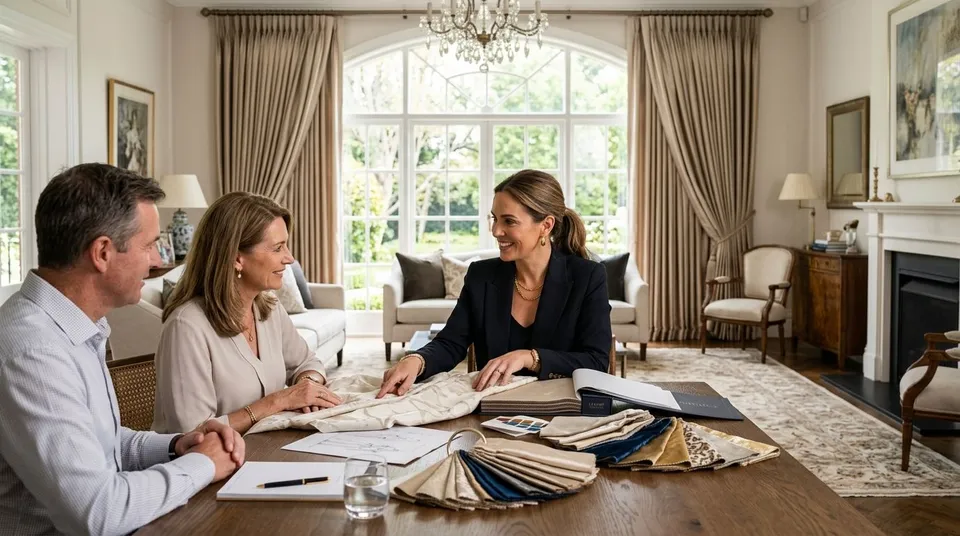
A custom drapery design consultation for luxury interiors in 2026 is an in-home walkthrough where a specialist measures every opening, reviews fabric weight and lining, and matches an operation type (manual, motorized, or smart) to how each room actually gets used. High-end rooms carry taller windows, wider spans, and more layering than a standard bedroom, so the consultation has to cover hardware and mount depth, not just color swatches.
- Custom drapery design consultation for luxury interiors starts with measuring, not fabric books.
- Rainier Blinds runs in-home consultations across Bellevue, Tacoma, Seattle, and Auburn with pricing on the spot.
- Motorized and smart operation cost more upfront but solve high ceilings and hard-to-reach rods.
- Layering drapery over a cellular or roller shade controls light better than drapery on its own.
Why this matters for luxury interiors
A formal dining room, a two-story great room, or a wall of glass in a lakefront home doesn't behave like a standard living room window. Rod spans run wider, ceiling heights push mount options past what a stepladder and a single measurement can handle, and fabric that sags or pools wrong reads as a mistake, not a design choice.
A custom drapery design consultation catches those problems before fabric gets ordered. It also settles the operation question early: a 12-foot picture window with a motorized track behaves differently day to day than the same window with a manual cord, and that decision drives hardware selection from the start.
How to prepare for a custom drapery design consultation
Define how each room is actually used
Before anyone talks fabric, figure out what the room needs to do. A media room and a formal dining room want opposite things from the same drapery panel.
- Note which windows get direct afternoon sun and which stay shaded most of the day
- List privacy needs by room (street-facing living room vs. a set-back primary suite)
- Flag rooms where noise reduction matters, like a home office or media room
- Match fabric mood to furniture already in the room, not the other way around
- Decide if the drapery is functional (closes daily) or stationary (frames the window only)
Measure every window yourself first
A rough measurement before the consultation speeds everything up and helps you sanity-check the professional numbers later.
- Measure width at three points: top, middle, and bottom of the opening
- Measure height from where the rod will sit to the floor or sill
- Note return depth if the wall has trim or a deep sill
- Record ceiling height near the window, since it affects mount type
- Photograph each window so fabric and hardware choices get discussed against the real opening
Rainier Blinds sends its own measure-and-install crew to confirm these numbers at the in-home consultation, so a rough self-measurement is a starting point, not the final word.
Choose fabric weight and lining
Fabric choice for a formal dining room or a great room isn't the same decision as a nursery or a media room. Weight and lining do most of the work.
- Sheer voile for diffused daylight without full coverage
- Medium-weight linen blends for rooms with mixed sun exposure through the year
- Blackout lining for bedrooms, home theaters, and any south- or west-facing wall
- Thermal lining for large window walls, common in Pacific Northwest homes with real heat loss
- Silk or heavier decorative fabrics for formal dining rooms and entry spaces used more for appearance than daily function
The drapery fabric guide breaks down how weight and lining interact with wash care, which matters more in a formal dining room than people expect.
Pick a heading style and hardware
Heading style changes how the fabric falls and how much wall space the stack takes up when the panel is open.
- Pinch pleat for a tailored, traditional look in formal rooms
- Ripple fold (wave) for a clean, continuous line along wide window walls
- Grommet or tab top for a more casual, high-traffic room
- Traverse rod for daily-use panels that need smooth manual operation
- Decorative pole or ceiling-mount track depending on ceiling height and trim detail
A formal dining room with 9-foot ceilings reads differently with a ceiling-mount track than a standard rod, and that's a hardware decision, not a fabric one.
Decide between manual, motorized, or smart operation
Operation type is where most of the consultation time goes once fabric is settled, because it drives hardware, wiring, and mount depth.
- Manual cord or wand for budget-conscious rooms with easy reach
- Motorized remote for tall windows, wide spans, or rooms where daily cord use gets old fast
- Smart drapery tied to a hub for households already running a smart home system
- Battery-powered motors for retrofits without nearby wiring
- Hardwired motors for new construction or full renovations where wiring is already open
Layer drapery with shades for full light control
Drapery alone rarely solves both privacy and light control in a high-end room. Layering with a shade behind the panel handles both without switching fabric weight.
- Sheer drapery over a blackout cellular shade for full range from soft light to total dark
- Drapery panels over a roller shade for daily privacy with drapery reserved for texture and framing
- Drapery alone on interior walls or non-privacy-facing windows where shades aren't needed
- Zebra shades under drapery in rooms that need both light-filtering and blackout in one control
The layering guide for living rooms walks through which shade pairs with which fabric weight without one canceling the other out.
Book the in-home consultation
This is the step that turns a Pinterest board into an actual order. A specialist measures every opening in person, brings fabric and hardware options, and quotes pricing on the spot, no online estimate and no mailed samples.
- Confirm every room on the list gets measured in one visit
- Ask to see fabric and lining samples against your actual window light, not a showroom light
- Get operation type (manual, motorized, smart) confirmed per room before the visit ends
- Walk through mount type options for any window with trim or ceiling constraints
Confirm installation and care plan
Once fabric, hardware, and operation are locked, installation and long-term care are the last details worth nailing down before the crew shows up.
- Confirm the install date and which rooms are covered in one visit
- Ask about warranty coverage on motors and hardware before signing off
- Review wash or dry-clean requirements per fabric before final selection
- Set expectations for any follow-up support on motorized components
Maintaining custom drapery day to day is a separate conversation from installation, and it's worth having before the fabric is even ordered.
Comparison: drapery options for luxury interiors
| Option | Best for | Key limitation |
|---|---|---|
| Manual drapery | Budget-conscious rooms with easy window reach | Daily cord use on wide spans gets tiring fast |
| Motorized drapery | Tall windows, wide great-room spans, hard-to-reach rods | Needs power access or a battery replacement schedule |
| Smart drapery | Households already running a smart home hub | Adds setup complexity if the hub isn't already installed |
| Layered drapery + shade | Rooms needing both privacy and full blackout | Costs more than a single treatment and needs two measurements |
Motorized drapery wins for tall or wide-span windows in 2026, where a manual cord becomes impractical daily. Manual stays the right call for smaller, easy-reach rooms where the extra hardware cost buys nothing.
Common mistakes in luxury drapery consultations
- Ordering fabric before the room's light exposure is mapped. A west-facing wall with unlined linen fades and overheats a room within a season.
- Skipping the ceiling height check. A 9-foot or vaulted ceiling changes mount type and hardware length, and skipping this step means reordering hardware later.
- Choosing motorized operation without confirming power access. Retrofits without nearby wiring need battery motors, and that decision has to happen before installation day, not after.
- Treating drapery as a stand-alone solution in a room that needs blackout. Sheer or lightweight drapery alone won't block a west-facing bedroom window; that room needs a layered shade underneath.
- Matching fabric to a showroom sample instead of the room's actual light. Fabric that looks right under fluorescent light can read completely differently under afternoon sun.
FAQ
What does a custom drapery design consultation for luxury interiors include?
A consultation includes an in-home measurement of every window, a review of fabric weight and lining options, and a decision on operation type (manual, motorized, or smart). Rainier Blinds quotes pricing on the spot during the visit, with no online or mailed estimate.
Is motorized drapery worth it for tall or wide windows?
Motorized drapery is worth it for tall windows, wide great-room spans, or any rod that's hard to reach daily. Manual operation is the better call for smaller, easy-reach rooms where a motor adds cost without solving a real problem.
How is drapery different from shades for a formal room?
Drapery adds fabric texture and framing but rarely blocks light or gives full privacy on its own. Layering drapery over a cellular or roller shade solves both light control and appearance in one window.
Do I need to measure my windows before the consultation?
A rough self-measurement speeds up the visit but isn't required. Rainier Blinds' own measure-and-install crew confirms exact numbers on-site before any fabric is ordered.
What fabric lining works best for Pacific Northwest window walls?
Thermal lining handles large window walls in the Pacific Northwest better than standard lining, since it addresses real heat loss through 2026's mild but wet winters. Blackout lining is the better call for bedrooms and media rooms regardless of climate.
Can drapery and shades be installed in the same visit?
Yes, layered installations of drapery and a shade behind it happen in the same visit when both are measured and ordered together. Ordering them separately means two measurement visits instead of one.
What heading style suits a formal dining room?
Pinch pleat or ripple fold heading styles suit formal dining rooms best, since both hold a tailored line along wider spans. Grommet or tab top styles read more casual and fit higher-traffic rooms better.
One last thing
The detail that gets skipped most often in a luxury drapery project isn't fabric or color, it's ceiling height near the window. A 9-foot or vaulted ceiling changes which mount type works and how long the hardware needs to be, and catching that at the consultation instead of after installation day saves a full reorder.