
Our available controls: Rainier Blinds offers Roman and woven wood shades with motorized operation only. Available controls and power options for other products are confirmed at your consultation.
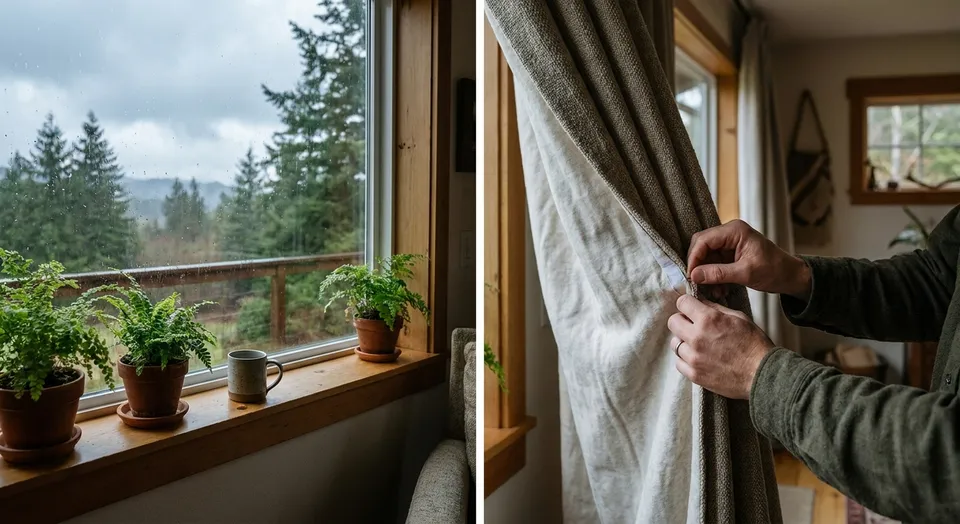
Before wet winter weather, inspect shades and address condensation or ventilation problems. Follow the selected product’s cleaning, storage, temperature, and operating instructions; routine care does not guarantee protection from moisture damage.
- Winterizing window treatments in the Pacific Northwest means sealing drafts and layering fabric before December 2026 cold snaps hit.
- Cellular construction can add an insulating layer at the window. Performance depends on the actual product, fit, glazing, climate, and use; request product-specific data rather than assuming an R-value or a fixed utility-bill saving.
- Condensation on single-pane and older dual-pane windows causes more shade damage in Western Washington than cold ever does.
- Motorized shades in unheated garages or sunrooms need battery checks before temperatures drop below 40°F.
- Drapery layered over cellular or roller shades adds a second air gap that outperforms either treatment alone.
Why this matters
Windows can contribute to winter heat loss, while condensation depends on indoor humidity, ventilation, and glass temperature. Treat moisture at its source and follow the shade’s care instructions; adding a shade does not cure a condensation problem.
Before winter, inspect fabric, brackets, and any accessible power components, then follow the product’s maintenance instructions. Address persistent condensation and use batteries only within the manufacturer’s storage and operating conditions.
What you'll need
- A soft brush attachment or microfiber cloth for track and headrail cleaning
- A mild soap-and-water solution (no ammonia-based cleaners on light-filtering or blackout fabrics)
- The product manufacturer’s approved maintenance supplies, if required
- Weatherstripping or foam tape if you're addressing frame gaps directly
- Fresh batteries or a charged battery pack if you run motorized shades
- 30-60 minutes per room, more if you're adding insulated cellular shades for garage conversions or similar upgrades this season
The steps
1. Inspect every track, rail, and mount before the rain arrives
Run a hand along headrails and mounting brackets looking for loose screws, warped brackets, or gaps where the treatment doesn't sit flush against the frame. Loose mounts are the number-one reason cold air bypasses an otherwise good shade. Tighten hardware now while you can still get to the frame without a ladder in the rain.
Common mistake: homeowners assume a gap at the top of a roller shade is cosmetic. It's the single biggest air leak point on any inside-mount treatment.
2. Clean fabric and hardware while humidity is still manageable
Dust and pollen buildup traps moisture, and moisture on fabric in a 45°F room doesn't dry the way it would in July. Wipe roller and zebra shade fabric with a barely damp microfiber cloth, and vacuum roman shade pleats with a low-suction brush attachment. Skip this step and you're layering winter condensation on top of existing grime, which is how mildew spots start.
3. Add or upgrade insulating layers before the first cold snap
Cellular construction can add an insulating layer at the window. The result depends on the exact product, fit, glazing, climate, and how the shade is used; it does not establish a particular temperature change or utility-bill saving.
4. Layer drapery over your existing shades for a second air gap
Layering may change comfort and light control, but performance depends on the complete product, glazing, fit, and use. Ask for relevant product data instead of assuming that a second fabric layer provides a fixed insulation gain.
5. Check mount type on any treatment near a drafty frame
Older homes in Steilacoom, Seattle, and historic Tacoma neighborhoods often have frames that have shifted slightly over decades, and an inside mount on an out-of-square frame leaves visible daylight at the corners. Outside-mount or frame-covering options close that gap where an inside mount can't. If you're unsure which mount type your window actually needs, choosing the right mount type walks through the measurements that decide it.
6. Service motorized shades before cold affects the battery
Lithium battery packs lose usable capacity below roughly 40°F, which is a normal December morning in an unheated garage, sunroom, or covered porch. Charge packs fully before the first freeze and bring removable packs indoors on nights forecast below freezing. Motors themselves tolerate PNW winters fine; it's almost always the battery that fails first. Full guidance on keeping packs healthy through the season is in maintaining motorized shade batteries.
7. Adjust your daily operation habits for the season
Close shades and drapery at dusk to hold in the day's accumulated warmth, and open south-facing treatments during midday sun even in January, since low winter sun still adds real heat gain through glass. Leaving everything closed 24/7 actually traps more cold air against the glass on sunny days than it keeps out.
Get your windows winter-ready
A Rainier Blinds crew member measures and provides a quote for the selected options, no subcontractors.
8. Watch for condensation daily during the wettest months
Check the bottom rail of roller and cellular shades each morning during November through February. If you see beading or fogging on the glass behind the shade, crack the shade open for an hour to let the room air circulate before closing it again. Fabric that stays wet against cold glass for days at a time is the fastest way to void a warranty on any window treatment.
Troubleshooting
If mildew or moisture damage appears, stop applying generic cleaning remedies. Follow the fabric manufacturer’s instructions and address the condensation or leak. A visual inspection alone does not establish whether the cause is a defect, environment, or care issue.
Motorized shade won't respond on a cold morning. Check the battery pack temperature first, not the motor. Bring the pack to room temperature for two hours before testing again.
If a cordless mechanism feels stiff, stop forcing it and use the manufacturer’s troubleshooting instructions. Do not spray lubricant into the mechanism unless the exact product instructions permit it.
Draft still noticeable with shades closed. The leak is almost always at the mount, not the fabric. Recheck bracket tightness and consider an outside mount if the frame has shifted.
If fabric feels damp, identify and address the moisture source and follow the product’s drying and care instructions. Persistent condensation, a leak, or unsuitable room conditions may need separate attention.
Tools and resources
- The product manufacturer’s approved maintenance supplies, if required
- A basic multimeter if you want to check battery pack voltage on motorized shades
- How to maintain motorized window shade batteries for a full seasonal battery schedule
- Choosing the right mount type for custom blinds if you suspect your mount is the draft source
- A tape measure and notepad if you're planning a cellular shade upgrade for 2026
What to do next
When comparing an upgrade, assess the actual window, mounting, light needs, and product performance. Do not assume a generic cellular shade will pay for itself within a particular period.
FAQ
What's the best way to winterize window treatments in the Pacific Northwest?
Clean and inspect tracks first, then add an insulating layer like cellular shades or drapery, and check motorized battery packs before temperatures drop below 40°F. Doing this in October or early November beats waiting for the first cold snap.
Do cellular shades actually reduce heat loss in winter?
Cellular construction can add an insulating layer at the window. The result depends on the exact product, fit, glazing, climate, and how the shade is used; it does not establish a particular temperature change or utility-bill saving.
Is drapery better than shades for winter insulation?
Drapery layered over shades outperforms either treatment alone because it creates a second air gap between the room and the glass. On drafty or north-facing windows, that combination matters more than which single treatment you pick.
How much does window condensation damage window treatments?
Moisture held against a shade can damage fabric or hardware. Address condensation and ventilation promptly, let the product dry as directed by its manufacturer, and investigate the source of persistent moisture.
Do motorized shades work in cold garages during winter?
Motorized shade motors tolerate Pacific Northwest winter temperatures fine, but battery packs lose capacity below roughly 40°F. Bringing removable packs indoors overnight during freezes keeps the shade responsive.
When should you winterize window treatments in Western Washington?
Late October through mid-November is the window before the first sustained cold and rain arrive. Doing the inspection and any upgrades before December avoids scrambling during an actual cold snap.
Can you winterize existing shades or do you need new ones?
Most existing shades just need cleaning, mount tightening, and a drapery layer added on top. New cellular shades only make sense where the current treatment is a bare roller or sheer with no insulating fabric at all.
What window treatments hold up best to Pacific Northwest winters?
An exterior-rated shade can help with sun and glare. Select the exact system for the opening, mounting structure, and exposure. Follow its documented wind limits and retraction instructions; neither cable guides nor zipper tracks guarantee protection from wind, rain, or storms.
One last thing
The detail most homeowners miss: the coldest week of the year usually isn't when window treatments fail, it's the wettest one. A stretch of 45°F days with steady rain and high indoor humidity builds more condensation against glass than a single hard freeze ever does, which is why the daily bottom-rail check in November matters more than any one winterizing task on this list.