Our available controls: Rainier Blinds offers Roman and woven wood shades with motorized operation only. Available controls and power options for other products are confirmed at your consultation.
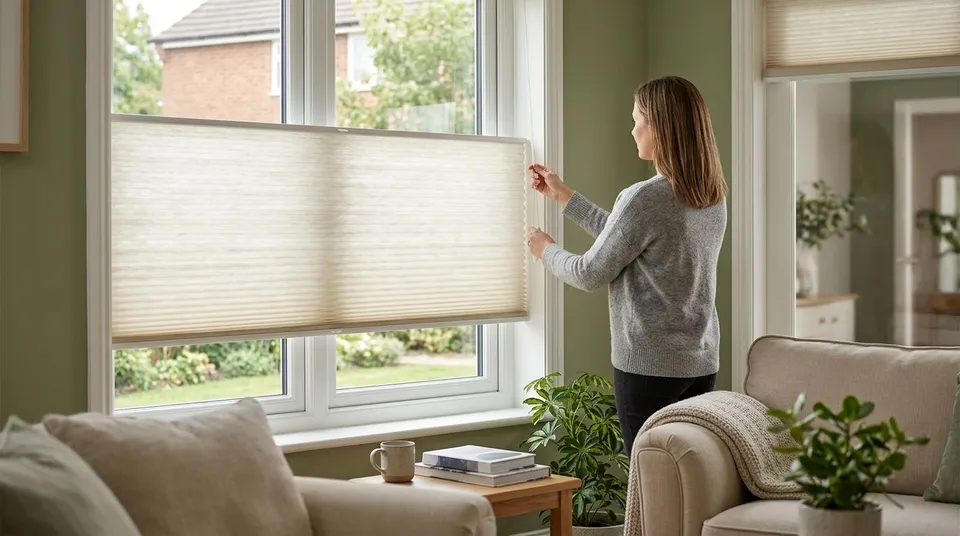
Cellular shades rarely qualify for the federal energy tax credit in 2026, because that credit is written for exterior windows, doors, and insulation, not interior window coverings. What actually gets you a rebate on cellular shades is a local utility program, and eligibility depends entirely on which provider services the home and what that program covers this year.
- Cellular shades do not qualify for the federal Section 25C tax credit in 2026 because that credit covers exterior windows, doors and insulation, not interior treatments.
- Cellular shade energy rebates, when they exist, come from local utilities like Puget Sound Energy or Seattle City Light, not from federal programs.
- Double cell honeycomb shades trap more air than single cell versions, which is why the rare utility program that includes shades usually asks for a documented R-value.
- Rainier Blinds measures and installs custom cellular shades across South King County, but rebate approval always runs through the utility, never the installer.
Why this matters
Homeowners searching for cellular shade energy rebates usually assume there is a federal credit waiting for them, the same way there is for a heat pump or a new furnace. There isn't, and finding that out after buying shades on that assumption wastes money and time.
The real opportunity sits with your utility, not the IRS. Puget Sound Energy, Seattle City Light, and Tacoma Power each run their own efficiency incentive programs, and those programs change year to year. Knowing the difference before you buy cellular shades built for energy savings saves you from chasing a rebate that never existed.
How to qualify for energy rebates with cellular shades
Qualifying for a cellular shade energy rebate in 2026 comes down to five checks, in this order:
- Rule out the federal tax credit first. Section 25C of the federal tax code covers exterior windows, exterior doors, and insulation. Interior window coverings, including cellular shades, are excluded. Do not budget for a federal credit that isn't there.
- Confirm your utility provider. Puget Sound Energy, Seattle City Light, and Tacoma Power each set their own incentive lists. A rebate that exists in one service territory may not exist in the next city over.
- Ask specifically about window covering or weatherization programs. Most utility rebate lists lead with insulation, heat pumps, and windows. Cellular shades, when covered at all, usually appear under a broader weatherization or home energy audit program rather than as a standalone line item.
- Get documentation on the shade's construction. A rebate reviewer needs to see that the product is a genuine cellular or honeycomb design, not a flat roller or roman shade with no air pocket. Ask your installer for the manufacturer's product spec sheet before the rebate application goes in.
- Keep the installation invoice. Utility programs that do accept window covering claims typically require proof of purchase and proof of installation tied to the address receiving the rebate.
“A rebate reviewer asking for a documented R-value will never approve a flat roller shade. Only a genuine cellular construction has an air pocket worth measuring.”
Roller shades vs. cellular shades for rebate purposes
This distinction matters more than most homeowners expect. A flat roller shade blocks light but does not trap air, so it has nothing for a utility efficiency reviewer to measure. A cellular shade's honeycomb structure creates sealed air pockets between the window and the room, which is the actual mechanism any energy rebate program is trying to reward.
| Shade type | Air pocket structure | Typical rebate relevance |
|---|---|---|
| Roller shade | None, single flat fabric layer | Not typically eligible |
| Single cell shade | One sealed honeycomb layer | Sometimes eligible, program-dependent |
| Double cell shade | Two stacked honeycomb layers | Most likely to meet R-value documentation requests |
If you're weighing the two products anyway, the full breakdown is in roller shades vs. cellular shades in South King County.
Why cellular shade rebate eligibility varies
- Utility service territory. PSE, Seattle City Light, and Tacoma Power do not run the same incentive programs, and none of them are required to include window coverings.
- Program funding cycles. Utility rebate budgets reset annually and sometimes run out mid-year, closing a program before the next cycle opens.
- Single cell vs. double cell construction. Double cell shades trap more air and are more likely to meet the R-value threshold a program sets.
- Standalone purchase vs. weatherization audit. Programs are far more likely to fold shades into a whole-home audit incentive than to rebate them as an isolated purchase.
- Federal exclusion of interior treatments. No matter which utility you're in, the federal 25C credit stays out of reach for shades because the credit's scope stops at the building envelope itself, meaning exterior windows and doors, not what hangs inside them.
Does the federal tax credit cover cellular shades or blinds in 2026?
No, the federal Energy Efficient Home Improvement Credit does not cover cellular shades or blinds in 2026. It's written for exterior windows, exterior doors, and insulation, and interior window coverings fall outside that scope regardless of their insulating value.
Are double cell cellular shades more likely to qualify for a rebate than single cell?
Double cell cellular shades are more likely to meet a utility program's documentation requirements than single cell versions, because the second honeycomb layer traps additional air and produces a higher measurable R-value. Not every utility program asks for this detail, but the ones that do favor double cell construction.
Do utility rebates treat motorized cellular shades differently than manual ones?
Motorized cellular shades are evaluated on the same insulating construction as manual ones for rebate purposes, since the motor changes how the shade operates, not how much air it traps. A utility program judging insulating value looks at the cell structure, not whether the shade opens by cord or by remote.
Before you commit to a purchase based on a rebate you haven't confirmed, get the shade measured and quoted first. Rainier Blinds' crew measures and installs cellular shades across South King County and can tell you on the spot whether a single cell or double cell configuration fits the window, independent of whatever a utility program decides to cover this year.
Get your windows measured
Free in-home consultation before you buy cellular shades.
FAQ
What are cellular shade energy rebates in 2026?
Cellular shade energy rebates in 2026 are local utility incentives, not federal tax credits, offered by some providers like Puget Sound Energy for insulating window treatments tied to a broader weatherization program.
Does the federal tax credit cover window shades?
No, the federal Section 25C tax credit does not cover window shades or blinds. It applies to exterior windows, exterior doors, and insulation, not interior window coverings.
Is Puget Sound Energy the only utility with a possible rebate program?
No, Seattle City Light and Tacoma Power also run their own efficiency incentive programs, and each sets its own eligibility list independent of the others.
Do single cell shades ever qualify for utility rebates?
Single cell shades can qualify for some utility programs, but double cell shades are more likely to meet an R-value documentation requirement because the extra honeycomb layer traps more air.
What documentation do I need for a cellular shade rebate claim?
You typically need the manufacturer's product spec sheet confirming cellular construction, plus the installation invoice tied to the property address receiving the rebate.
Are roller shades ever eligible for energy rebates?
Roller shades are generally not eligible for energy rebates because they lack the sealed air pocket structure that utility efficiency programs use to justify an incentive.
Do motorized cellular shades qualify for different rebates than manual ones?
Motorized and manual cellular shades are judged on the same cell construction for rebate purposes, since the motor affects operation, not insulating value.
Should I buy cellular shades based on an expected rebate?
No, confirm your utility's current program directly before buying, since rebate availability and funding change year to year and are never guaranteed at the time of quote.
One last thing
Most homeowners who call asking about cellular shade energy rebates end up qualifying for nothing federal and something local, if anything at all, and the honeycomb construction that makes a shade rebate-eligible in the first place is also the same feature that cuts noise and blocks more heat gain in west-facing rooms across South King County. That dual benefit is worth more day to day than any rebate check, since the rebate depends on a utility program's budget and the insulating performance doesn't.
If your utility does not currently offer a window covering incentive, the double cell construction still pays off in comfort. Winterizing window treatments for Pacific Northwest homes covers how that plays out through a Puget Sound winter regardless of rebate status.