
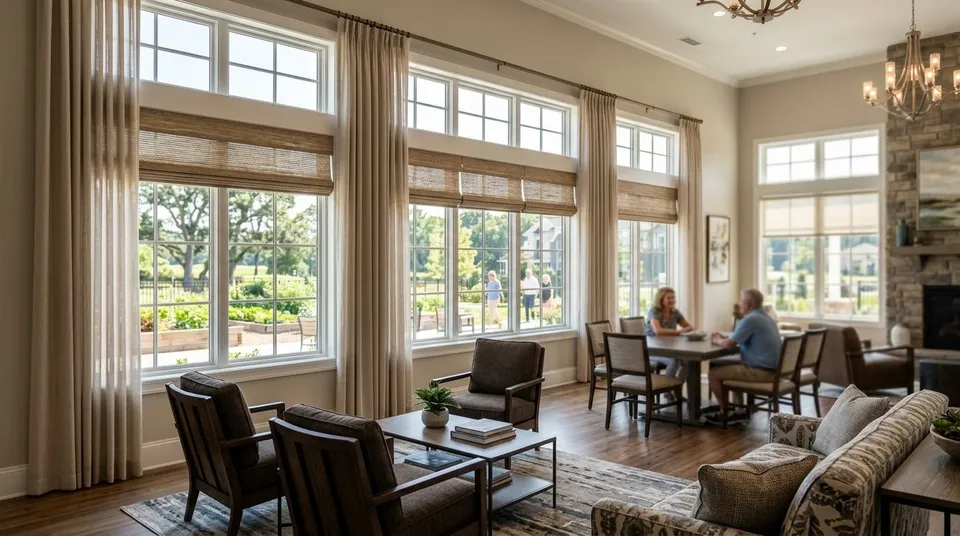
HOA clubhouses and community centers need window treatments that survive daily public use, meet safety rules for shared spaces, and still look presentable to a board that approves every dollar. The right pick balances glare control, fade protection on shared furniture, and operation that a facilities manager can maintain without a service contract.
- Cordless, motorized cellular and zebra shades are the safest window treatments for HOA clubhouses in 2026.
- Skip corded blinds entirely in shared public rooms; liability and ADA concerns rule them out.
- Outdoor steel wire and zipper shades cover clubhouse patios and pool decks without changing the exterior look.
- Rainier Blinds measures and installs with one in-house crew across South King County HOA communities, not a subcontractor.
Why window treatments matter for HOA clubhouses
A clubhouse window wall isn't a living room window. It faces dozens of residents a week, gets used for board meetings, yoga classes, holiday parties, and rental events, and every fabric choice has to answer to a board that votes on the invoice.
Glare is the most common complaint HOA managers bring to Rainier Blinds about clubhouse spaces: afternoon sun hitting a projector screen during a board meeting, or west-facing windows making the fitness room unusable by 4pm. Fade is the second: HOA-owned furniture and flooring is community property, and replacing it isn't a line item anyone wants to explain at the annual meeting.
Corded blinds also create a liability question that a private homeowner never has to think about. A clubhouse is a public-adjacent space used by children at pool parties and by seniors at community events, and dangling cords are exactly the kind of hazard an HOA's insurance carrier flags. Cordless and motorized operation removes that question before it gets asked.
Update your shade selection room by room
Don't treat the clubhouse as one job with one fabric. A HOA facility usually has 3-4 distinct rooms with different light and use patterns.
- Meeting and board rooms: light-filtering or blackout roller shades for screen visibility
- Fitness or yoga rooms: light-filtering cellular or roller shades that cut glare without killing daylight
- Lobby and entry: zebra shades for adjustable privacy during business hours
- Multi-purpose event halls: motorized roller or cellular shades that raise and lower on a schedule
- Patios and pool decks: outdoor steel wire or zipper track shades for wind and sun
Choose cordless or motorized operation as the default
A shared facility gets far more open-close cycles than a private home, and cords wear out faster under that use. Motorized operation also solves the access problem: staff don't need a ladder or a key to a locked cord cleat to adjust a shade in a 20-foot clubhouse window.
- Motorized cellular shades for rooms with high ceilings or hard-to-reach glass
- Battery-powered motors where running new wiring isn't in the budget
- Smart shades on a schedule for rooms used on a fixed weekly calendar
- Cordless manual shades for low-traffic storage or utility rooms
Match fabric openness to the room's real use
Openness percentage decides how much of the outside view and light comes through, and it's the single most-skipped decision in a clubhouse project. A meeting room needs a tighter weave than a lobby.
- 1-3% openness for board rooms and presentation spaces to kill screen glare
- 5-10% openness for lounges and common areas that still want daylight
- Blackout for any room doubling as a media or screening space
- Sheer or light-filtering for lobbies where the board wants the building to look occupied and open
Standardize hardware across every room
HOA facilities managers who buy shade-by-shade end up with mismatched brackets, three different remote systems, and a maintenance headache in year two. Standardizing at the start saves the board money on every future repair call.
- One motor and remote system across all motorized rooms
- One fabric vendor so replacement panels match years later
- One mount type (inside or outside) per window style in the building
- One warranty document on file for the whole project, not one per room
Get board approval before ordering
HOA purchases go through a vote, and boards move slower than a single homeowner. Building that timeline into the project keeps the install from stalling mid-job.
- Bring fabric samples to a board meeting before final sign-off
- Get written approval on the exact rooms and fabric per room
- Confirm who signs the final invoice: management company or board treasurer
- Set an install window that avoids scheduled community events
Plan installation around the facility's calendar
A clubhouse rarely sits empty for a full week. Installation has to work around existing bookings, not the other way around.
- Schedule noisy work (mounting brackets, wiring motors) for weekday mornings
- Stagger rooms so at least one meeting space stays usable
- Confirm power access for motorized rooms before install day
- Walk the finished rooms with the property manager, not just the board
Measure exterior spaces separately from interior windows
Pool decks, patios, and covered walkways need outdoor-rated shades, and they're a separate measure from interior glass. Steel wire and zipper track systems hold up to wind that a standard interior fabric can't handle.
- Zipper track shades for fully enclosed patio openings
- Steel wire shades for partially open patio covers with solid framing
- Motorized operation for any exterior shade mounted above reach
- Confirm exposure direction before picking fabric weight
Comparison table: shade options for HOA clubhouses
| Option | Best for | Key limitation |
|---|---|---|
| Motorized cellular shades | Meeting rooms, high or hard-to-reach windows | Needs power access or battery swaps on a schedule |
| Zebra shades | Lobbies, multi-purpose rooms needing adjustable privacy | Not blackout-capable at full openness |
| Light-filtering roller shades | Fitness and yoga rooms | Limited glare control on full afternoon sun exposure |
| Blackout roller shades | Board rooms, screening spaces | Blocks all natural light, wrong choice for common areas |
| Outdoor steel wire/zipper shades | Patios, pool decks, covered walkways | Not a fit for fully interior rooms |
| Drapery | Formal event halls, entryways | Higher maintenance in high-traffic public spaces |
The best window treatment for most HOA clubhouses in 2026 is a mix: motorized cellular or zebra shades on interior glass, paired with outdoor steel wire or zipper shades on patios and pool structures. That combination covers glare, safety, and exterior exposure without forcing one fabric to do every job.
Get a clubhouse shade consultation
In-home measure and real pricing for HOA and community facility windows.
Common mistakes HOA boards make
- Buying corded blinds to save money upfront. Cord replacement and liability exposure in a public-use room cost more over the life of the shade than paying for cordless from day one.
- Skipping board sign-off on fabric samples. A shade that looks fine in a photo can get rejected after install, forcing a second round of work the budget didn't plan for.
- Treating the whole clubhouse as one order. A board room and a fitness room need different openness levels; one fabric across the building leaves at least one room unusable at certain hours.
- Forgetting exterior spaces until the interior job is done. Patio and pool deck shades need separate measuring and different hardware, and adding them later usually means a second site visit.
- Not standardizing hardware across rooms. Mixed motor systems and mount types turn a simple warranty repair into a multi-vendor problem two or three years down the line.
For HOA communities specifically in South King County, custom blinds for HOA communities covers board approval timelines and multi-unit ordering in more depth. Facilities looking to cut cooling costs in shared spaces should also look at cellular shades built for energy savings, since insulated cellular fabric reduces heat gain in west-facing meeting rooms.
For board rooms specifically, zebra shades for conference rooms and shared workspaces walks through openness percentages that keep a projector screen visible at 2pm.
FAQ
What window treatments work best for HOA clubhouse meeting rooms?
Light-filtering or blackout roller shades at 1-3% openness work best for HOA clubhouse meeting rooms in 2026, since they cut glare on screens without leaving the room fully dark.
Are motorized shades worth it for a community center?
Yes, for high or hard-to-reach windows and rooms used on a fixed schedule. Motorized shades cut the maintenance burden on staff who would otherwise manually adjust dozens of windows every week.
How do cordless shades reduce liability in shared spaces?
Cordless and motorized shades remove dangling cords that create a strangulation hazard in rooms used by children and the public, which is the exact risk an HOA's insurance policy flags in a public-adjacent facility.
What is the most durable shade fabric for a high-traffic clubhouse?
Cellular and zebra fabrics rated for commercial-style daily cycling hold up best in high-traffic clubhouse rooms, since they're built to open and close far more often than a residential window sees.
Can outdoor shades cover clubhouse patios and pool decks?
Yes, steel wire and zipper track outdoor shades are built for patios, pool decks, and covered walkways, and they're measured separately from interior clubhouse windows.
How long does a full clubhouse window treatment project take?
Timelines depend on room count and board approval speed, since HOA purchases typically require a vote before ordering. Scheduling around the facility's existing bookings matters more than the install itself.
Do HOA boards need bids from multiple vendors?
Most HOA governing documents require competitive bids over a set dollar threshold, so check the community's bylaws before ordering a full clubhouse project.
What's the best window treatment for glare on video calls in a clubhouse office?
Light-filtering roller or zebra shades set to a low openness percentage cut glare on camera without blacking out the room entirely, which keeps the space usable for other meetings.
One last thing
The detail most HOA boards skip until year three: standardizing on one motor and remote system across every room in 2026 means one warranty call fixes the whole building, not one call per room. That single decision at the ordering stage saves more maintenance time than any fabric choice on this list.