
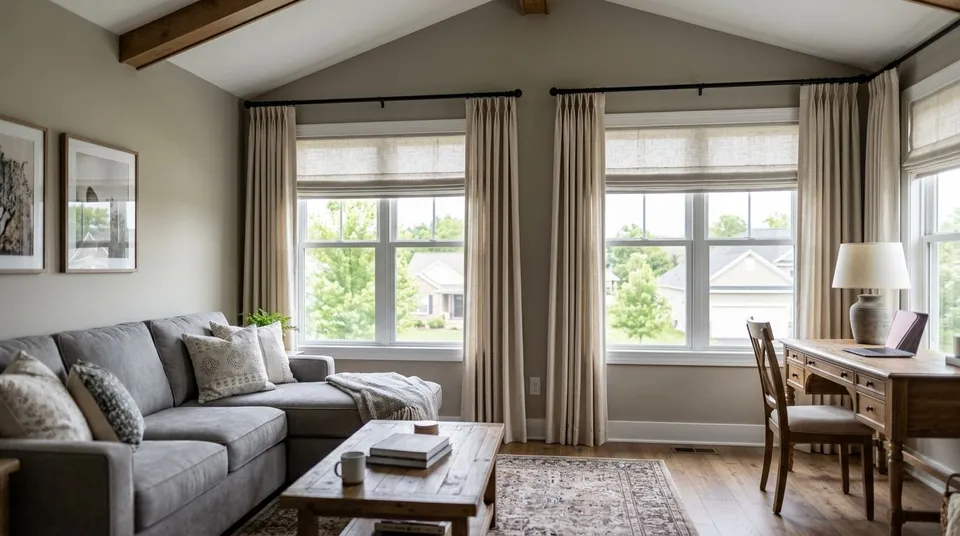
Window treatments for bonus rooms above garage are shades and drapery chosen to fix a room that runs hotter, colder, and brighter than the rest of the house, with the goal of leveling out temperature swings and cutting glare on the exterior wall side. A bonus room over a garage usually has more exposed exterior surface per square foot than any other room in the house, often two or three windows on one wall, and sometimes a skylight if it was framed with a vaulted ceiling. That combination means standard picks from the rest of your house rarely perform the same way up there.
- Insulated cellular shades are the strongest single fix for temperature swings in bonus rooms above garages.
- Rooms with west or south exposure need a light-filtering or blackout layer, not just privacy sheers.
- Skylights or vaulted windows in these rooms need a separate shade system from the wall windows.
- Motorized shades solve the reach problem on tall bonus-room windows without a ladder.
- Rainier Blinds measures and installs window treatments for bonus rooms above garages across the Greater Seattle Area in 2026.
Why window treatments matter for bonus rooms above garage
A bonus room above the garage sits on top of an unheated or minimally insulated space, with no room below it to share warmth in winter or absorb heat in summer. That's a different thermal problem than a bedroom stacked over a heated living room. Insulated cellular shades for garage conversions address this exact structural gap by trapping a layer of air against the glass, which is the same principle that makes these rooms usable as home offices, gyms, and guest suites in the first place.
The window count matters too. Most bonus rooms over a garage get windows on the gable end and sometimes on both long walls, so afternoon sun hits from more than one direction at different times of day. A single roller shade spec that works on the north-facing side will underperform on the west-facing side by mid-afternoon, especially in the summer months.
Update your measurements for exterior wall exposure
Start with the physical reality of the room before picking fabric or color.
- Measure every window on the exterior-facing walls separately, since bonus rooms rarely have matching window sizes
- Note which walls face west or south, since those get the longest and hottest sun exposure
- Check for a skylight or high transom window, common in bonus rooms with vaulted ceilings
- Record ceiling height at the window, since many bonus rooms have sloped or cathedral ceilings that change mount options
- Flag any window near a heat vent or mini-split unit, since fabric choice changes near a direct airflow source
Choose an insulating shade for the exterior-facing windows
The manual, no-cost first move is simple: prioritize the windows on the garage-adjacent exterior wall for insulation, not decoration. A honeycomb-style cellular shade with a tighter cell structure holds more air and cuts more heat transfer than a flat roller fabric.
- Cellular shades with a double-cell or triple-cell construction outperform single-cell on temperature control
- Light-colored cellular fabrics reflect more heat in summer than dark tones
- Top-down bottom-up cellular shades let you keep the top open for daylight while insulating the lower half
- Cordless or motorized lift avoids a dangling cord near a desk or exercise equipment, which is common in these rooms
- Pairing cellular shades with a drapery panel on the coldest wall adds a second insulating layer for winter
Cut glare on west and south-facing walls
If your bonus room windows face west or south, glare control matters as much as privacy. A room used for video calls, a home gym mirror wall, or a media setup gets unusable in direct afternoon sun without the right shade.
- Solar shades with a 3% to 5% openness cut brightness while keeping the view
- Zebra shades let you dial between sheer and blackout stripes without swapping shades
- Light-filtering roller shades soften direct sun without going fully dark during the day
- Motorized shades on a timer close automatically before the room overheats in the afternoon
Handle skylights or vaulted windows separately
A skylight or a high gable window needs its own shade system, not an extension of the wall-window plan. These are usually out of reach without a pole or motor, and they let in more direct overhead sun than a vertical window ever will. Skylight shades for vaulted ceilings covers mount options for angled and hard-to-reach glass, which is a common feature in bonus rooms framed with a cathedral roofline.
- Motorized skylight shades remove the need for an extension pole on a room with 10-plus foot ceilings
- Blackout skylight shades matter most if the bonus room doubles as a guest bedroom or media room
- Solar skylight shades cut heat gain without blocking the daylight that makes vaulted rooms feel open
Plan for privacy without losing daylight
Bonus rooms above garages often sit at the front of the house, visible from the street or driveway, which makes privacy a real concern even on the second story.
- Light-filtering shades hold daytime privacy while still passing daylight through
- Dual shades combine a sheer layer and a blackout layer in one headrail
- Top-down bottom-up cellular shades cover the lower half of the window for street-level privacy while leaving the top open
Pick the right operation tier for how the room gets used
Every shade in this category comes in manual, motorized, or smart versions, and the right tier depends on what the bonus room is used for in 2026, not just window height.
- Manual shades work fine on reachable windows in a guest room or craft room
- Motorized shades solve the reach problem on tall gable windows and skylights without a ladder
- Smart shades on a schedule close automatically during peak afternoon heat if the room is a home office or gym used daily
- Battery-powered motorized shades avoid running new wiring in a finished bonus room, which keeps the install faster
Winterize the room for Pacific Northwest weather
A bonus room above an unheated garage loses heat fast once temperatures drop, and the wrong window treatment makes that worse instead of better. How to winterize window treatments for Pacific Northwest homes walks through seasonal adjustments that matter most in a room with this much exterior exposure.
- Close cellular shades fully at night in winter to trap the air pocket against the glass
- Layer drapery over cellular shades on the coldest-facing wall for an added insulating barrier
- Check for gaps around the mount that let cold air bypass the shade entirely
Comparison of window treatment options for bonus rooms above garages
| Option | Best for | Key limitation |
|---|---|---|
| Insulated cellular shades | Rooms with strong temperature swings year-round | Adds cost over a basic roller shade |
| Solar or light-filtering roller shades | West or south-facing glare control | Less insulating value than cellular |
| Zebra shades | Rooms needing both privacy and daylight control | Higher price point than a single-layer shade |
| Motorized skylight shades | Vaulted ceilings and out-of-reach glass | Needs a power source or battery maintenance |
| Drapery over cellular shades | Coldest exterior wall in winter | Takes more wall space to mount |
The straightforward call for 2026: an insulated cellular shade on every exterior-facing window in a bonus room above the garage, upgraded to motorized on anything above reach, is the setup that actually solves the temperature problem instead of just covering the glass.
Get a free measure and quote
Rainier Blinds measures and installs shades for bonus rooms across the Greater Seattle Area.
Common mistakes homeowners make with bonus room window treatments
- Treating it like a bedroom instead of a garage-adjacent room. Standard bedroom shade specs skip the insulation layer this room actually needs.
- Ignoring the skylight until it's an afterthought. A skylight left bare turns a comfortable room into a greenhouse by early afternoon.
- Buying one shade spec for every window on the wall. Mismatched sun exposure on different walls means one fabric weight rarely fits every window.
- Skipping motorization on tall or angled windows. A pole-operated shade on a 12-foot gable window gets used less often because it's inconvenient, which defeats the point.
- Forgetting winter altogether. A room optimized only for summer glare still loses heat fast once temperatures drop in November and December.
FAQ
What's the best window treatment for a bonus room above a garage?
Insulated cellular shades are the strongest single option for a bonus room above a garage because they address the temperature swings caused by the unheated space below. Pair them with a light-filtering or solar shade on any west or south-facing window for glare control.
Do bonus rooms above garages need special window treatments?
Yes, because these rooms typically have more exterior wall exposure and less buffering from adjacent heated rooms than the rest of the house. Standard shade specs used elsewhere in the home often underperform on temperature control in this specific room type.
Is motorized better than manual for bonus room shades?
Motorized shades make the most sense on tall gable windows, skylights, or vaulted ceiling windows that are hard to reach manually. Manual shades still work fine on standard-height, easily reachable windows in the same room.
How do I control heat in a bonus room above the garage?
Insulated cellular shades with a double-cell or triple-cell construction cut heat transfer through the glass more than a flat roller fabric. Closing them fully during peak afternoon sun and again at night in winter has the biggest impact on comfort.
What window treatment works for a skylight in a bonus room?
Motorized skylight shades are the practical choice for angled or out-of-reach glass common in bonus rooms with vaulted ceilings. A blackout option matters if the room doubles as a guest bedroom or media space.
Can I use blackout shades in a bonus room above the garage?
Yes, blackout shades work well if the bonus room is used as a guest bedroom, home theater, or media room where full light control matters. The picks in best blackout shades for bedrooms cover fabric and mount details that apply to this room type as well.
Do bonus rooms above garages need privacy shades?
Many bonus rooms sit at the front of the house facing the street or driveway, so privacy matters even on the second story. Light-filtering or dual-layer shades hold daytime privacy without blocking all the natural light.
How much insulation value does a cellular shade actually add?
A cellular shade traps a pocket of air against the glass, which reduces the direct heat transfer that happens through bare window glass. The tighter the cell structure, meaning double-cell or triple-cell designs, the more air gets trapped and the more the temperature swing gets reduced.
One last thing
The detail most homeowners miss on a bonus room above the garage: the floor under the window is usually just as underinsulated as the wall behind it, so a shade alone won't fully solve a cold room in January. Pair the insulated shade with a rug or a floor vent check before assuming the window treatment failed to do its job.