
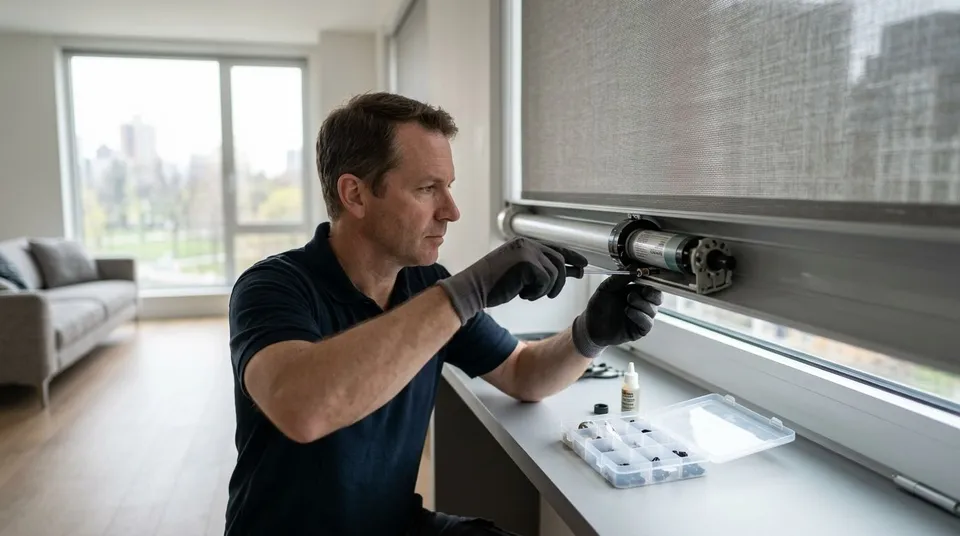
A noisy motorized shade motor almost always traces back to one of four things: a loose mounting bracket, a battery pack running low, limits that need recalibrating, or worn internal gears that call for a motor swap. Clicking and rattling sounds are DIY fixes you can try today. Grinding or straining sounds mean the gears inside the housing are wearing out, and no amount of tightening or reprogramming fixes that, only a motor replacement does.
- Loose brackets and low batteries cause most clicking or rattling noise in a motorized shade motor; tighten and recharge first.
- Grinding or straining sound means worn motor gears, not a DIY fix, plan on motor replacement.
- Recalibrating the shade's upper and lower limits fixes noise tied to a remote reset or reprogram.
- Rainier Blinds' measure and install crew diagnoses motorized shade motor noise across the Greater Seattle Area in 2026.
Why this matters
A noisy motor is the shade warning you before it quits. Catch the clicking or rattling in 2026 and you fix it with a screwdriver and a remote. Ignore it and the same noise turns into a dead motor that stops responding entirely, which is the exact failure covered in Rainier Blinds' guide to a motorized shade motor that won't respond.
Motorized and smart shades cost more upfront than manual ones, so a five-minute fix beats a full motor swap every time you can catch it early.
How to fix a noisy motorized shade motor
- Identify the noise type first. Clicking, humming, grinding, and rattling each point to a different cause, so don't start unscrewing brackets before you know which sound you're actually hearing.
- Tighten the mounting bracket. Loose screws let the roller tube vibrate against the bracket every time the motor engages. A quarter turn on each screw usually stops it.
- Recalibrate the upper and lower limits. Hold the program button on the remote for 3 to 5 seconds until the shade jogs, then reset the stop points. Limits that drift after a remote reset or a power outage make the motor strain and click at the end of its travel, a common issue covered in Rainier Blinds' guide on how to program motorized window shades.
- Check the battery or AC connection. Battery-powered motors often run on a pack of eight AA batteries or a rechargeable lithium pack, and they draw more current, and strain louder, as the charge drops.
- Test after each step. Run the shade up and down once after every fix instead of stacking all four changes at once, so you actually know which one solved it.
- Call a professional if grinding continues. Grinding that persists after steps 1 through 4 means the gears inside the motor housing are worn, and that's a motor replacement, not a bracket adjustment.
Clicking or ticking noise: loose hardware or drifting limits
A clicking sound right at the start or end of the shade's travel is almost always a loose mounting bracket or a limit calibration problem. Tighten the bracket screws and recalibrate the limits before you assume the motor is failing. Verdict: DIY fix, try it first.
Grinding or straining noise: worn motor gears
A grinding, straining, or metal-on-metal sound means the gears inside the motor housing have worn down from years of daily cycling. This isn't a tightening problem or a battery problem, it's a mechanical one. Verdict: skip the DIY route, schedule a motor replacement.
Humming or buzzing noise: track misalignment or debris
A steady hum or buzz usually means the roller tube is slightly out of alignment and rubbing against the bracket, or dust has built up inside the housing on an older install. Realigning the tube fixes most of these; if the hum continues after that, the housing needs a professional look. Verdict: try realignment first, then escalate.
Rattling noise: loose roller tube or bracket
A rattle that shows up mid-travel, not just at the stops, points to a roller tube that isn't seated fully in its bracket. Reseat the tube and re-tighten the bracket screws. Verdict: DIY fix, five minutes with a screwdriver.
Why noise from a motorized shade motor varies
- Battery voltage drop on battery-powered motors makes the motor work harder and louder as the charge falls
- Mounting hardware loosening from repeated vibration over months of daily open-close cycles
- Motor age and gear wear from years of use, the same way any small motor wears with cycles
- Limit calibration drifting after a remote reset, power outage, or app reprogram, covered in Rainier Blinds' guide on how to program motorized window shades
- Dust or debris inside the housing on installs that have been open to construction dust or an unsealed window
- Manual, motorized, and smart tier differences in motor size and torque mean noise thresholds aren't identical across shade types
“If the shade grinds instead of clicks, stop using the remote and schedule a motor replacement, not another reprogram.”
Get a noisy shade checked out
Rainier Blinds inspects and calibrates motorized shades across the Greater Seattle Area.
Why does my motorized shade click every time it opens or closes?
A click on every open or close cycle, not just at the stops, usually means the mounting bracket has loosened enough to let the roller tube shift slightly with each pass. Tighten the bracket screws first; if the click continues after that, recalibrate the upper and lower limits since a drifted stop point makes the motor click as it hits the end of its travel.
Can a noisy shade motor be repaired, or does it need replacing?
A noisy shade motor can be repaired when the noise comes from outside the housing, meaning loose brackets, low batteries, or bad calibration. When the noise comes from inside the housing as a grinding or straining sound, the gears have worn and the motor itself needs replacing rather than repairing.
How long do motorized shade motors last before they wear out?
Motorized shade motors run for years of daily cycling before internal gears wear enough to cause grinding, and the tier matters. Manual, motorized, and smart operating systems all use different motor designs, so wear patterns and noise thresholds aren't identical across a single household's shades.
FAQ
What causes a motorized shade motor to make noise?
A loose mounting bracket, a low battery, drifted limit calibration, or worn internal gears cause most motorized shade motor noise. Clicking and rattling point to the first three; grinding points to gear wear.
Is a clicking noise from a motorized shade motor dangerous?
A clicking noise isn't dangerous on its own, but it usually signals loose hardware or a calibration issue that gets worse if ignored. Tighten the bracket and recalibrate the limits before the motor starts straining harder.
How do I recalibrate a noisy motorized shade motor?
Hold the program button on the remote for 3 to 5 seconds until the shade jogs, then reset the upper and lower stop points. This fixes noise caused by a remote reset, power outage, or app reprogram.
Should I replace batteries or the whole motor when a shade gets loud?
Replace or recharge the batteries first if the shade runs on a battery pack, since low charge is the more common and cheaper cause. If the noise is grinding rather than straining, the motor itself needs replacing regardless of battery level.
Can I fix a grinding motorized shade motor myself?
No, a grinding sound means the internal gears have worn down, and that requires a motor replacement rather than a DIY adjustment. Tightening brackets or recalibrating limits won't fix worn gears inside the housing.
Does a humming noise mean my motorized shade motor is failing?
A humming or buzzing noise usually means the roller tube is slightly misaligned or the housing has dust buildup, not motor failure. Realigning the tube resolves most humming; persistent hum after that needs a professional look.
Why did my motorized shade get louder after a power outage?
A power outage can reset the motor's stored limit settings, so the motor strains and clicks as it searches for its old stop points. Recalibrating the upper and lower limits after any outage fixes this.
Who fixes motorized shade motor noise in the Greater Seattle Area?
Rainier Blinds' measure and install crew inspects and recalibrates motorized shade motors for homeowners across Auburn, Bellevue, Tacoma, and the rest of the Greater Seattle Area in 2026.
One last thing
Grinding rarely shows up out of nowhere, it usually follows months of a quieter clicking or humming that got ignored. Catching the noise at the clicking stage in 2026, before it turns into a grind, is the difference between a five-minute bracket fix and a full motor swap on a motorized or smart shade.