
Our available controls: Rainier Blinds offers Roman and woven wood shades with motorized operation only. All other shade styles are available with manual, motorized, or smart control. Your consultation confirms the controls and power options for your product.
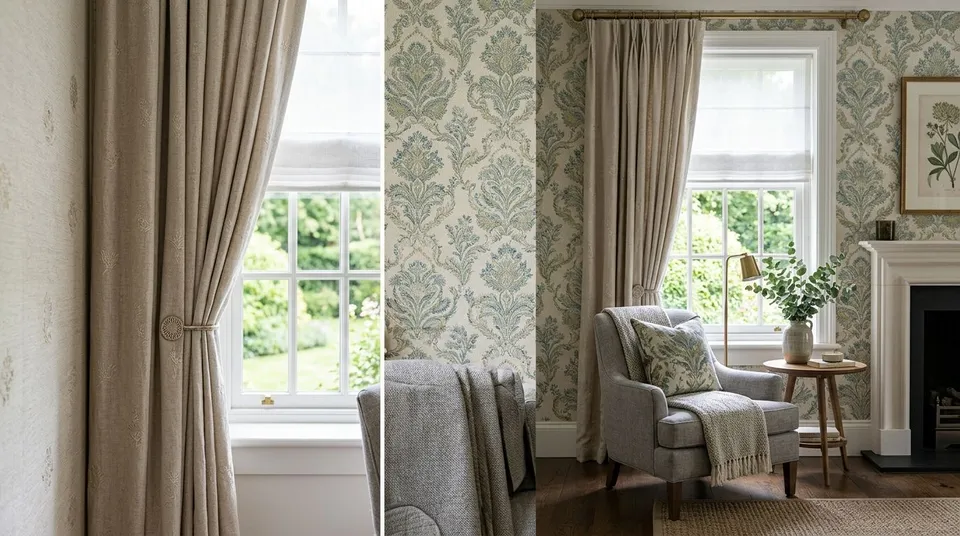
Homeowners installing designer wallpaper need window treatments chosen to match the pattern's scale, undertone, and glare before the paper goes on the wall, not picked afterward as an unrelated add-on. A papered room shows every seam and every drill mark, so the shade or drape either disappears into the print or acts as a deliberate contrast, and the hardware finish has to read correctly against metallic, grasscloth, or high-gloss paper.
- Wallpaper and window treatment pairing works best when shade color pulls from the paper's background tone, not its pattern.
- Roller shades and zebra shades read cleanest against bold prints because flat fabric doesn't compete with pattern folds.
- Drapery panels add contrast texture in papered rooms when the wallpaper itself is subtle or tonal.
- Rainier Blinds measures and installs custom shades and drapery across the Greater Seattle Area to match papered walls.
- Order wallpaper and fabric samples together in 2026, not separately, to catch undertone mismatches before installation.
Why wallpaper and window treatment pairing matters for this project
Designer wallpaper is a bigger commitment than paint. A bad pairing between the paper and the window treatment shows every day for years, not just until the next repaint. Homeowners searching for wallpaper and window treatment pairing advice in 2026 are usually mid-renovation, already committed to a specific paper, and trying to avoid a second expensive mistake on top of the first one.
The stakes are different from choosing shades for a plain wall. A custom drapery panel that looked right against a solid beige wall can clash instantly once a bold, large-scale wallpaper goes up behind it. Color, texture, and light control decisions on a papered wall are locked in for years, since repapering to fix a mismatch costs far more than repainting.
Pick the treatment style before you order wallpaper
Decide the shade or drape style while the wallpaper is still a sample, not after the crew hangs it.
- Walk the room and decide whether the window needs the pattern to visually continue behind it, which favors shades, or a clean break, which favors drapery
- Note whether the window is the room's focal point or secondary to a wallpaper accent wall
- Decide inside mount versus outside mount before ordering paper, since outside mount hardware sits directly over the pattern
- Confirm whether the wall behind the window gets papered too, since drapery hardware needs to anchor into structure, not into fresh paper
Match pattern scale to fabric weight
Scale mismatches are the most common visual failure in papered rooms, more common than color mismatches.
- Large-scale wallpaper prints with a 12 inch repeat or larger pair with solid-color shades, not busy patterned fabric
- Small-scale prints and grasscloth textures can carry a patterned roman shade without looking cluttered
- Pull one background color from the wallpaper for the shade fabric, not an accent color, so the eye has a resting point
- Hold the actual wallpaper sample against the fabric swatch in the room's daylight, not under store lighting, before ordering either
Choose light control based on the wallpaper's fade risk
Some wallpaper materials fade and yellow far faster than others once direct sun hits them daily.
- Grasscloth, silk, and hand-printed papers fade and discolor faster in direct sun than vinyl-coated wallpaper
- West-facing and south-facing rooms with sun-sensitive paper need a light-filtering or blackout liner behind the shade, not sheer fabric
- Rainier Blinds measures and installs custom cellular shades and blackout shades with liners built for daily UV exposure, which is the faster path once the DIY liner shopping gets complicated
- Papered rooms near skylights need shades that seal light gaps completely, since ambient glare accelerates fading even without direct sun
Coordinate hardware finish with the paper's metallics
Hardware is the detail homeowners forget until the crew is standing in the room with a drill.
- Match bracket and headrail finish to the wallpaper's metallic tone, brass paper with brass hardware, not mixed metals
- Choose a narrow headrail profile on papered walls so less hardware sits on top of the pattern
- Confirm valance or cornice color against the paper's dominant background, not its metallic accent
- Test hardware finish samples against the actual paper before drilling, since photos and screens shift metallic tones
Decide where drapery wins over shades
Drapery and shades solve different problems in a papered room, and picking wrong wastes the wallpaper investment.
- Use drapery panels when the wallpaper is the quiet backdrop and the fabric needs to carry the room's statement
- Use shades alone when the wallpaper is already bold and any added fabric pattern would compete with it
- Layer shades under drapery in living rooms, which is how most designers handle a bold accent wall without losing light control
- Rainier Blinds crews walk homeowners through layered shade and drapery combinations during a free in-home consultation, since photos rarely show how two fabrics sit together in real light
See the full breakdown in this guide on layering shades and drapery for living rooms before ordering either.
Order wallpaper and fabric samples together
Guessing at swatches separately, weeks apart, is the single most avoidable mistake in this whole process.
- Request the wallpaper sample and shade or drapery fabric swatch at the same time, from the same supplier visit if possible
- Pin both samples to the actual wall for at least 48 hours to see how they read morning and evening
- Check the samples against existing trim, flooring, and furniture in the room, not just against each other
- This guide on choosing fabric for custom roman shades covers weight and opacity choices that affect how a fabric reads against a printed wall
Time the installation sequence correctly
Installation order matters more in papered rooms than in painted ones, because paper is far less forgiving of drilling mistakes.
- Paper the walls first, then measure and install shades or drapery, never the reverse
- Wait the full manufacturer-recommended cure time on fresh wallpaper adhesive before drilling brackets nearby
- Schedule the measure appointment after wallpaper installation is confirmed, not while it's still tentative, since final wall dimensions can shift slightly with new paper
- Confirm bracket placement avoids seams in the wallpaper pattern, since a crooked bracket over a seam is visible from across the room
Comparing window treatment options for wallpapered rooms
| Option | Best for | Key limitation |
|---|---|---|
| Roller shades | Bold, large-scale wallpaper prints needing a flat, quiet backdrop | Limited texture, adds no contrast on its own |
| Zebra shades | Rooms wanting adjustable privacy without fully hiding the wallpaper when raised | Horizontal banding can compete with strong vertical wallpaper stripes |
| Roman shades | Subtle or tonal wallpaper where the shade can carry texture | Fabric folds show dust and pattern lines more than flat shades |
| Drapery panels | Rooms where wallpaper is the quiet backdrop and fabric adds the statement | Takes more wall space and needs full-height mount clearance |
| Cellular shades | Papered rooms with strong sun exposure and fade-prone paper | Fabric cell texture can clash with heavily patterned wallpaper |
| Woven wood roman shades | Textured or grasscloth wallpaper needing a natural material match | Limited color range compared to dyed fabric shades |
Roller shades and zebra shades win for bold wallpaper. Drapery panels win when the wallpaper is subtle and the room needs a fabric statement.
Common mistakes homeowners make pairing wallpaper and window treatments
- Ordering wallpaper first and shopping for shade fabric months later, missing the undertone match entirely
- Choosing outside-mount hardware after the paper is already up, leaving visible drill damage in the pattern
- Picking a shade color from a paint deck instead of pulling it from the actual wallpaper sample
- Ignoring UV fade risk on grasscloth or silk paper and installing sheer fabric with no liner behind it
- Hanging heavy drapery hardware without checking wall anchor points first, then chipping the paper during install in 2026 renovations
Get shades measured for papered walls
Free in-home consultation across the Greater Seattle Area.
FAQ
What's the best window treatment for busy wallpaper patterns?
Solid-color roller shades or zebra shades work best against busy, large-scale wallpaper because flat fabric adds no competing pattern. Reserve patterned roman shades for subtle or tonal wallpaper only.
Should shades match or contrast wallpaper?
Pull the shade color from the wallpaper's background tone so it matches, rather than matching the pattern's accent color. A contrasting drapery panel works only when the wallpaper itself is quiet and tonal.
Does wallpaper fade from sunlight through windows?
Yes, grasscloth, silk, and hand-printed wallpaper fade and yellow faster than vinyl-coated paper under direct sun. West and south-facing rooms need a light-filtering or blackout liner behind the shade to slow it down.
What mount type works best in papered rooms?
Inside mount is generally safer for papered walls because it keeps hardware off the pattern's surface. Outside mount works too, but bracket placement has to avoid wallpaper seams to look intentional.
Can drapery hang over wallpaper without damaging it?
Yes, as long as bracket anchor points land on structure rather than fresh adhesive, and the wallpaper's cure time has fully passed before drilling. Rushing this step is the most common cause of chipped paper during installation.
How do you match shade color to wallpaper?
Hold the actual wallpaper sample next to the fabric swatch in the room's real daylight, not under store lighting or on a screen. Pull from the paper's dominant background color, not its pattern accent.
Is a zebra shade good with striped wallpaper?
It can clash, since the shade's horizontal banding competes with strong vertical wallpaper stripes. A flat roller shade or a solid roman shade avoids that visual conflict.
How much light control do papered rooms need?
Rooms with sun-sensitive paper like grasscloth or silk need a light-filtering or blackout liner, not sheer fabric, to slow fading. Rooms with vinyl-coated wallpaper have more flexibility on opacity choice.
One last thing
Grasscloth and other natural-fiber wallpapers react to humidity swings common in Pacific Northwest homes, expanding and contracting slightly through the seasons. Order inside-mount shades with a little extra side clearance in papered rooms, so the shade never rubs the wall covering as it raises and lowers through a Seattle winter and summer. That single detail saves a wallpaper repair bill down the road.