Our available controls: Rainier Blinds offers Roman and woven wood shades with motorized operation only. Available controls and power options for other products are confirmed at your consultation.
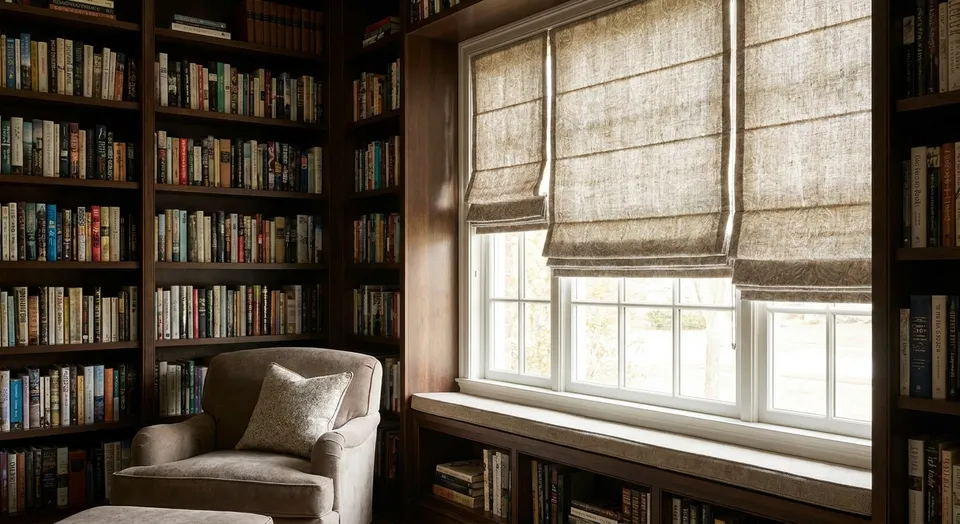
A home library window takes a beating from sun, dust, and constant temperature swings near bookshelves. And most stock shades weren't built with that room in mind. Custom Roman shades solve the specific problems a library throws at you: glare on reading surfaces, UV fade on spines, and a look that doesn't compete with built-in shelving.
- Fabric Roman shades with a light-filtering liner are the safest default for home libraries in 2026, Buy.
- Blackout-lined Roman shades protect book spines from UV fade better than roller shades. Buy for south-facing rooms.
- Woven wood Roman shades add texture that pairs well with wood shelving. Consider for reading nooks.
- Skip corded Roman shades in any library with a window seat or reading bench used by kids.
- Rainier Roman shades use motorized operation. Confirm controls and power before installation.
Why this matters
Book rooms have narrower tolerances than living rooms. Direct sun for 6-8 hours a day on a south- or west-facing window fades spines and warps paper over a few seasons, and a library with a reading chair or window seat needs a shade that won't dangle a cord near a curled-up kid or pet.
The fabric you pick for a Roman shade changes how much UV gets through, how the shade folds, and whether it reads formal or casual against your shelving, and that's before you even think about lift systems. Custom Roman shades for home libraries in 2026 need to be evaluated on light control, fold quality, and operating method, not just color.
Who this is for
This guide is for homeowners in the Auburn, Bellevue, Tacoma, or wider Seattle area with a dedicated library, reading room, or built-in-shelved den who want window treatments that protect books and look intentional rather than an afterthought roller shade bought at a big-box store. If your library doubles as a home office or a formal sitting room, the criteria below still apply, you're just weighing softness against durability differently.
What to look for in Roman shades for a home library
Light control and UV protection
A library's main enemy is sun, not privacy loss. Look for a fabric or liner rated for light-filtering or blackout performance. A sheer or basic light-filtering weave lets UV through that fades spines within a couple of years on a bright exposure. Blackout-lined Roman shades cut both glare on reading surfaces and long-term fading.
Fold structure and stack height
Roman shades fold flat or into soft waves depending on construction, and the stack height (how much fabric bunches at the top when raised) matters more in a library than a bedroom because it determines how much of a tall bookshelf window stays covered even when the shade is up. A poor stack can block 8-10 inches of a window permanently.
Cord safety near reading nooks
If the library has a window seat, daybed, or floor cushion where kids or pets curl up, a corded lift is a real hazard. Rainier Blinds offers Roman shades with motorized operation only. We confirm the motor, power option, and compatible controls for your windows during the consultation. Motorization avoids an exposed operating pull cord; follow the product safety instructions and keep climbable furniture away from windows.
Fabric weight versus shelving material
Heavy woven wood Roman shades look right against dark wood built-ins but can feel bulky in a smaller library. Lighter cotton-blend fabrics fold tighter and suit rooms with painted or white shelving. Match the shade's weight to your shelving finish, not just your wall color.
Mount type for deep window casings
Libraries often have deeper trim or window seats than living rooms, which changes whether an inside or outside mount looks cleaner and whether the shade clears book spines stacked on a sill. Get this measured before ordering, not guessed from a tape measure at the hardware store.
Motorization for hard-to-reach windows
Transom windows above bookshelves or windows behind a heavy desk are common in libraries, and a pull cord you can't physically reach defeats the point of a shade. Motorized lift on those specific windows solves an access problem stock shades can't.
Top picks for home library Roman shades
Fabric Roman shades with light-filtering liner, the safe default. A mid-weight cotton-blend fabric with a light-filtering liner cuts glare on a reading surface without going fully dark, which matters if you actually read in the room during the day. Verdict: Buy for east- or north-facing library windows where fading isn't the main concern.
Blackout-lined Roman shades. The UV-control pick. Full blackout lining behind a decorative face fabric blocks the sun that fades spines on south- and west-facing exposures, and it still looks like a soft shade rather than a hard blackout panel. A library that gets 6+ hours of direct afternoon sun should default here. Verdict: Buy.
Woven wood Roman shades, the textural pick. Bamboo or reed-woven material brings a natural texture that plays well against wood shelving and reads less formal than fabric. It's bulkier when raised, so measure stack height against your window trim first. Verdict: Consider if your library has wood built-ins and a taller window.
Motorized Roman shades. The seating-area option. Removing the cord entirely is the right call for any library with a window seat, daybed, or reading nook used by kids or pets. Rainier Roman shades are motorized only. Follow the product safety instructions even when operating cords are absent. Verdict: Buy if the room has seating under the window.
Motorized Roman shades, the access pick. For transom windows above shelving or windows blocked by a heavy desk, motorization solves a reach problem no manual lift fixes. It is the operating method used for all Rainier Roman shades. Verdict: Buy for hard-to-reach windows, Skip a manual Roman configuration, which Rainier does not offer.
Another option is pairing a Roman shade with drapery panels on either side softens a formal library and adds a second layer of light control for movie-night-dark reading sessions, a combination that works particularly well in rooms with tall, narrow windows flanked by shelving.
Get a quote for your library windows
Book an in-home consultation to compare samples and get a measured quote.
What to avoid in a home library
- Basic sheer or light-filtering-only fabric on a bright south exposure. It looks fine on day one and fades your book collection by year two or three.
- Corded lift systems near any seating area: even a library marketed as an adult-only space can have grandkids, pets, or a future occupant who didn't choose the cord.
- Undersized stack allowance on tall windows: a shade that eats 10 inches of window height when raised defeats the purpose of a floor-to-ceiling library window.
Verdict comparison
| Style | Light Control | Best For | Verdict |
|---|---|---|---|
| Fabric + light-filtering liner | Moderate | East/north-facing rooms, everyday reading | Buy |
| Blackout-lined fabric | High | South/west-facing rooms, fade-prone collections | Buy |
| Woven wood | Low-moderate | Wood built-ins, casual libraries | Consider |
| Motorized operation | Depends on fabric | Window seats, kids, pets | Buy |
| Motorized lift | Depends on fabric | Transom windows, blocked reach | Buy |
FAQ
Are Roman shades good for a home library?
Yes. Roman shades give a home library soft, tailored light control that suits built-in shelving better than hard blinds. Pair a blackout or light-filtering liner with the fabric to protect book spines from UV fade.
What's the best fabric for Roman shades in a library?
A mid-weight cotton-blend with a light-filtering or blackout liner is the best default for a library in 2026, since it controls glare without looking like a hard blackout panel. Heavier woven wood suits rooms with dark wood shelving.
Do Roman shades protect books from sun damage?
A blackout-lined Roman shade blocks the UV exposure that fades book spines on south- or west-facing windows getting 6 or more hours of direct sun daily. A basic light-filtering fabric alone offers less protection.
Are cordless Roman shades worth it for a library with a window seat?
Rainier Blinds offers Roman shades with motorized operation only. We confirm the motor, power option, and compatible controls for your windows during the consultation. Keep climbable furniture away from windows and follow the product safety instructions.
Should I motorize Roman shades in a home library?
Rainier Blinds offers Roman shades with motorized operation only. We confirm the motor, power option, and compatible controls for your windows during the consultation. Motorization is especially convenient above shelving or behind a desk.
Woven wood Roman shades or fabric Roman shades for a library?
Woven wood suits libraries with dark wood built-ins and a more casual feel, while fabric Roman shades fold tighter and fit formal rooms with painted shelving. Match the shade's weight to your shelving finish, not just wall color.
How much sun exposure is too much for a library window?
A window getting 6 to 8 hours of direct sun daily on a south- or west-facing exposure warrants a blackout-lined Roman shade over a basic light-filtering fabric. Less direct exposure on east- or north-facing windows can use lighter fabric.
One last thing
Stack height gets ignored more than any other spec on a library order, a shade that bunches 8-10 inches at the top of a tall bookcase window blocks light and view even fully raised, which defeats the entire point of putting a window next to your shelving in the first place. Measure the stack before you pick the fabric, not after.