
Our available controls: Rainier Blinds offers Roman and woven wood shades with motorized operation only. Available controls and power options for other products are confirmed at your consultation.
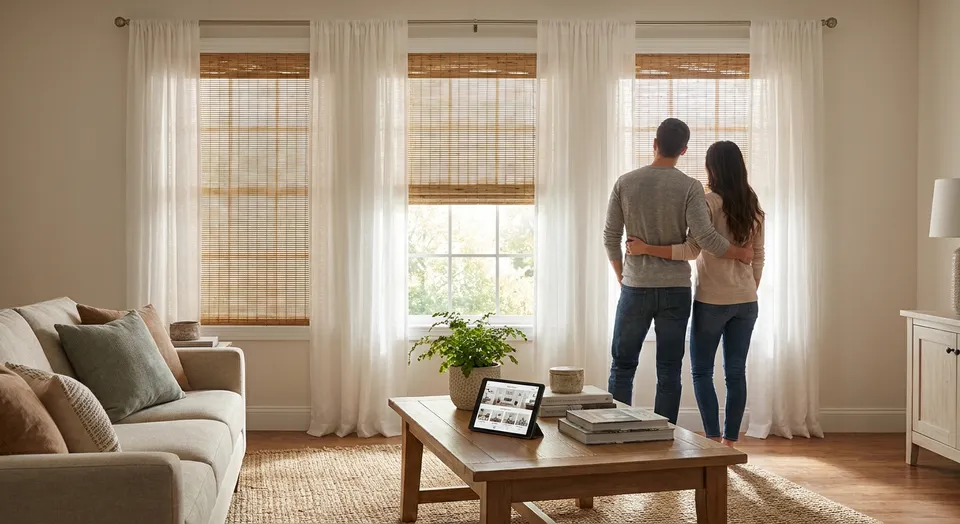
First-time homebuyers move in with bare windows, a tight closing-cost budget, and zero idea what actually fits their new place. This guide ranks the best window treatments for first-time homebuyers in 2026, from the safest cordless option to the one you should hold off on until the moving boxes are gone.
- The best window treatments for first-time homebuyers in 2026 are cordless cellular shades and roller shades, not corded stock blinds.
- Cellular shades can help with insulation; select controls appropriate for the household and follow the product safety instructions.
- Roller shades win on cost-per-window for open floor plans and oversized picture windows.
- Skip drapery and outdoor shades until year one is over - they're additions, not necessities.
- Blackout shades belong in the primary bedroom first, not the whole house, on a first-year budget.
Why this matters
Most new owners inherit bare glass. The previous tenant took their curtains, the stager's blinds went back to the rental company, and every window in the house is exposed to the street by week two.
Budget is the real constraint, not taste. How to budget for custom window treatments matters more in year one than any other stretch of homeownership, because the moving costs, inspection repairs, and furniture gaps are still eating the account.
Exposed window-covering cords can create a strangulation hazard. CPSC recommends cordless coverings where young children are present. Cordless controls avoid exposed operating pull cords. Follow the product safety instructions and keep beds, furniture, and other climbing objects away from windows.
How we ranked
Compare product suitability, complete project cost, confirmed timing, fit, controls, and appearance. These are practical selection considerations, not laboratory rankings or product-compliance certifications.
Starter homes in South King County tend to share traits: standard-height double-hungs, one or two oversized living-room windows, and at least one bedroom that needs to go fully dark. The rankings account for that mix rather than a custom estate home with arched or oversized openings.
The ranked list
1. Cordless Cellular Shades - the safety pick
The honeycomb structure traps air in two or more sealed pockets, which cuts heat transfer through the glass better than a flat fabric shade. That matters in a starter home with older single-pane or early dual-pane windows, which is common inventory in this price bracket in 2026.
Cordless cellular shades avoid exposed operating pull cords and can help reduce heat transfer at the window. Follow the product instructions and assess the complete installed product for your household.
2. Roller Shades - the workhorse
Flat fabric, minimal stack height, and the lowest cost-per-window of any custom option on this list. That makes them the right call for the windows that don't need a design statement - hallways, secondary bedrooms, home offices.
Roller shades also handle oversized picture windows better than pleated or cellular fabric, which can sag or lose shape at large widths. Buy.
3. Zebra Shades - the wildcard
Alternating opaque and sheer stripes, spaced roughly 2 inches apart, let one shade do the job of a day shade and a privacy shade. Slide the fabric layers and you go from full view to full privacy without buying two window treatments per window.
They cost more per window than a plain roller shade, and the mechanism has more moving parts to maintain. For a living room or dining room where light control changes throughout the day, they're worth the premium. For a spare bedroom, they're overkill. Consider.
4. Light-Filtering Roman Shades - the classic
Horizontal fabric folds read as more finished than a flat shade, which is why these show up in staging photos and resale listings more than any option on this list. The tradeoff is yardage cost - a roman shade uses more fabric per square foot than a roller or cellular shade, so the price per window climbs.
Save these for the room that actually gets seen - a dining room or formal living room - rather than every window in the house. Consider.
5. Blackout Shades for the Primary Bedroom - the sleep saver
Starter-home subdivisions built in the last decade tend to sit closer together, with more streetlight and neighbor-window bleed than an established lot with mature trees. A blackout shade in the primary bedroom solves that on day one.
Buying blackout fabric for every room in the house isn't a first-year priority - it's a bedroom fix, not a whole-house fix. Buy for the primary bedroom, skip elsewhere for now.
6. Drapery Panels - the finishing touch
Layering drapery over an existing shade adds softness and a finished look that pure hard treatments can't match, and it's a common move once the shade budget is already spent. It's an addition, not a replacement, and it's not the first purchase a new owner needs to make.
Wait until the shade budget across the main living spaces is done.
7. Outdoor Shades for Patios and Decks - the bonus round
Steel wire and zipper-track outdoor shades extend a patio into usable shoulder-season space, which is a real value-add in the Pacific Northwest. It's also the lowest-priority item on this list for anyone still furnishing the inside of the house.
Wait until interior windows are covered.
Get real pricing for your new place
Measure, quote, and install with one local crew - no online guesswork.
Comparison table
| Treatment | Best For | Light Control | Typical Room | Verdict |
|---|---|---|---|---|
| Cordless Cellular Shades | Insulation + safety | High | Bedrooms, living areas | Buy |
| Roller Shades | Low cost per window | Medium-High | Hallways, home offices | Buy |
| Zebra Shades | Flexible light control | Variable | Living, dining | Consider |
| Light-Filtering Roman Shades | Finished, resale-friendly look | Medium | Dining, formal living | Consider |
| Blackout Shades | Full dark, shift-friendly sleep | Full | Primary bedroom | Buy (bedroom only) |
| Drapery Panels | Layered, softer finish | Low (layer only) | Living rooms | Wait |
| Outdoor Shades | Patio and deck extension | Medium | Patios, decks | Wait |
Where to buy
- Don't order stock sizes for a starter home sight unseen. Many of these houses have window openings that are out of square by a quarter inch or more, and a stock roller shade off by that much leaves a visible gap on one side.
- Get one crew measuring and installing, not a middleman. A retailer that outsources install to a rotating subcontractor can't be held to the same standard as a company using its own crew for both the measure and the hang.
- Ask what's excluded before you buy. Faux wood, real wood, and aluminum blinds are common big-box defaults, but they don't hold up the same way in Pacific Northwest humidity and temperature swings as fabric roller, cellular, or zebra shades do.
Rainier Blinds measures, sells, and installs custom roller, cellular, zebra, roman, and blackout shades - plus drapery and outdoor shades - across Auburn, Bellevue, Tacoma, and the rest of the Greater Seattle Area, using its own installation crew rather than a subcontractor.
FAQ
What are the best window treatments for first-time homebuyers in 2026?
Cordless roller or cellular shades can be practical starting points for a first home. Select other styles room by room; Rainier Roman and woven wood shades are motorized only. Compare complete quotes rather than assuming one style is always cheapest.
Are cordless blinds required by law now?
Exposed window-covering cords can create a strangulation hazard. CPSC recommends cordless coverings where young children are present. Cordless controls avoid exposed operating pull cords. Follow the product safety instructions and keep beds, furniture, and other climbing objects away from windows.
Should I buy blackout shades for every room?
No - blackout shades make the most sense in the primary bedroom first, where full dark actually affects sleep quality. Living rooms and secondary bedrooms are better served by light-filtering roller or cellular shades on a first-year budget.
Do cellular shades really lower energy bills?
Cellular shades trap air in sealed honeycomb pockets, which reduces heat transfer through the glass more than a flat fabric shade. That effect is most noticeable in older starter homes with single-pane or early dual-pane windows still in place.
Are roller shades cheaper than roman shades?
Yes - roller shades use a flat panel of fabric and cost less per window than roman shades, which require more yardage for their folded construction. Roman shades cost more but read as more finished for staging and resale.
What window treatment works best for an oversized picture window?
Roller shades hold their shape better at large widths than pleated or cellular fabric, which can sag over wide spans. That makes them the practical pick for the single big living-room window common in starter-home floor plans.
Is drapery a good first purchase for a new house?
Drapery works best as a layer over an existing shade rather than a standalone treatment, so it's better as a second purchase once the main shade budget is spent. Prioritize hard treatments on every window before adding fabric panels.
Do faux wood or aluminum blinds work for Pacific Northwest starter homes?
Faux wood, real wood, and aluminum blinds are common in big-box stores but don't hold up as consistently to Pacific Northwest humidity and temperature swings as fabric roller, cellular, or zebra shades. Fabric-based custom shades are the more durable choice for this climate.
One last thing
The detail most first-time buyers miss: a starter home's window openings are rarely perfectly square, especially in older subdivisions across South King County, and a quarter-inch of drift is enough to leave a visible gap on a stock-sized shade. A measured, custom-cut shade closes that gap on install day instead of six months later when the light leak finally gets annoying.