
Our available controls: Rainier Blinds offers Roman and woven wood shades with motorized operation only. Available controls and power options for other products are confirmed at your consultation.
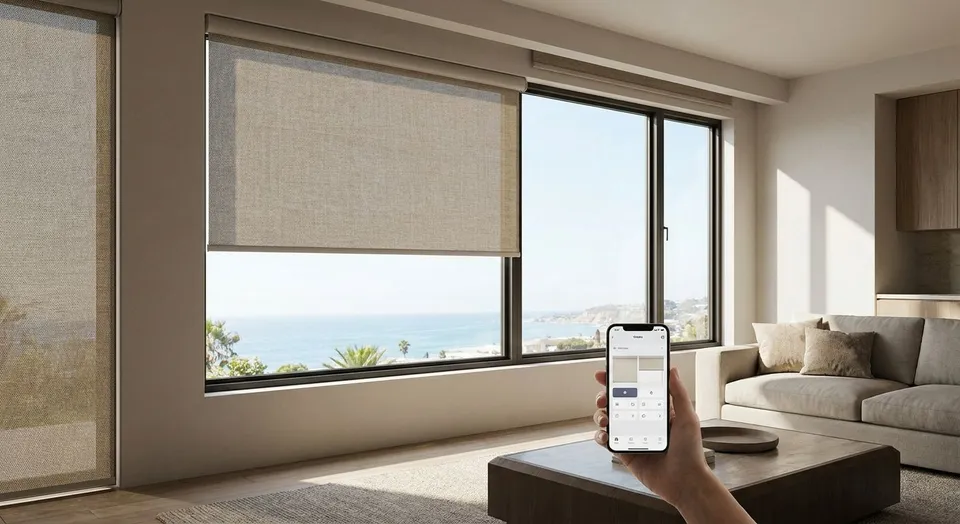
A vacation home sits empty more days than it's occupied, which means the window shades you pick have to work without you checking on them every week. This guide breaks down what actually matters for smart shades for vacation homes in 2026, and what looks good in a showroom but fails at a lake cabin or a second home three hours from where you live full time.
- Motorized roller shades with hardwired power beat battery-only systems for smart shades for vacation homes left unoccupied 6+ months a year - Buy.
- Cellular shades hold indoor temperature swings better than roller fabric alone in cabins without year-round heat - Buy for shoulder-season properties.
- Skip WiFi-hub-dependent shade systems if the property's internet gets shut off between visits - the shades go dark with the router.
- Battery life and charging time depend on the selected motor, shade size, and use. Confirm the approved power option, charger, charging access, and maintenance instructions before ordering; wired products also need service access. Compatibility, controller or hub requirements, and available controls depend on the exact motor and your home setup. We confirm the supported equipment and features before ordering.
Why this matters
A vacation or second home doesn't get the daily attention a primary residence does. Nobody's there to notice a shade stuck half-open, a dead battery wand, or a fabric that's mildewed from a humid off-season. Lake cabin and boathouse windows take the brunt of this - sun exposure on the water, moisture swings, and long stretches with the thermostat set low or off.
Security matters too. A home that looks occupied - shades moving on a schedule, lights syncing - is a home burglars skip. A home with the same shade position for four months straight is an invitation. The right smart shade setup solves both problems at once: it protects the fabric and the furniture inside, and it makes the house look lived-in when it isn't.
Who this is for
This guide is for owners of a second home, lake cabin, ski property, or coastal getaway who visit a handful of times a year and want the shades to run themselves in between. It's also useful if the property doubles as a short-term rental, where guests need simple controls and you need the shades to reset automatically between stays.
What to look for in smart shades for vacation homes
Power source that survives long vacancies
Battery life and charging time depend on the selected motor, shade size, and use. Confirm the approved power option, charger, charging access, and maintenance instructions before ordering; wired products also need service access. Compatibility, controller or hub requirements, and available controls depend on the exact motor and your home setup. We confirm the supported equipment and features before ordering.
Connectivity that doesn't depend on a live internet plan
Many owners shut off internet service at a second home between visits to save money. If your shades run through a hub that needs an active WiFi connection to hold its schedule, that schedule dies the day the router loses power. Systems that keep a local schedule on the motor itself, independent of the hub, hold up better. Pairing motorized shades with a smart home hub is worth reading before you commit to any single ecosystem.
Scheduling that mimics an occupied home
A shade that opens and closes on the exact same schedule every single day starts to look automated fast. Look for a system that lets you vary the timing every two to three days, not just set-and-forget one time slot.
Fabric that tolerates humidity and temperature swings
A cabin with no heat running for weeks at a time gets condensation on the glass. Woven and natural-fiber fabrics can absorb that moisture and mildew. Vinyl-coated roller fabrics and closed-cell cellular shades handle the swing better and don't need constant airflow to stay clean.
Local install and service reach
A smart shade that breaks while you're three hours away is a shade that stays broken until your next visit, unless someone local can get to it. That's a bigger deal for a vacation property than for a primary residence where you can wait around for a tech.
Whole-house grouping in one app
If the property has 10+ windows, you don't want to tap through them one at a time when you're heading out the door. Group scenes - "away," "arrival," "evening" - matter more here than at a house you're in every day.
Top picks for vacation and second homes
Motorized roller shades - the low-maintenance workhorse. Roller fabric sheds moisture better than woven materials and the motor housing is sealed against dust that builds up in a closed-up house. Motorized roller shades for South King County homeowners covers the hub and app options that hold a schedule without a live internet connection. Verdict: Buy for main living areas and large picture windows.
Cellular shades - the insulation play. A honeycomb structure traps air and slows heat loss through the glass, which matters in a cabin that sits at 50 degrees for weeks between visits. They're a better fit for bedrooms and smaller windows than for a wall of glass facing a lake. Verdict: Buy for properties without year-round heat.
An exterior-rated shade can help with sun and glare. Select the exact system for the opening, mounting structure, and exposure. Follow its documented wind limits and retraction instructions; neither cable guides nor zipper tracks guarantee protection from wind, rain, or storms.
Zebra shades - the guest room compromise. Alternating sheer and solid bands give light control without full blackout, which works fine for a guest bedroom that's used occasionally. They're a weaker pick for a primary bedroom where you want the room fully dark on arrival night. Verdict: Consider for secondary bedrooms only.
Blackout roman shades - skip for most vacation setups. They look sharp, but the folded fabric stack traps dust and moisture in a house that sits closed for months, and the stack marks show up faster than they would in a home that gets opened and aired out weekly. Verdict: Skip, unless the room gets regular airflow between visits.
What to avoid
- Hub-only smart systems with no local schedule memory. If the hub loses power or the internet gets cut, the shades freeze in whatever position they were left in - not the position you want a stranger looking in the window to see.
- Battery motors in full-sun, south- or west-facing rooms with no solar charging option. The charge drains faster under heavy sun-driven cycling, and a dead battery between visits defeats the whole point of automation.
- DIY plug-and-play kits sized for standard windows. Cabins and older second homes often have out-of-square frames or non-standard widths, and a kit shade that doesn't seal the sides lets in more light and moisture than a measured, installed shade.
Get shades measured for your second home
In-house crew handles measuring and install across the Greater Seattle Area.
Verdict comparison
| Product | Power reliability | Humidity tolerance | Best use | Verdict |
|---|---|---|---|---|
| Motorized roller shades | High (hardwired option) | High | Living rooms, large windows | Buy |
| Cellular shades | Medium (battery common) | High | Cabins without year-round heat | Buy |
| Outdoor zipper track shades | High (hardwired) | High (outdoor rated) | Decks, covered patios | Consider |
| Zebra shades | Medium | Medium | Secondary bedrooms | Consider |
| Blackout roman shades | Medium | Low | Rooms with regular airflow only | Skip |
FAQ
What are the best smart shades for vacation homes in 2026?
Hardwired motorized roller shades are the best smart shades for vacation homes in 2026 because they don't depend on a battery charge cycle during long vacancies. Cellular shades are the better pick for properties without year-round heat.
Do smart shades work without home WiFi?
Some smart shade motors hold a schedule locally and keep running even if the home's internet is shut off, while hub-dependent systems freeze once WiFi drops. Ask specifically about local schedule memory before buying for a property where you cut internet service between visits.
How long do battery-powered shade motors last between visits?
Battery life and charging time depend on the selected motor, shade size, and use. Confirm the approved power option, charger, charging access, and maintenance instructions before ordering; wired products also need service access. Compatibility, controller or hub requirements, and available controls depend on the exact motor and your home setup. We confirm the supported equipment and features before ordering.
Are motorized shades worth it for a second home?
Yes, motorized shades are worth it for a second home because they make the property look occupied on a varying schedule and protect fabric and flooring from sun during long vacancies. The upfront cost is higher than manual shades, but the security and maintenance payoff shows up over multiple unattended months.
Can smart shades prevent break-ins at an empty vacation home?
Smart shades alone don't prevent break-ins, but a schedule that varies shade position every two to three days makes a home look actively occupied. Pairing shades with other smart home signals - lights, a doorbell camera - strengthens that effect.
What shades hold up best in a humid, unheated cabin?
Vinyl-coated roller fabric and closed-cell cellular shades hold up best in a humid, unheated cabin because they resist absorbing moisture the way woven or natural-fiber fabrics do. Roman shades with folded fabric stacks are the weakest choice for a space that sits closed for weeks.
Do outdoor shades protect a deck when nobody's using the vacation home?
An exterior-rated shade can help with sun and glare. Select the exact system for the opening, mounting structure, and exposure. Follow its documented wind limits and retraction instructions; neither cable guides nor zipper tracks guarantee protection from wind, rain, or storms.
Should a short-term rental use the same smart shades as a full-time second home?
A short-term rental benefits from simpler app controls guests can use without training, while an owner-only second home can run a more complex varying schedule. Both should avoid hub-only systems that lose their schedule when internet service gets interrupted between guests.
One last thing
The detail most owners miss isn't the shade fabric or the motor brand - it's the schedule variation. A smart shade set to open at 8am and close at 6pm every single day for six months looks more automated, not less, than a house with nobody home. Vary the times every two to three days and the house reads as occupied instead of running on a timer.