
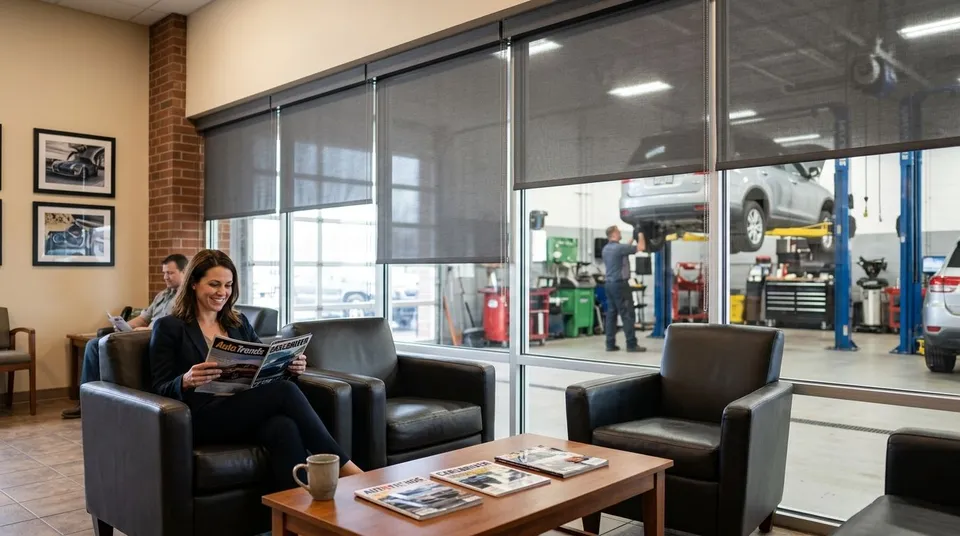
Motorized shades for auto repair shop waiting rooms need to block glare on the TV, cut afternoon heat through the storefront glass, and hold up to customers who touch the wall switch with grease on their hands more often than they touch the fabric itself. A waiting room isn't a living room: it takes more daily light-cycles, more foot traffic, and more abuse than a residential window ever will.
The difference from a home installation comes down to three things: duty cycle, cleanability, and glare control aimed at a screen instead of a couch. A shop that runs shades up and down dozens of times a week needs a motor rated for commercial use, not a battery unit built for a bedroom. Rainier Blinds measures and installs custom motorized shades across the Greater Seattle Area, and the same glare and heat problems that show up in car dealership showrooms apply almost line for line to a repair shop's front-of-house space.
- Motorized shades for auto repair shops win on glare control for waiting-room TVs and check-in tablets, not just privacy.
- Solar and light-filtering roller shades outperform blackout fabric here because the space still needs daylight during business hours.
- Cellular shades add insulation value for shops with west-facing glass that overheats by early afternoon.
- Corded shades are a liability risk in high-traffic commercial waiting areas; motorized or cordless is the safer call for 2026 installs.
- App scheduling tied to shop open/close hours removes the need for staff to raise and lower shades manually every day.
Why motorized shades matter for auto repair shops
A repair shop waiting room usually faces the street or the service bay, both of which mean direct sun for a chunk of the day. Customers sit there for 20 minutes to two hours waiting on an oil change or a diagnostic, and most of that time is spent looking at a TV or a phone. Glare on the screen turns a mildly boring wait into an actively annoying one, and that's the kind of detail that shows up in a Google review.
Front-of-house glass in a shop also takes more abuse than a home window. Dust from the service bay, fingerprints from customers who just handed over keys, and constant opening of the front door all add wear that a fabric shade in a house never sees. Motorized shades solve the touch problem directly — nobody needs to grab the shade itself to raise or lower it, which matters when hands aren't always clean.
Update your window assessment before you shop
Start with the windows themselves, not the fabric catalog. A shop with a single street-facing storefront window has different needs than one with a wall of glass next to the service bay doors.
- Note which windows face west or south — those get the worst afternoon glare
- Measure width and height of every window and glass door in the waiting area separately
- Check for glass doors that need shades that clear door swing
- Flag any window near a TV mount or check-in counter for glare-specific fabric
- Look for drafts near older storefront glass that point toward an insulation need
Choose a fabric built for glare, not blackout
A waiting room needs daylight during business hours, so full blackout is usually the wrong call here — it's better suited to a bedroom or a media room. Light-filtering and solar fabrics let daylight in while cutting the harsh glare that fights with a wall-mounted TV.
- Solar shades with a low openness percentage cut UV and glare while keeping a view of the parking lot
- Light-filtering roller shades soften daylight without making the room feel closed off
- Dual/day-night shades let front-desk staff switch between privacy and visibility depending on the hour
- Zebra shades give a similar day/night toggle in a banded fabric look
- Avoid full blackout fabric unless the TV wall gets direct sun most of the day
Decide between manual and motorized operation
Manual shades work fine in a small single-window waiting area with one or two shades total. Once you're covering a storefront wall or multiple glass doors, manual raising and lowering becomes a staff chore that gets skipped.
- Manual chain-loop shades: lowest cost tier, fine for a single small window
- Motorized shades on a wall switch: no cords near customers, consistent daily operation
- App-controlled motorized shades: schedule raise/lower to match opening and closing hours
- Voice or hub-paired smart shades: useful if the front desk already runs on a tablet or smart display
- This is where a shop moves from a residential-grade fix to a commercial-grade one — Rainier Blinds' crew measures and installs the motorized tier in-house rather than subcontracting the job out
Add scheduling so shades run themselves
A repair shop opens and closes on a fixed schedule most weeks, which makes shade scheduling one of the easier automations to set up correctly the first time.
- Set shades to lower automatically 30-60 minutes before peak afternoon sun
- Program a full-open schedule for opening time so the waiting room reads as bright, not closed off
- Use a single schedule across all waiting-room windows so the room looks consistent
- Review the schedule seasonally since sun angle shifts from summer to winter in the Pacific Northwest
- Full setup steps are covered in how to program motorized window shades if staff will manage settings themselves
Plan for high-traffic durability and easy cleaning
A waiting room shade gets touched, bumped, and occasionally splashed with coffee more than almost any shade in a private home. Durability and cleanability matter more here than pattern or color.
- Pick fabrics rated for commercial wear over decorative residential-grade fabric
- Avoid corded lift systems in a public waiting area — they're a snag and safety liability with kids or pets occasionally in tow
- Choose a fabric that wipes clean rather than one that needs vacuuming
- Mount shades where the crank or motor housing sits out of reach of casual bumping
- Confirm the motor is rated for daily commercial-cycle use, not a light residential duty cycle
Match the shade tier to your shop's actual traffic
A one-bay shop with a single storefront window doesn't need the same setup as a five-bay operation with a wall of street-facing glass. Matching tier to traffic keeps the install proportional to the actual problem.
| Option | Best for | Key limitation |
|---|---|---|
| Manual roller shades | Single small window, low traffic | Staff has to raise/lower them by hand daily |
| Motorized roller shades | Storefront walls, multiple windows | Needs a power source or battery pack per shade |
| App-controlled smart shades | Shops that want scheduled open/close | Requires a stable Wi-Fi connection at the install site |
| Cellular shades (motorized) | West-facing glass with heat buildup | Less of a full view-through than a solar roller shade |
| Zebra/day-night shades | Rooms needing privacy and visibility on a toggle | More moving parts than a single-fabric roller shade |
Verdict: for most auto repair shop waiting rooms, motorized solar or light-filtering roller shades are the right default — they cut glare on the TV, keep the room from feeling closed off during business hours, and hold up to daily commercial-cycle use better than a manual chain-loop shade.
Get a shop measurement and quote
Rainier Blinds measures and installs on-site across the Greater Seattle Area.
Common mistakes auto repair shops make
- Choosing full blackout fabric for the whole waiting room. It kills the daylight a front-of-house space needs during business hours and makes the room feel like a closet.
- Ignoring dust and grease exposure near the service bay entrance. Fabric that isn't rated for wipe-down cleaning stains fast in a shop environment.
- Installing corded shades in a public area. Cords near a customer walkway are a snag hazard that a commercial insurer will flag.
- Skipping the scheduling step after motorizing. A motor with no schedule set still needs someone to press a button, which defeats the point of upgrading.
- Copying a residential fabric choice from a showroom sample. A sample built for a living room isn't built for eight-hour daily sun exposure and constant foot traffic.
A well-run comparison of retail-facing glass problems, including glare and fading on merchandise or equipment near the window, shows up in commercial window treatments for retail storefronts — the fabric logic carries over directly to a shop's front glass.
FAQ
What's the best window treatment for an auto repair shop waiting room?
Motorized light-filtering or solar roller shades work best for most auto repair shop waiting rooms in 2026 because they cut TV glare and afternoon heat without blocking daylight entirely. Full blackout fabric is usually the wrong choice for a space that needs to stay bright during business hours.
Should shades in a commercial waiting room be motorized or manual?
Motorized is the better call for any waiting room with more than one or two windows, since staff won't reliably raise and lower manual shades every day. Motorized also removes cords from a public walkway, which lowers snag risk.
Do motorized shades help with glare on a waiting room TV?
Yes, a solar or light-filtering fabric positioned to cut direct sun on the screen reduces glare without darkening the whole room. This matters most on west-facing storefront glass in the early afternoon.
Can motorized shades run on a schedule tied to shop hours?
Yes, app-controlled motorized shades can be set to open at opening time and lower before peak afternoon sun automatically. This removes the daily manual step entirely once it's configured.
Are cellular shades a good fit for a shop with west-facing glass?
Cellular shades add insulation value that helps with heat buildup on west-facing storefront glass, though they give less of a see-through view than a solar roller shade. They're a strong pick when heat, not just glare, is the main complaint.
What fabric holds up best to daily customer traffic in a commercial waiting room?
Commercial-grade solar and light-filtering fabrics rated for wipe-down cleaning hold up better than decorative residential-grade fabric in a high-traffic waiting room. Avoid delicate textures that show fingerprints or grease easily.
Does Rainier Blinds install motorized shades for commercial spaces like auto repair shops?
Rainier Blinds measures and installs custom motorized shades for commercial and residential spaces across the Greater Seattle Area, using its own measure-and-install crew rather than a subcontractor. Consultations happen on-site.
Are smart shades that connect to Google Home or Alexa worth it for a shop?
Smart shade integration is useful mainly if the front desk already runs on a connected tablet or smart display for scheduling and hours. For a simple schedule tied to open/close times, a standard app-controlled motor covers most shops without the added hub setup.
One last thing
The detail most shops miss isn't the fabric, it's the mount depth: a storefront window with a deep sill can take an inside mount that hides the hardware completely, while a shallow-frame glass door usually needs an outside mount to clear the door swing. Getting that measurement wrong is the single most common reason a commercial shade install gets redone within the first year.