
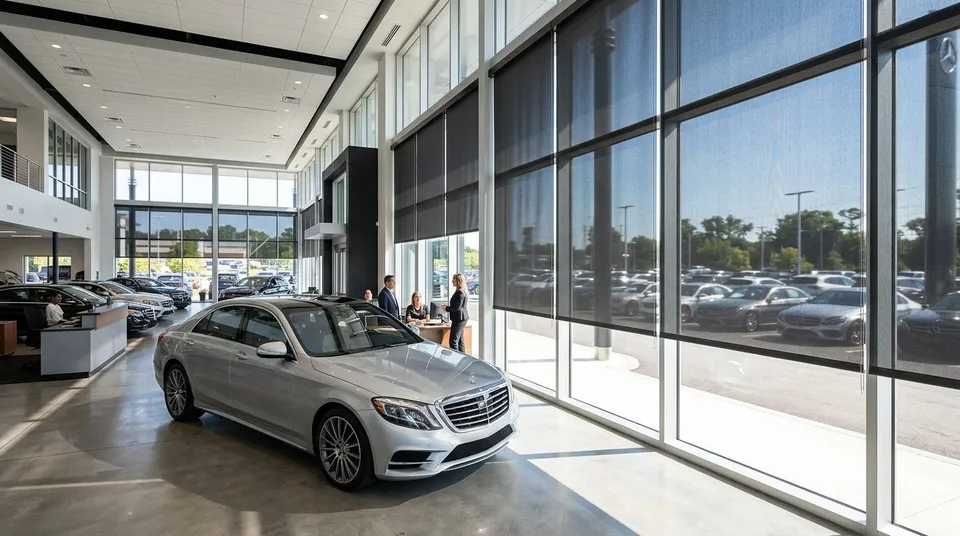
Car dealership showrooms need solar shades that cut windshield glare and heat off the sales floor without hiding the vehicles from the street. That single requirement, visibility from the road plus comfort inside, is what separates a showroom job from a standard home installation, and it changes which shade fabric, opacity, and operation tier actually work.
- Solar shades for car dealership showrooms work best at 1% to 5% openness, low enough to cut glare but high enough to keep vehicles visible from the road.
- Motorized solar roller shades are the practical choice for floor-to-ceiling glass walls and clerestory windows staff cannot reach with a wand.
- Manual shades still make sense for a single small bay window that gets sun for only part of the day.
- Rainier Blinds measures and installs solar shades across the Greater Seattle Area including Auburn, Bellevue, and Tacoma with its own crew, not a subcontractor.
- UV fade on showroom floors and vehicle interiors is a cheaper fix with shades than refinishing damaged displays.
Why solar shades matter for car dealership showrooms
A showroom's whole sales pitch depends on glass. Floor-to-ceiling windows sell the cars parked behind them, which means you cannot black out the afternoon sun the way an office or a bedroom would. Commercial window treatments for retail storefronts face the same tension between street visibility and interior comfort, and dealerships hit it harder because the glass runs floor to ceiling and display vehicles sit directly in the sun path.
West and south facing bays get the worst of it in 2026, with afternoon glare washing out digital price displays and heating the concrete floor enough that customers avoid standing near the windows. A solar screen at low openness solves both problems at once: it scatters direct sun before it reaches the floor, but it does not turn the storefront into a wall.
Solar shades at 1% to 5% openness cut glare and heat on a dealership floor while keeping the vehicles visible from the parking lot. That is the line to hold when picking fabric density for a showroom, and it is the detail most often missed when a dealership buys off a big-box shelf instead of getting a measured, site-specific recommendation.
What makes a showroom different from a home installation
- Glass runs floor to ceiling or wraps a full bay, not a single window
- The space stays occupied and lit during business hours, so glare control cannot mean closing the shades
- Vehicle paint, leather, and dash plastics fade under UV the same way carpet and furniture do at home
- Clerestory windows and high glass walls are often out of reach for a manual wand
- Staff need the shades to look intentional, since the showroom is also the sales floor
How to choose solar shades for a car dealership showroom
Measure your glass exposure bay by bay
Start with the sun path, not the floor plan. A dealership with west-facing and south-facing bays can need two different openness percentages on the same building.
- Walk the showroom at midday and again in late afternoon, noting which bays get direct glare
- Check for reflected glare off parked vehicles' glass and chrome, which doubles the problem in some bays
- Note ceiling height per bay, since taller glass changes shade weight and headrail requirements
- Flag clerestory or transom glass above the main sightline separately, since it usually needs its own control
- Record which bays face the customer parking lot, since those need to stay the most visible
Log the actual heat and glare problem before buying anything
Do not guess at which bays need shades. A short log tells you where the money should go.
- Note the time of day glare hits digital displays or the sales desk hardest
- Track floor temperature near the glass with a basic thermometer during peak sun hours
- Ask sales staff which bays customers avoid standing near in the afternoon
- Photograph any visible fading on floor finish, signage, or parked display vehicles
- Compare morning versus afternoon comfort if the showroom has both east and west glass
Pick an openness percentage that keeps the cars visible
This step makes or breaks a dealership solar shade job. Too low and the showroom looks closed off from the road. Too high and it does nothing for glare.
- 1% to 3% openness for bays facing direct west or south sun, where glare is the main complaint
- 3% to 5% openness for bays with moderate exposure that still need through-visibility
- 5% to 10% openness only where heat matters more than street visibility
- Darker screen colors cut more glare at the same openness percentage than light colors
- Test a fabric sample against the actual glass before committing to a full building order
Protect vehicle finishes and interior fade
UV exposure fades vehicle interiors, dash plastics, and showroom floor finish the same way it fades furniture at home. Rotating which vehicles sit closest to the glass buys time, but it does not stop the exposure. The same logic drives the fabric choices in preventing furniture and flooring fade.
- Rotate display vehicles away from the highest-glare bays on a set schedule
- Prioritize solar shade installation on bays holding your highest-value inventory first
- Track fade on floor finish near the glass as an early warning sign for other bays
- Get the worst-exposure bays measured and installed before peak summer sun in 2026
Decide on manual, motorized, or smart operation
Every solar shade Rainier Blinds installs comes in three operation tiers, and the right one depends on how the glass is used, not just its size.
- Manual shades work for a single small bay window that needs adjusting once a day
- Motorized shades are the call for floor-to-ceiling glass walls staff cannot reach with a wand
- Smart shades add scheduled operation, useful for a showroom that wants shades open at opening and closed before peak afternoon glare
- Motorized and smart tiers need a power source near the headrail, so plan for it before installation day
- Battery-powered motorized options exist for bays where running new wiring is not practical
Plan for large glass walls and clerestory windows
Tall glass and hard-to-reach transom windows are where dealerships most often skip shades entirely, because a standard wand system cannot reach them. Motorized shades for large picture windows solve the reach problem the same way in a showroom as in a residential great room.
- Measure clerestory glass separately from the main bay glass, since it often needs a different headrail
- Group motorized shades by bay so staff are not managing a dozen individual units
- Confirm ceiling mount depth before ordering, since floor-to-ceiling glass sometimes limits headrail placement
- Ask about concealed wiring if exposed cords near a customer-facing wall are a concern
Schedule installation around dealership hours
A showroom cannot shut down for a measure-and-install visit the way a house can.
- Book the measure during a slower weekday, not a weekend when foot traffic peaks
- Stage installation bay by bay so the rest of the showroom stays open
- Confirm lead time on custom fabric before tying a launch date to a sale event
- Ask the installer to work around vehicle deliveries already on the calendar
Maintain solar shades in a high-traffic commercial space
Showroom shades take more dust and more hands-on contact than a home installation.
- Wipe fabric down monthly with a dry microfiber cloth to keep dust out of the screen weave
- Check motorized shade batteries or power connections quarterly if the bay sees daily use
- Inspect headrail brackets on tall glass annually, since door traffic vibration can loosen mounts
- Keep spare remotes or app credentials with facilities staff, not just the original installer
Comparison: solar shade options for showroom glass
| Option | Best for | Key limitation |
|---|---|---|
| Manual solar roller shades | A single small bay window adjusted once a day | Staff must reset it by hand as the sun moves |
| Motorized solar roller shades | Floor-to-ceiling walls and clerestory glass out of wand reach | Needs power near the headrail |
| Smart solar roller shades | Multi-bay showrooms that want shades on a schedule | Needs a hub or app tied to the dealership network |
| Window tint film | A fast fix on one bad exposure | Fixed opacity, no way to open the view back up |
Verdict: for most dealership showrooms, motorized solar roller shades at 1% to 5% openness are the right call, with manual shades reserved for a single low-traffic bay.
Common mistakes dealerships make with showroom shades
- Choosing too high an openness percentage. A 10% openness screen still lets enough glare through to wash out a digital price display, and it reads as a residential fabric choice on a commercial glass wall.
- Skipping motorization on tall glass. A manual wand on 12-foot glass either does not reach or looks bolted on after the fact.
- Treating every bay the same. A west-facing bay and a north-facing bay do not need the same fabric density, and one spec for the whole building wastes money on bays that never had a glare problem.
- Waiting out the lead time without rotating inventory. Fade damage keeps happening on high-value vehicles parked in the worst bay while the order is in production.
- Scheduling installation during peak showroom hours. A weekend measure-and-install visit disrupts the exact foot traffic the glass wall exists to attract.
Get your showroom bays measured
Free in-home consultation across Auburn, Bellevue, Tacoma and the Greater Seattle Area.
FAQ
What openness percentage is best for solar shades for car dealership showrooms?
1% to 5% openness works for most showroom bays in 2026, low enough to cut glare and heat but high enough to keep vehicles visible from the road. West and south-facing bays with direct afternoon sun should stay closer to the 1% to 3% range.
Do solar shades block the view of vehicles from the street?
No, not at the openness percentages used for showrooms. A 1% to 5% screen scatters direct sun while still letting people see through the fabric from outside, which is why it beats blackout fabric for dealership glass.
Should showroom solar shades be motorized?
Motorized is the practical choice for floor-to-ceiling glass walls and clerestory windows a manual wand cannot reach. A single small bay window that needs adjusting once a day can stay manual.
Do solar shades prevent fading on vehicle interiors?
Solar screen fabric blocks UV that causes fading on dash plastics, leather, and showroom floor finish. It will not undo existing fade, so the bays with the worst glare should get shades first.
Can solar shades be installed without closing the showroom?
Yes, installation is typically staged bay by bay so the rest of the showroom stays open. Scheduling the measure visit on a slower weekday rather than a weekend keeps disruption minimal.
What is the difference between solar shades and window tint film for a showroom?
Window tint film is permanent and has one fixed opacity, while solar roller shades can be raised, lowered, or scheduled by time of day. Tint works as a fast stopgap on one bad bay, but shades give more control long term.
How do smart solar shades work in a showroom?
Smart solar shades operate on a schedule or by app, so a multi-bay showroom can close shades automatically before peak afternoon glare and reopen them at opening. They need a hub or app connection tied to the building network.
Who installs solar shades for commercial showrooms in the Seattle area?
Rainier Blinds measures and installs solar shades across the Greater Seattle Area, including Auburn, Bellevue, and Tacoma, using its own crew rather than a subcontractor. Quotes happen at a free in-home consultation.
One last thing
The bay skipped most often on a dealership shade order is the clerestory glass above the main sightline, the strip of window nobody thinks about because it sits above eye level. It is also usually the hottest glass in the building by mid-afternoon in 2026, since it catches direct sun longer than the lower bays shaded by neighboring buildings. Measure it separately and give it its own motorized control instead of leaving it off the order.