The best solar shade for protecting a favorite rug or sofa depends on the light reaching it and the fabric you select. Start with a room where direct sun lands on furnishings, then compare samples and documented performance. The options below are ordered by what to evaluate first, rather than ranked by unsupported UV percentages.
- Check the exact fabric's tested UV and light-transmission data.
- Openness describes the weave; it is not a universal UV-blocking rating.
- Consider an opaque second layer when you want to reduce daylight further.
- Choose controls that make the shade easy to use when the room receives direct sun.
1. Start with a solar fabric you can evaluate
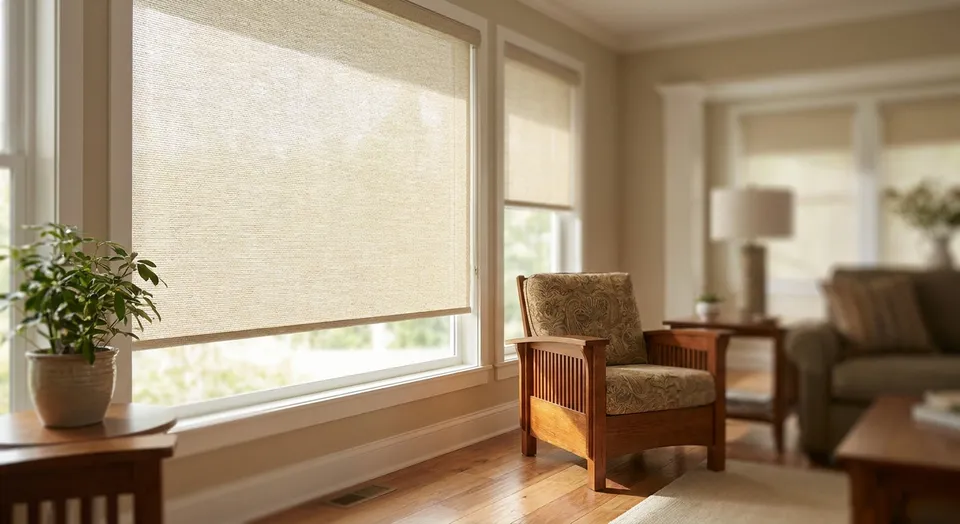
A solar screen can soften glare while retaining some view through the window. Compare its appearance from your usual seat, the light reaching the furnishings, and the manufacturer's data for the specific color and weave. A product name or openness percentage alone is not a complete performance specification.
For a room with a view, sample more than one fabric. Decide how much outward visibility you want to retain and how much daylight you are comfortable reducing. A denser-looking sample may suit one window but feel too closed on another.
2. Add an opaque layer when the room needs it
A dual-shade arrangement or suitable drapery can provide an additional way to reduce incoming light. This can be useful in a living room that needs an outward view during part of the day and stronger coverage when direct sun reaches the furniture.
Check the mounting depth, overlap, and space needed for both treatments. Light can still enter around an uncovered edge. An opaque layer also changes the view and brightness of the room, so try the effect before committing to the whole room.
3. Consider motorized controls for hard-to-reach windows
A shade is useful only when it is positioned for the conditions you want to manage. Motorization can make adjustment easier on tall windows or several windows in one room. Where the selected system supports scheduling, a routine can help with regular use.
Confirm the motor, available controls, required equipment, and charging or power access before ordering. Check any schedule against the actual sunlight in the room as seasons change; automation does not guarantee that a shade will always be in the right position.
Understand what fade protection means
Reducing UV exposure is only part of the picture. Visible light can also fade sensitive materials, and damage depends on both exposure and the material. The Canadian Conservation Institute explains these distinctions. A UV-blocking percentage is not a promise that a sofa, rug, photograph, or floor will keep its original color.
Keep particularly sensitive artwork or heirlooms out of direct sun where practical, and follow their care guidance. For valuable collections, seek preservation advice appropriate to the object rather than relying on a shade specification alone.
What to bring to a consultation
Note the windows where the problem occurs and the time of day. Photos showing where sunlight falls can help explain the goal. Mention whether you need evening privacy, because a solar screen's daytime appearance does not establish privacy with room lights on.
Rainier Blinds can compare available fabrics, mounting, and controls in your home. Your quote reflects the selected products and installation scope. Consultations are free within 60 driving miles of Auburn; farther projects are considered individually, with any consultation fee quoted before booking and credited toward your order if you proceed.
Compare solar-shade samples
Tell us which furnishings and windows you want to protect so we can discuss suitable options.
Contact Rainier BlindsFAQ
Does 1% openness mean 99% UV blocking?
No. Openness describes the open area of the weave. Use the exact fabric's tested UV data rather than calculating a UV rating from its openness.
Will solar shades stop furniture from fading?
They can reduce light exposure, but they cannot guarantee that furnishings will not fade. The material, exposure, glass, shade fabric, and how the shade is used all matter.
Is motorization necessary for fade protection?
No. Choose it for convenient operation or supported schedules. A motor does not improve the fabric's UV rating.