
Our available controls: Rainier Blinds offers Roman and woven wood shades with motorized operation only. Available controls and power options for other products are confirmed at your consultation.
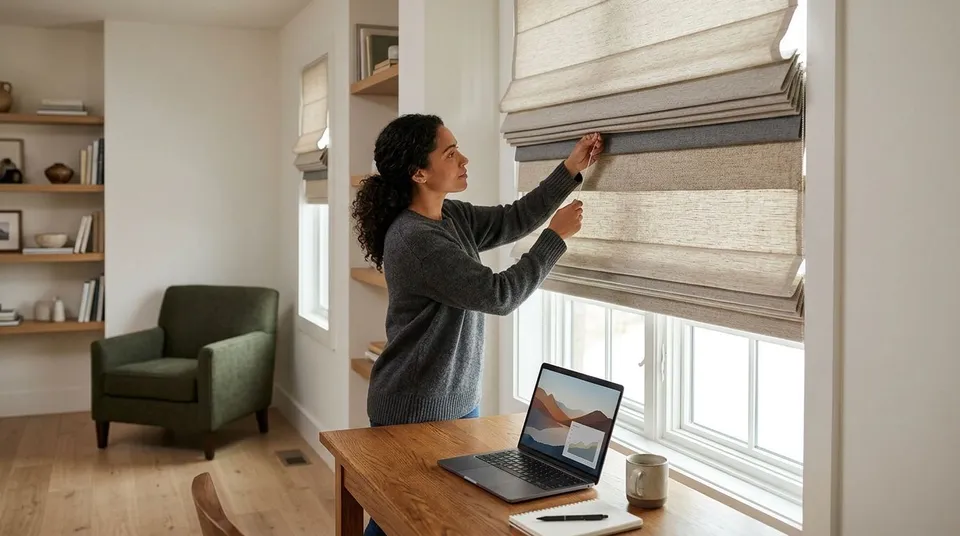
A cellular shade against the glass paired with a heavy drapery panel over the top is the most effective shade-only fix for a noisy home office, and it works because the two materials attack sound differently. The honeycomb structure in a cellular shade traps air pockets that dampen sound reflecting off the window, while the mass and fullness of a drapery panel resist noise trying to pass through the frame. Neither layer stops sound leaking around an old sash or under a hollow-core door, so the window and door seals matter as much as the shade you choose in 2026.
- Layering cellular shades with heavy drapery is the most effective way to soundproof a home office with shades in 2026.
- Cellular shades dampen reflected sound off the glass; drapery blocks noise trying to pass through the frame.
- Zebra shades and light filtering roman shades control light well but add little sound dampening on their own.
- Window and door gaps often leak more outside noise than the glass itself, so sealing matters too.
- Rainier Blinds measures and installs both the cellular layer and the drapery layer for home offices across the Greater Seattle Area.
Why this matters
Home offices in 2026 double as video call studios, and a barking dog or a delivery truck outside your window shows up on every call whether you notice it or not. Most homeowners reach for blackout shades assuming darkness equals quiet, then wonder why the room still echoes. Opacity and sound dampening are two different jobs, and a shade built for one doesn't automatically do the other.
How to soundproof a home office with shades
The layering method below is a sequence, not a single product purchase. Each step adds a different kind of resistance to sound.
- Mount a cellular shade inside the window frame first. Its honeycomb cells sit closest to the glass and dampen sound reflecting back into the room. Rainier Blinds has a dedicated breakdown of cellular shades for noise reduction in home offices if you want the material comparison in more depth.
- Add a drapery panel outside the frame, wide and long enough to overlap the wall on both sides. The extra fabric width matters more than the fabric weight alone, since gaps at the edges let sound slip past a narrow panel. The same layering shades and drapery approach used in living rooms applies directly to a home office window.
- Check the window and door seals before you blame the shade. A drafty sash or an undercut door lets in more outside noise than most window glass does on its own.
- Choose motorized operation if you take back-to-back calls. Being able to close a cellular shade from a wall switch or an app beats walking across the room between meetings, though the motor itself adds convenience, not dampening.
Sound dampening comparison by shade type
| Shade type | Sound role | Light control | Best for |
|---|---|---|---|
| Cellular shades | Dampens reflected sound off glass | Light filtering to blackout options | Base layer under drapery |
| Drapery | Blocks noise transmission through the frame | Depends on fabric weight | Finishing layer, full window width |
| Roman shades | Light dampening, less than cellular | Light filtering to blackout options | Rooms where cellular's stacked look isn't wanted |
| Zebra shades | Minimal, thin sheer-and-solid construction | Precise light control via alternating bands | Glare control, not a noise fix |
Verdict: cellular shades under drapery is the combination that actually moves the needle on a noisy home office; zebra shades alone will not.
Cellular shades: the base sound layer
Cellular shades work because the honeycomb shape traps air in pockets instead of leaving a flat, hard surface for sound to bounce off. That structure is also why they're marketed for insulation, the same air pockets that slow heat transfer also soften sound reflection inside the room.
Pros: dampens echo, comes in light filtering or blackout fabrics, fits inside most frames without losing sill depth. Cons: does nothing for sound coming through the wall or an uninsulated door, and a single layer alone won't match a cellular-plus-drapery combo. Verdict: Buy as the base layer, skip if you're only after light control and don't care about noise.
Drapery: the finishing layer for noise
A drapery panel adds mass and fullness the cellular shade can't provide on its own. Hang it on a rod wide enough that the panel covers the full window opening with room to spare on both sides, a narrow panel that just covers the glass leaves gaps at the frame where sound still gets through.
Pros: adds real mass, covers frame gaps a shade alone can't reach, works with any operation tier from manual to motorized traverse rods. Cons: takes up wall space on both sides of the window, and lightweight sheer fabrics won't add meaningful dampening. Verdict: Buy a full-width, heavier panel as the second layer, skip sheer-only drapery if noise is the goal.
Roman shades: a lighter dampening alternative
Roman shades stack flat against the window rather than trapping air in cells, so they dampen less sound than a cellular shade, but they still add more fabric mass than a bare pane of glass. Homeowners who want a tailored look instead of the honeycomb profile often land here. Rainier Blinds covers the fabric side of this decision in custom roman shades for home offices.
Pros: tailored look, works well layered under drapery, available in light filtering or blackout fabrics. Cons: less sound dampening than a true cellular shade because there's no air-pocket structure. Verdict: Hold if cellular's honeycomb look doesn't fit the room, otherwise cellular wins on dampening alone.
Zebra shades: light control, not a noise layer
Zebra shades alternate sheer and solid fabric bands on a single roll, which is excellent for adjusting glare on a monitor during a call. That thin, banded construction carries little mass, though, so don't expect it to do the sound-dampening job a cellular shade or drapery panel handles.
Pros: precise glare control for screens, clean look, works in manual, motorized, or smart versions. Cons: minimal sound dampening compared to cellular shades or drapery. Verdict: Skip as a noise fix, keep in the mix purely for glare control if that's a separate problem in the room.
Why noise levels in a home office vary
- Window age and pane count. Older single-pane windows transmit more outside noise than newer dual-pane units, regardless of the shade in front of them.
- Proximity to traffic. A window facing a busy street carries more transient noise than one facing a backyard, and shades reduce reflection more than they block that transmission.
- Door type. A hollow-core door lets more sound through than a solid-core one, and no window treatment fixes that.
- Room surfaces. Hardwood floors and bare walls bounce sound around the room, which makes shade dampening more noticeable once you add it.
- Floor level. Ground-floor offices facing a street or driveway pick up more outside noise than upper-floor rooms.
- HVAC and vents. Ductwork carries sound between rooms independent of anything happening at the window.
“Layering a cellular shade with drapery softens the reflected noise inside a home office, but it won't fix a hollow-core door or a single-pane window on its own.”
Do blackout shades block outside noise better than light filtering shades?
No, opacity and sound dampening are separate specs, and a blackout fabric's dark lining controls light, not noise. A light filtering cellular shade with the same honeycomb depth dampens sound about as well as a blackout version of the same product.
Is drapery or cellular shades better for a home office?
Neither wins alone, the combination outperforms either single layer for noise, since drapery covers the frame gaps a cellular shade can't reach and the cellular shade dampens reflection the drapery alone won't touch.
Can motorized shades reduce video call background noise?
Motorized shades close faster than manual ones, letting you shut a cellular shade from a wall switch right before a call, but the motor adds convenience, not dampening. Rainier Blinds' guide on video call ready motorized shades covers the setup side of this in more detail.
Rainier Blinds measures and installs both layers, cellular shades and drapery, as one project for home offices across Auburn, Bellevue, Tacoma, and the rest of the Greater Seattle Area, and every shade comes in manual, motorized, or smart operation depending on how hands-off you want the daily routine.
Get a free home office consultation
Rainier Blinds measures and installs cellular shades and drapery on the spot.
FAQ
What's the best shade for reducing noise in a home office?
A cellular shade layered under a heavy drapery panel is the best shade-based fix for a noisy home office in 2026. The cellular shade dampens sound reflecting off the glass and the drapery blocks noise trying to pass through the frame.
Do blackout shades block sound as well as light?
No, blackout shades control light opacity, not sound. A light filtering cellular shade with the same honeycomb depth dampens noise about as well as a blackout version of the same product.
Is drapery or cellular shades better for a home office?
Layering both beats using either alone. Drapery alone doesn't dampen glass reflection and a cellular shade alone doesn't cover frame gaps, so the combination handles more of the noise problem.
Can motorized shades help with video call noise?
Motorized cellular shades let you close them from a switch or app right before a call instead of walking to the window, but the motor itself doesn't add sound dampening.
How much noise reduction can shades realistically deliver?
Shades soften echo and reflected sound inside the room, they don't stop structural or airborne noise the way wall insulation or double-pane glass does. Treat them as one part of a noise plan, not the whole fix.
Do zebra shades block outside noise?
Zebra shades are a light-control product built from alternating sheer and solid fabric bands, and that thin construction adds little mass, so they contribute little sound dampening compared to a cellular shade.
What's the biggest noise leak in most home offices?
Gaps around an aging window sash or a hollow-core door usually leak more outside noise than the glass itself. Check seals before assuming the shade is the problem.
Should I soundproof windows or the whole room?
Shades only address the window opening. Sound entering through walls, floors, or an interior door needs separate treatment beyond any window covering.
One last thing
Most homeowners spend their whole budget on the shade and skip the door, but a hollow-core door under the office often lets in more hallway and street noise than the window ever will. Fix the door seal first, then let the cellular shade and drapery combo handle what's left coming through the glass.