
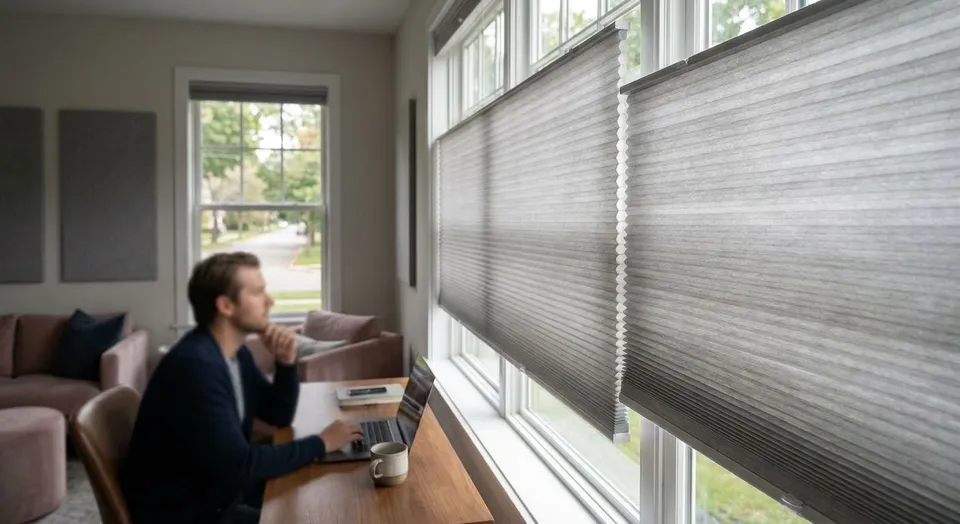
Best cellular shades for noise reduction in home offices

Cellular shades outperform every other shade style Rainier Blinds installs when the goal is quieter square footage, and the difference between a single-cell and a double-cell shade is the whole ballgame for a home office that doubles as a call center.

TL;DR
  • Double-cell blackout cellular shades are the best cellular shades for home office noise reduction in 2026, buy.
  • Single-cell light-filtering shades trap less sound; skip them if your office faces a busy street.
  • Motorized double-cell shades add convenience, not extra sound dampening, over the manual version, consider.
  • Insulated cellular shades matter most in garage-conversion offices where a single pane of glass lets in traffic and rain noise.
  • Layering drapery or a roman shade over cellular shades adds mass that blocks more sound than shades alone.
Cellular shade specs that matter for noise
3/8 inch
Single-cell pleat depth
3/4 to 1 inch
Double-cell pleat depth
R-3.3 to R-5.4
Insulation rating range

Why this matters

A home office isn't a bedroom. You're on calls, the HVAC kicks on mid-sentence, and a neighbor's leaf blower ruins a take. Cellular shades help because the honeycomb structure traps a pocket of still air between the window and the room, and still air is what dampens sound and slows heat transfer at the same time.

A single-cell shade traps one small pocket of air, typically around a 3/8-inch cell. A double-cell shade stacks two pockets, usually 3/4 inch to a full inch deep, which is more air mass between you and the window. More trapped air means more resistance to both mid-range conversation frequencies and the low hum of street traffic.

Rainier Blinds measures and installs double-cell blackout cellular shades across South King County home offices, and the cell depth conversation comes up on nearly every consult for a converted bedroom or bonus room being turned into an office in 2026.

How this list is ranked

This ranking is built around four criteria that actually affect noise inside a working home office: cell depth, single versus double construction, mount type against the window frame, and how well the shade pairs with a second layer like drapery. Fabric opacity (light-filtering vs. blackout) gets weighed too, since denser blackout fabric backing adds a small amount of extra mass over sheer or light-filtering weaves.

The picks below reflect configurations Rainier Blinds actually installs in South King County home offices in 2026, not lab-tested acoustic scores, no cellular shade manufacturer publishes a certified STC rating, so treat this as a practical buying order, not a decibel chart.

1. Double-cell blackout cellular shades: the safe pick

One spec that matters: 3/4-inch to 1-inch cell depth with a blackout-backed fabric. This is the configuration that does the most work against both noise and morning light bleeding into video calls.

The blackout backing adds fabric density on top of the trapped-air benefit, which is why this configuration shows up most often in home offices that share a wall with a street-facing bedroom. It also blocks glare on monitors better than any light-filtering option, which matters more than people expect once daily video calls start.

Buy. This is the default recommendation for any home office where noise and glare are both problems.

2. Motorized double-cell cellular shades: the video-call upgrade

One spec that matters: same 3/4-inch to 1-inch double-cell construction, controlled by a wall switch, remote, or app instead of a cord.

Motorization doesn't add sound dampening over the manual version. The fabric and cell depth are what block sound, not the drive mechanism. What it adds is consistency: a shade that closes to the exact same position every time a call starts, which matters when you're trying to keep a clean, glare-free background on camera. Rainier Blinds installs this configuration in motorized shades for video-call-ready home offices where the homeowner wants one-tap control before every meeting.

Consider. Worth the upgrade if you're on camera daily and want repeatable positioning; skip it if you're comfortable pulling a cord.

3. Single-cell light-filtering cellular shades: the budget option

One spec that matters: 3/8-inch cell depth, sheer-to-light-filtering fabric weight.

This is the entry-level cellular shade, and it still beats a roller shade or a bare window on sound because of the trapped air pocket, but it traps less air than a double-cell shade and uses a lighter fabric that adds less mass. Fine for a quiet interior office; a real compromise for a room facing a road.

Consider for interior-facing offices with low ambient noise. Skip for anything facing a street, a shared wall, or a busy driveway.

4. Insulated cellular shades: the converted-garage fix

One spec that matters: double-cell construction paired with a tighter frame-fit mount, since garage conversions and ADU offices often have thinner glazing and less wall insulation than the rest of the house.

A garage or ADU office usually has a single pane of glass and thinner exterior walls than a bedroom-converted office, so outside noise and temperature swings both hit harder. Rainier Blinds sees this constantly in insulated cellular shades for garage conversions, where the shade is doing double duty against noise and against the temperature swing a converted garage sees between a Seattle winter and a 2026 August afternoon.

Buy for any garage or ADU office. This is the one setup where skipping the insulated version is a mistake, not a preference.

5. Vertical cellular shades: the sliding-glass-door office

One spec that matters: vertical-track cellular fabric built for wide glass rather than a standard window frame.

A home office built off a sliding glass door has more glass surface area than a normal window, and more glass means more surface for sound to pass through. A vertical cellular shade covers that width without the noise leaks a standard blind leaves at the panel gaps.

Consider. Necessary if your office backs onto a slider; unnecessary spend if your only window is standard-sized.

6. Cellular shades sized for energy savings: the temperature-driven pick

Cellular shades built primarily around insulation ratings rather than blackout fabric still contribute to noise control, just as a secondary benefit rather than the main reason to buy them.

Homeowners chasing lower heating bills in cooler months often land on this configuration first and get the noise benefit as a bonus. It's a reasonable pick if energy cost is the primary driver and noise is a secondary concern.

Hold if noise reduction is your main goal. Go with the double-cell blackout pick instead and treat the energy savings as a bonus, not the deciding factor.

Comparison table

Configuration Cell depth Best for Verdict
Double-cell blackout 3/4"-1" Street-facing offices, glare control Buy
Motorized double-cell 3/4"-1" Daily video calls, repeatable positioning Consider
Single-cell light-filtering 3/8" Quiet interior-facing offices Consider / Skip
Insulated double-cell 3/4"-1" Garage or ADU conversions Buy
Vertical cellular Varies by track Sliding glass door offices Consider
Energy-rated cellular 3/4"-1" Heating-bill-first buyers Hold

Where to buy

  • Get a real in-home measurement before ordering anything. Cell depth and mount type both depend on the exact window frame, and a big-box store measurement won't catch the details a video-call room needs.
  • Ask specifically for double-cell over single-cell if a busy street, shared wall, or driveway sits outside the office window. This is the single biggest lever on the list.
  • Have the installer check whether a second layer (drapery or a roman shade) makes sense before you commit to shades alone; added mass on top of trapped air is the next step up once cellular shades hit their limit.

Get a home office quote

In-home measurement and real pricing on the spot, installed by Rainier Blinds' own crew.

Get a quote

FAQ

What are the best cellular shades for home office noise reduction in 2026?

Double-cell blackout cellular shades with a 3/4-inch to 1-inch pleat depth are the best cellular shades for home office noise reduction in 2026. The deeper double-cell air pocket blocks more sound than a single-cell shade, and the blackout backing adds extra fabric density.

Do cellular shades actually block sound?

Yes, cellular shades block sound better than roller shades or blinds because the honeycomb cells trap still air between the glass and the room. No manufacturer publishes a certified STC rating for shades, but the trapped-air principle is the same one used in acoustic insulation.

Is a double-cell shade worth it over single-cell for a home office?

Yes, if the office faces a street, a shared wall, or a driveway. A double-cell shade traps roughly twice the air depth of a single-cell shade, which matters more for noise than for light control alone.

Do motorized cellular shades reduce noise better than manual ones?

No, motorization doesn't add sound dampening on its own. The fabric weight and cell depth are what block noise; motorization only adds consistent positioning, which helps more with video-call glare than with sound.

Are cellular shades better than roller shades for a home office?

Cellular shades block more noise than roller shades because the honeycomb structure traps air, while a roller shade is a single flat layer of fabric. Roller shades win on cost and simplicity if noise isn't the main concern.

What cellular shade setup works best for a garage-converted home office?

Insulated double-cell cellular shades work best for garage conversions because the thinner glazing and walls typical of a converted garage let in more outside noise and temperature swing than a standard bedroom window.

Should I layer drapery over cellular shades for extra noise control?

Yes, layering drapery or a roman shade over cellular shades adds fabric mass that blocks more sound once the shade alone reaches its limit. This matters most in offices facing high-traffic streets or shared walls.

One last thing

The cell depth number matters more than any brand name or fabric color you'll pick in the showroom. A 3/4-inch double-cell shade in a plain color will out-quiet a designer single-cell shade every time, because the noise reduction comes from the air pocket, not the print.

Related guides