
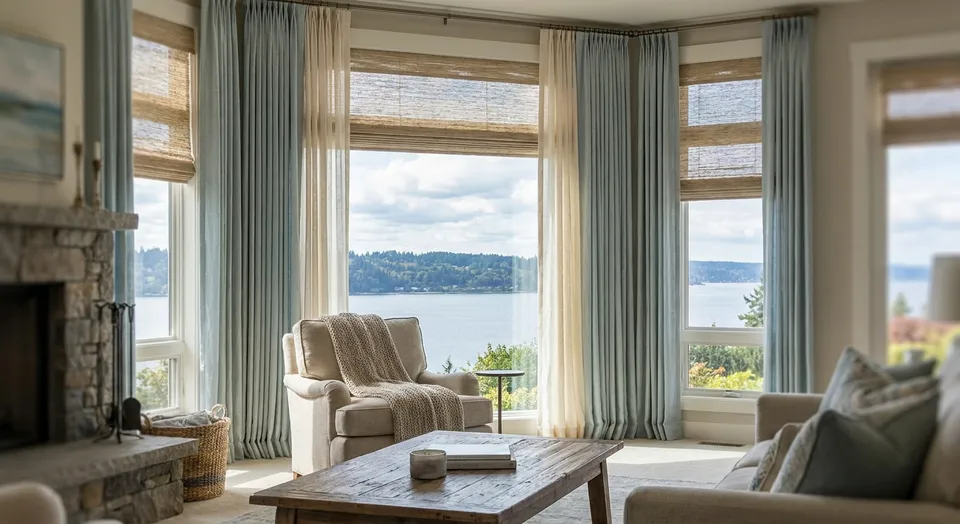
Bluff-top homes in Normandy Park catch wind off Puget Sound from three sides and afternoon glare that stock mini blinds were never built to handle. Here's what actually holds up on the bluff in 2026, and what to skip when you're picking custom window treatments for a Normandy Park view home.
- Motorized cellular shades handle Normandy Park's west-facing glare and bluff wind better than stock mini blinds. Buy.
- Custom window treatments in Normandy Park need UV-rated fabric or west-facing rooms fade out within a few years.
- Zebra dual shades give bluff homeowners Sound views by day and full privacy at night without swapping panels.
- Skip big-box vinyl blinds on sliders wider than 6 feet in 2026 - they warp under direct wind off the water.
- Drapery panels still beat hard shades for noise and draft control on older bluff-facing single-pane windows.
Why this matters
A bluff-facing room may receive strong glare and be exposed to wind. Assess the actual opening, glass, mounting, and weather exposure before choosing. Indoor and outdoor products have different requirements; the exact outdoor system's limits govern its use.
Fade, warp, and glare are the three complaints that show up over and over on bluff properties in 2026. A window treatment picked for looks alone usually fails on one of those within the first winter.
Who this is for
This guide is for homeowners on the Normandy Park bluff - or similar Puget Sound-facing lots in Rainier Blinds' service area - with oversized west or south-facing glass, sliding doors wider than 6 feet, and rooms that get unusable glare in the evening even with existing blinds closed. If your windows face an interior courtyard or a shaded lot, most of the wind and UV guidance below matters less.
What to look for in custom window treatments for Normandy Park bluff homes
UV and glare control without losing the view
Bluff homes are built around the view, so blackout isn't the goal - controlled light is. Look for sheer or light-filtering fabrics rated to cut direct glare while keeping the Sound and the Olympics visible during the day. A treatment that forces you to choose between glare and view isn't right for this lot type.
Fade resistance on west-facing fabric
West-facing glass on a bluff gets more direct UV exposure per day than an equivalent east-facing window. Fabric without a UV-rated finish or backing typically shows visible fading and yellowing within two to three years in this exposure. Ask specifically about fade-resistant options before you pick a color.
Wind and pressure resistance on large glass
Sliding doors and picture windows over 6 feet wide flex slightly under sustained wind, and cheap track-mounted blinds rattle or bind against the frame as a result. Cellular and cordless roller systems with a snug frame-mount handle that movement better than loose vertical blinds or clip-on panels.
Motorization for oversized or hard-to-reach glass
Many bluff homes have windows taller than 7 feet or set above stairwells and window seats where a manual wand or cord is impractical. Motorized shades solve the reach problem and let you program a schedule that closes west-facing rooms automatically before peak glare hits in the afternoon.
Moisture and hardware corrosion resistance
Salt air off Puget Sound accelerates corrosion on cheap metal hardware faster than it would inland. Aluminum or coated hardware holds up longer on a bluff install than standard steel brackets, especially on windows that get direct spray during winter storms.
Room-by-room fabric matching
A great room with a Sound view calls for a different fabric than a bedroom that needs full blackout for sleep. Matching the wrong fabric to the wrong room is the single most common mistake on bluff jobs - a sheer that's perfect in the living room does nothing for a bedroom that needs to stay dark past sunrise.
Top picks for Normandy Park bluff homes
Motorized cellular shades - the safe pick. Honeycomb construction traps air in insulating pockets, which helps on single-pane bluff windows that lose heat fast in winter. Motorization solves the reach problem on windows taller than 7 feet, and a scheduled close before sunset cuts west-facing glare automatically. See the full breakdown in the motorized shades guide for Kent-area homes. Verdict: Buy.
Zebra dual shades - the wildcard. Alternating sheer and opaque bands let you dial in exactly how much Sound view versus privacy you want at any hour, which matters on a bluff lot where neighbors and passersby can see straight through uncovered glass at night. They cost more than a standard roller but solve a problem single-layer shades can't. Compare the visual difference against standard custom blinds in the Federal Way guide. Verdict: Buy for view rooms, Consider for bedrooms.
Cellular versus roller shades - know the tradeoff. Roller shades cost less and clean lines up better on modern bluff architecture, but cellular shades win on insulation for older single-pane windows common in Normandy Park's original bluff-era builds. The full side-by-side is worth reading before you commit either way: roller shades vs cellular shades for South King County. Verdict: Consider, pick based on window age.
Drapery panels - the traditionalist's pick. On older single-pane bluff windows, heavy drapery still beats hard shades for cutting draft and wind noise, and it layers well over a sheer roller for daytime glare control. It's the wrong call for a modern great room with an unobstructed Sound view, since panels visually cut the window down. Verdict: Consider for bedrooms and older windows, Skip for view walls.
Standard vinyl mini blinds - the one to skip. They're the cheapest option at any big-box store, but the slats warp under direct wind exposure on wide sliders and the cords become a hazard on windows taller than 7 feet. On a bluff lot exposed to real wind, this is the option that fails first. Verdict: Skip.
What to avoid
- Off-the-shelf blinds sized to "close enough." Bluff windows rarely match standard big-box sizing, and a half-inch gap on a wind-exposed frame lets in both draft and noise.
- Fabric samples judged indoors under normal light. A color that looks neutral in a showroom can look completely different against direct west-facing glare at 5 p.m. - test swatches against your actual window before ordering.
- Non-motorized cords on anything above 7 feet. Beyond the reach issue, cords on tall bluff windows become a real safety hazard with kids or pets in the house.
Verdict comparison
| Treatment | Motorization option | Best room | Verdict |
|---|---|---|---|
| Motorized cellular shades | Yes | Any, esp. tall windows | Buy |
| Zebra dual shades | Yes | Great room, view walls | Buy |
| Roller shades (sheer) | Yes | Living areas | Consider |
| Drapery panels | No | Bedrooms, older windows | Consider |
| Vinyl mini blinds | No | None recommended | Skip |
Get a bluff-home measurement in 2026
Rainier Blinds measures and installs with its own crew, not a subcontractor.
FAQ
What's the best window treatment for a Normandy Park bluff home?
Motorized cellular shades are the best overall pick for 2026 because they handle wind-driven movement on wide glass and let you schedule closes before peak afternoon glare. Zebra dual shades are a close second for rooms where the Sound view matters most.
Do custom window treatments hold up to wind on the Normandy Park bluff?
Frame-mounted cellular and cordless roller shades hold up better than loose vertical blinds, which rattle and bind under sustained wind over 6-foot glass. Cheap vinyl mini blinds are the least durable option in this exposure.
Will west-facing fabric fade faster on a bluff lot?
Yes, west-facing fabric on direct Sound-view glass typically shows visible fading within two to three years without a UV-rated finish. Ask for fade-resistant fabric options before choosing a color for view-facing rooms.
Are motorized shades worth it for tall bluff windows?
Motorized shades are worth it on any window taller than 7 feet where a manual wand becomes impractical to reach. Scheduling also solves the daily glare problem automatically instead of relying on someone to close shades by hand.
Is drapery or cellular shades better for an older bluff home?
Drapery panels beat cellular shades on draft and noise control for original single-pane bluff windows built decades ago. Cellular shades win on insulation and a cleaner look for anyone who has already replaced their windows.
Do zebra shades give enough privacy at night on a bluff lot?
Zebra dual shades fully close to an opaque layer, giving complete nighttime privacy while keeping the sheer option available during the day. That flexibility is the main reason they work well on exposed bluff-facing rooms.
How much sun exposure do west-facing bluff windows get in Normandy Park?
West-facing bluff glass takes direct sun from roughly 4 p.m. until sunset for most of the year, with no natural obstruction from the water side. That's the exposure level that drives most of the fade and glare complaints on these lots.
Should every room in a bluff home get the same window treatment?
No, matching fabric to room function matters more on a bluff lot than anywhere else - a sheer that's ideal for a great room does nothing for a bedroom that needs blackout. Pick fabric per room, not per house.
One last thing
The detail most bluff homeowners miss in 2026 isn't the fabric - it's the hardware. Standard steel brackets corrode faster under salt air than aluminum or coated alternatives, and a bracket failure on a wide slider is a bigger repair than replacing the shade itself. Ask about hardware material before you ask about color.