
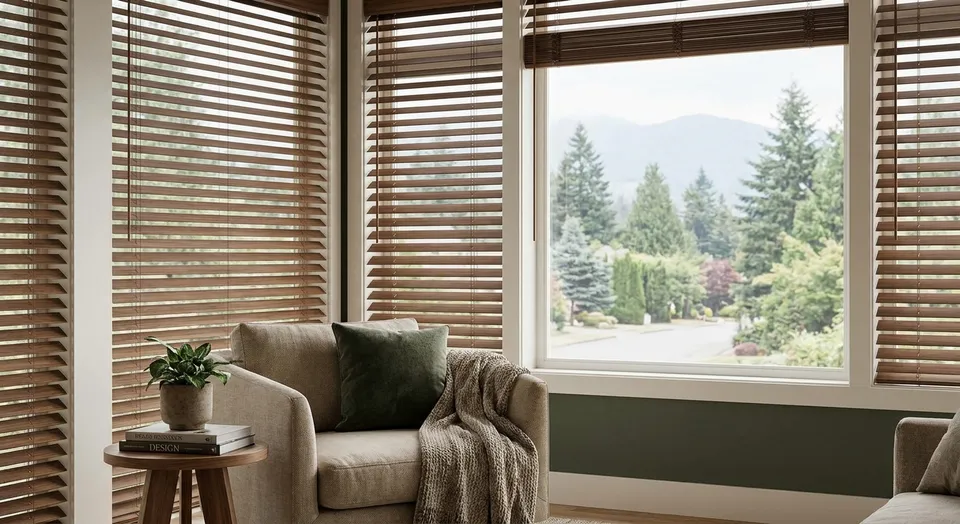
Federal Way homes run from 1980s daylight-basement ranches near Panther Lake to newer construction off Peasley Canyon Road, and window sizes swing wildly between the two. Which is exactly why off-the-shelf blinds keep coming up short (literally) for local buyers in 2026.
TL;DR
For custom blinds in Federal Way, cordless cellular shades are the safe pick for bedrooms facing the frequent gray-sky glare off Puget Sound, while moisture-resistant roller shades remain the Buy for kitchens and basements where humidity and kid traffic punish other materials. Motorized options make sense on hard-to-reach clerestory windows common in split-levels near Star Lake. Big-box store blinds are a Skip for anything wider than 36 inches because stock sizing forces gaps that let in the low winter sun angle typical of King County. Rainier Blinds measures every window on-site before quoting, which matters more in Federal Way than in flatter suburbs because so many homes have out-of-square frames from decades of settling.
Why this matters
Federal Way rooms have different needs for glare, privacy, and temperature control. Our team measures the actual openings and checks mounting constraints before ordering, then installs the selected shades. Choose fabric and controls for each room rather than relying on a stock width or a regional performance claim.
Who this is for
This guide is for Federal Way homeowners replacing worn mini-blinds, outfitting a new build off Dash Point Road, or upgrading a rental-turned-primary-residence before putting it on the market in 2026. It's built around the specific window shapes and light conditions found in South King County, not generic national advice.
What to look for in custom blinds for Federal Way homes
Light control for low-angle winter sun
Federal Way's winter sun sits low on the horizon for months, streaming directly into west and south-facing living rooms by mid-afternoon. Blinds need real slat overlap or a tight-weave shade fabric, not the thin plastic slats that let light bleed through at the edges. A 2-inch or wider slat blocks glare better than the 1-inch mini-blinds most builders install as standard.
Moisture tolerance for basements and bathrooms
Many Federal Way homes built before 2005 have daylight basements that run damp in the wetter months. Traditional wood blinds warp in that environment within a couple of years, and it's not a product line Rainier Blinds carries in the first place. A roller or cellular shade in a moisture-resistant fabric holds its shape through the same humidity swings without that risk.
Cordless or motorized operation for child and pet safety
Exposed window-covering cords can create a strangulation hazard. CPSC recommends cordless coverings where young children are present. Cordless controls avoid exposed operating pull cords. Follow the product safety instructions and keep beds, furniture, and other climbing objects away from windows.
Insulation value for older single-pane windows
A chunk of Federal Way's housing stock still has original single-pane windows, especially in the Redondo and Adelaide areas. Cellular shades with a honeycomb structure trap air and cut heat loss noticeably compared to flat roller shades, which matters when a Seattle City Light bill spikes every February.
Fit tolerance for out-of-square frames
Older frame construction and decades of settling mean a lot of Federal Way windows aren't perfectly square. Stock blinds assume square openings; custom orders account for the actual taper, which is the difference between a clean fit and a blind that won't sit flush at the bottom.
Outdoor durability for covered patios
Federal Way's covered patios and porches see near-daily moisture exposure nine months a year. Outdoor shades need UV-stabilized fabric and rust-resistant hardware, not repurposed indoor materials that discolor and seize up within a season.
Top picks for Federal Way homes
Cordless cellular shades, the safe pick. A 3/8-inch double-cell honeycomb design traps air in two layers instead of one, which is the meaningful upgrade over single-cell for anyone dealing with those original single-pane windows near Dumas Bay. Buy for bedrooms and home offices where quiet, consistent insulation matters more than a designer look.
Moisture-resistant roller shades, the workhorse. A vinyl-backed fabric handles humidity swings without warping and wipes clean easily. A matte finish cuts glare on the west-facing kitchen windows that catch the afternoon sun over Steel Lake. Buy for kitchens, laundry rooms, and basements.
Motorized roller shades, the wildcard. Skip the cord entirely on windows over 8 feet up, common in split-level entries and stairwell landings near Panther Lake. Battery-powered motors now run a full season on one charge for most residential window sizes. Consider if budget allows. It's a comfort upgrade, not a necessity, for standard-height windows.
Zebra shades. The light-control specialist. Alternating sheer and solid bands let you dial in exact glare control for that low winter sun angle without going fully dark. Consider for living rooms with big south-facing glass.
Outdoor solar shades. The patio fix. UV-stabilized PVC fabric holds color through repeated wet-dry cycles better than standard indoor fabric repurposed for outdoor use. Buy if the covered patio gets afternoon glare from May through September.
What to avoid
- Stock big-box mini-blinds over 36 inches wide. Gaps at the edges undercut both privacy and insulation, and Federal Way's out-of-square frames make the fit worse than in newer, tighter-tolerance construction elsewhere.
- Wood or faux wood blinds in daylight basements or bathrooms. They warp within two to three years once humidity gets involved. And neither is a product line Rainier Blinds carries.
- Corded lift systems in any home with kids under six or indoor cats. It's a safety call, not a style preference, and most manufacturers have already shifted their 2026 catalogs toward cordless as standard.
Verdict comparison
| Option | Best for | Key spec | Verdict |
|---|---|---|---|
| Cordless cellular shades | Bedrooms, offices | 3/8-inch double-cell | Buy |
| Moisture-resistant roller shades | Kitchens, basements | Follow selected fabric care instructions | Buy |
| Motorized roller shades | High/hard-to-reach windows | Charging requirements vary | Consider |
| Zebra shades | South-facing living rooms | Adjustable sheer/solid bands | Consider |
| Outdoor solar shades | Covered patios | UV-stabilized fabric | Buy |
| Stock mini-blinds (big-box) | Nothing wide or out-of-square | Fixed standard widths only | Skip |
FAQ
What's the best type of window treatment for Federal Way's rainy climate? Cellular shades handle the insulation side of Federal Way's damp, cool months best, while moisture-resistant roller shades hold up in basements and bathrooms where wood or faux wood would warp. Outdoor spaces need UV-stabilized solar shades rather than indoor fabric.
Are motorized blinds worth it in 2026? Motorized shades make sense on windows that are physically hard to reach, like stairwell landings or clerestory glass in split-level homes. For standard reachable windows, cordless manual lift does the same safety job for less money.
How much do custom blinds cost in Federal Way? Pricing depends on window count, size, and material, and varies enough between homes that an on-site measurement and quote is the only accurate way to know. Rainier Blinds provides pricing for your selected products after measuring.
Do custom blinds actually fit better than store-bought ones? Yes, custom orders account for the taper and out-of-square gaps common in older Federal Way homes, where stock sizing assumes a perfectly square frame that rarely exists in houses built before the mid-2000s.
Does Rainier Blinds carry wood or faux wood blinds? No. The catalog is built around shades (roller, cellular, zebra) and drapery rather than traditional slat blinds. For humid rooms like basements and bathrooms, a moisture-resistant roller or cellular shade avoids the warping problem wood and faux wood both run into.
Can I install custom blinds myself? You can, but out-of-square frames and oversized windows raise the risk of a crooked or loose-fitting result. Professional installation with an in-house crew avoids the callback trips that come with a DIY measurement error.
Do cellular shades really cut energy costs? They reduce heat loss through single-pane and older double-pane windows noticeably compared to flat roller shades, since the honeycomb structure traps insulating air pockets. The exact dollar savings depend on your specific window count and orientation.
What size gap is acceptable between a blind and the window frame? Essentially none. A properly fitted custom blind should leave no visible light gap on the sides. Stock blinds routinely leave a half-inch or more, which is the main complaint homeowners have after buying off-the-shelf.
One last thing
The detail most Federal Way homeowners miss: window trim depth, not just width and height, determines whether a blind mounts inside the frame or has to go outside it, and getting that wrong is the single biggest reason DIY orders end up returned or re-measured in 2026.