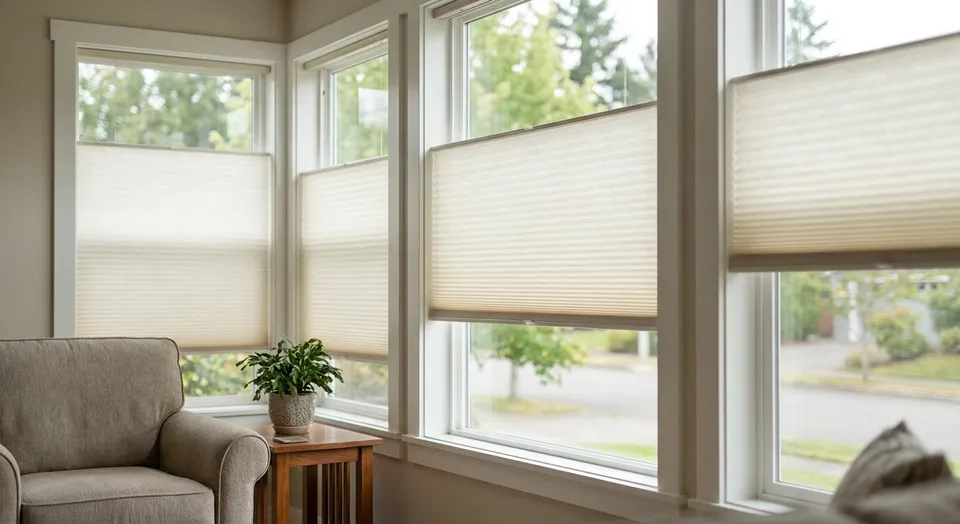
Federal Way homes fight two things year-round: heat loss through single-pane and dated dual-pane windows, and the total lack of privacy that comes with lots spaced 15 feet apart in neighborhoods like Twin Lakes and Redondo. Cellular shades solve both, and this guide names which cell depth, lift style, and light-control level actually earn a spot on your windows in 2026.
- Cellular construction can add an insulating layer at the window. The result depends on the exact product, fit, glazing, climate, and how the shade is used; it does not establish a particular temperature change or utility-bill saving.
- Cordless lift is mandatory in any home with kids or pets under 10; corded single-cell shades are a Skip.
- Vinyl-look single-cell shades in daylight basements trap moisture. Federal Way's damp winters make that a mold risk.
- Motorized double-cell shades are a Consider, not a Buy, unless you already run a smart-home hub.
Why this matters
Cellular construction can add an insulating layer at the window. The result depends on the exact product, fit, glazing, climate, and how the shade is used; it does not establish a particular temperature change or utility-bill saving.
That matters more in 2026 than it did five years ago, because Puget Sound Energy rates have climbed and most of the homes Rainier Blinds measures in Federal Way still run their original 1980s and 1990s windows. Cellular shades are the cheapest fix that doesn't involve replacing glass.
Who this guide is for
This is for Federal Way homeowners with close-set lots, west-facing living rooms that overheat in July, or bedrooms near flight paths where shift workers need real blackout. It's for split-level owners in Twin Lakes and Redondo dealing with drafty single-pane basement windows, and for anyone comparing custom window treatments for Federal Way homes against what a big-box store or online retailer is quoting.
What to look for in cellular shades for Federal Way homes
Cell depth and insulation value
Cellular construction can add an insulating layer at the window. The result depends on the exact product, fit, glazing, climate, and how the shade is used; it does not establish a particular temperature change or utility-bill saving.
Cordless or motorized lift
Choose a suitable cordless or motorized product to avoid an exposed operating pull cord. Follow all product safety instructions and keep cribs, beds, and climbable furniture away from windows.
Light control level
Choose light-filtering fabric for softened daylight or blackout fabric for a darker room. Neither fabric choice closes every mounting gap; discuss edge coverage and nighttime privacy for the actual opening.
UV and fade protection
West-facing rooms in Federal Way still get strong summer sun despite the gray reputation, and UV exposure fades hardwood floors and furniture over a few seasons. Fabric with a UV-blocking backing matters more here than the honeycomb structure itself.
Moisture resistance in daylight basements
Many Federal Way split-levels have finished daylight basements that run damp in winter. Cellular shades with a moisture-resistant coating hold up; vinyl-look imitation cellular shades from big-box stores trap condensation against the glass and can mildew within a season.
Mount type for older window frames
Homes built before the mid-1990s often have aluminum-frame or slightly out-of-square windows. An inside mount looks cleaner but needs at least 1.5 inches of depth; an outside mount forgives a crooked frame and adds privacy coverage at the edges.
Top picks for Federal Way homes in 2026
Cellular construction can add an insulating layer at the window. The result depends on the exact product, fit, glazing, climate, and how the shade is used; it does not establish a particular temperature change or utility-bill saving.
Single-cell cordless cellular shades can be considered for children’s rooms when the product and mounting suit the opening. Choose a suitable cordless or motorized product to avoid an exposed operating pull cord. Follow all product safety instructions and keep cribs, beds, and climbable furniture away from windows.
Top-down-bottom-up double-cell shades. The privacy pick. These raise from the bottom or drop from the top independently, so you get daylight up high and privacy down low, ideal for close-set lots in Twin Lakes where neighbors can see straight into a front room. Consider.
Motorized double-cell shades. The smart-home pick. Add a remote or app control and you get scheduled raise-and-lower for both privacy and thermal management without touching the shade. Worth it only if the home already runs a smart-home hub; otherwise it's an added cost for a feature you'll use twice a year. Consider.
Blackout fabric is intended to block light through the material. Light can still enter around the top, bottom, sides, and between panels. Choose the fabric and mounting plan together; an outside mount or suitable edge treatment may reduce gaps but does not guarantee a completely dark room.
Get real pricing on cellular shades
Rainier Blinds measures and quotes Federal Way homes on the spot, no subcontractor.
What to avoid
- Vinyl-look accordion shades sold as "cellular." They look similar in a showroom photo but lack the true honeycomb air pocket, so the insulation claim doesn't hold up, and they trap condensation in damp basements.
- Exposed operating cords can create a strangulation hazard. Choose a suitable cordless or motorized product to avoid an exposed operating pull cord. Follow all product safety instructions and keep cribs, beds, and climbable furniture away from windows.
- "Blackout" light-filtering shades without side-channel seals. Plenty of listings use "blackout" loosely for anything dark-colored. If the product page doesn't mention side channels or tape seals, assume light gaps at the edges.
For garage conversions and detached offices where insulation is the entire point, not just a bonus, the calculus shifts toward maximum cell depth over lift convenience. See insulated cellular shades for garage conversions for that specific case.
Verdict comparison
| Pick | Insulation | Light control | Operating-cord design | Best room | Verdict |
|---|---|---|---|---|---|
| Double-cell light-filtering | High | Light-filtering | Yes (cordless) | Living room | Buy |
| Single-cell cordless | Moderate | Light-filtering | Yes | Kids' room | Buy |
| Top-down-bottom-up | High | Adjustable zones | Yes | Front-facing rooms | Consider |
| Motorized double-cell | High | Light-filtering/blackout | Yes | Compatibility, hub requirements, and available controls depend on the selected motor and your home setup. We confirm those details before ordering. | Consider |
| Blackout cellular | High | Blackout | Yes | Bedroom | Buy (bedroom) |
FAQ
What's the best cellular shade for Federal Way, WA homes?
Double-cell light-filtering cellular shades are the best all-around pick for Federal Way homes in 2026 because the 3/4-inch cell depth delivers the most heat-loss reduction. Blackout cellular is better specifically for bedrooms near flight paths or shift-work schedules.
Are cellular shades better than roller shades for insulation?
Yes, cellular shades insulate better than roller shades because the honeycomb structure traps air against the glass, while roller shades are a single flat layer of fabric. Roller shades win on cost and cleaning ease instead.
How much do cellular shades cost installed in Federal Way?
Pricing depends on window size, cell depth, and lift type, and varies by room and quantity. Rainier Blinds provides on-the-spot pricing during an in-home measure rather than a flat online estimate.
Do cellular shades need to be corded to save energy?
No, cordless and motorized cellular shades insulate exactly the same as corded versions because the energy performance comes from the cell structure, not the lift mechanism. Cordless is the safer choice for homes with kids or pets.
Can cellular shades go in a damp daylight basement?
Yes, but only fabric rated for moisture resistance; vinyl-look imitation cellular shades from discount retailers can mildew in a damp Federal Way basement within a season. Ask specifically about moisture-resistant coating before buying.
Is motorized worth it for cellular shades in 2026?
Motorized cellular shades are worth it if the home already runs a smart-home hub and the household wants scheduled privacy or insulation control. Without an existing hub, it's an added cost for a feature most households use only a couple times a year.
What cell size gives the most insulation?
Cellular construction can add an insulating layer at the window. The result depends on the exact product, fit, glazing, climate, and how the shade is used; it does not establish a particular temperature change or utility-bill saving.
Do blackout cellular shades work for shift workers?
Yes, true blackout cellular shades with side-channel or tape seals block daytime light gaps that light-filtering shades let through. That makes them the right pick for anyone sleeping during daylight hours near SeaTac flight paths.
One last thing
The fabric color and pattern get all the attention in the showroom, but the actual heat-loss number comes from cell depth alone, a plain white 3/4-inch double-cell shade outperforms a decorative 3/8-inch single-cell shade on insulation every time, regardless of price point or looks. If a quote leads with fabric options before asking about cell depth, that's a sign the seller isn't measuring for performance.