
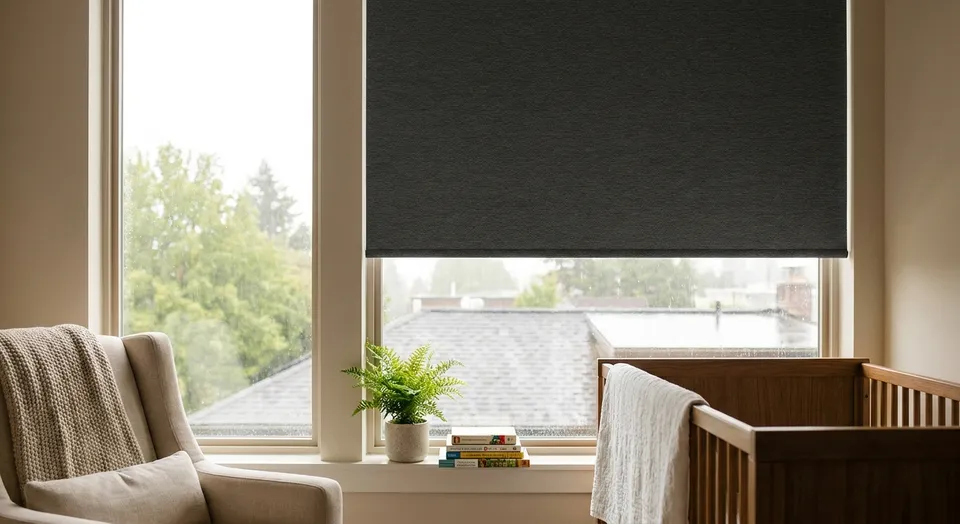
Blackout treatments can reduce daylight in a nursery. Choose the fabric, mounting, and safe operating method for the actual room; a darker room does not guarantee a particular sleep or nap outcome.
- Suitable cordless cellular blackout shades can combine light control with an insulating layer; check the complete product’s safety and mounting instructions.
- Motorized blackout shades solve the 5am sunrise problem without a cord anywhere near the crib. Buy for west-facing rooms.
- Skip vinyl roller blackout shades under $40 online. Side-channel gaps let in a strip of light that wakes toddlers by 6am.
- Layered zebra shades look nice but leak light at the fabric bands. Consider only for playrooms, not sleep spaces.
Who this is for
This guide is for parents in Seattle, Bellevue, Tacoma, and the rest of the Greater Seattle Area outfitting a nursery for a newborn or toddler, especially in homes with west or south-facing bedrooms where summer daylight runs past 9pm. If you're choosing between big-box blackout curtains and a measured, cordless shade for a room where a baby actually has to sleep, this is written for you.
Why this matters
Seattle summer daylight stretches to nearly 9:15pm in June, and winter mornings brighten before 6am even under cloud cover, both wreck a nap schedule if the room isn't genuinely dark. Big-box blackout shades are built to a generic width, and generic width means light gaps down both sides of the window frame. A shade measured and installed for the exact opening closes that gap, and in a nursery, the gap is the whole problem.
Cordless operation isn't optional here either. Every shade recommended for a nursery in this guide is either cordless by design or motorized, in line with the safety expectations retailers and installers hold for rooms with cribs. Custom blinds and shades installed by Rainier Blinds are measured room-by-room, which is the difference between a shade that fits the opening and one that just fits the window size on the label.
What to look for in blackout shades for a Seattle nursery
Light blockage rating
Blackout fabric is intended to block light through the material. Light can still enter around the top, bottom, sides, and between panels. Choose the fabric and mounting plan together; an outside mount or suitable edge treatment may reduce gaps but does not guarantee a completely dark room.
Cordless or motorized operation
Choose a suitable cordless or motorized product to avoid an exposed operating pull cord. Follow all product safety instructions and keep cribs, beds, and climbable furniture away from windows.
Side-channel or edge seal
Blackout fabric only blocks light where it covers the glass, the light that gets in comes around the edges. Shades with a side-channel track or a tight frame-mount install close that gap to under 1/2 inch; stock-width shades from a big-box store routinely leave 1-2 inches open on each side.
Fabric weight and insulation
Seattle nurseries in older homes (Tacoma craftsman bungalows, Auburn ramblers) often have single-pane or aging double-pane windows. A heavier blackout cellular shade adds a mild insulating layer, which matters for keeping the room from swinging cold in January.
Ease of daytime use
A nursery shade gets opened and closed multiple times a day for diaper changes and playtime light. Motorized shades with a remote or app control solve this without a toddler reaching for a wand near the crib rail.
Local measuring and install
A quarter-inch measuring error on a nursery window is the difference between full blackout and a visible light line every morning. That's the argument for a measured, in-home install over an online order to a generic window size.
Top picks for Seattle nursery blackout shades
Consider a suitable cordless or motorized cellular blackout shade when both light control and an insulating layer matter. Follow the product safety instructions and plan the edge coverage; no shade guarantees a sleep outcome.
Motorized blackout shades. The convenience pick. Battery or hardwired motors raise and lower the shade on a remote or schedule, so a west-facing bedroom can auto-close at 6pm before Seattle's long summer evening light hits full strength. The motorized shades guide for South King County homes covers battery life and control options in more detail. Buy for parents who want the shade to close itself before bedtime, not after.
A blackout roller shade can suit a nursery when its fabric, mounting, controls, and safety instructions fit the room. Compare the actual quote with cellular options rather than assuming a fixed cost difference.
Zebra/layered shades offer adjustable band positions for daytime use. Rainier offers blackout zebra fabrics; confirm the fabric and mounting for nap-time darkness, and keep the entire treatment clear of the crib and children’s reach.
Drapery with blackout liner, the layered pick. A blackout-lined drape hung outside the window frame with side returns closes light gaps a shade alone can't, especially on oddly shaped or bay windows common in older Seattle homes. It adds bulk and needs more wall space than a shade. Consider for a nursery with an unusual window shape where a standard shade won't seal the frame.
What to avoid in a nursery
- Stock-width vinyl blackout shades from big-box stores. They're built to standard sizes, not your window, and the 1-2 inch side gaps let in a visible light strip every morning.
- Corded shades with cord cleats. A cleat is a workaround, not a fix. Once a toddler is mobile, a cord anywhere in the room is a hazard.
- Light-filtering and room-darkening labels do not establish a standard percentage of light blockage or a particular nap length. Inspect the selected fabric and discuss edge coverage if a darker room is the goal.
Verdict comparison
| Option | Light blockage | Cordless | Insulation | Verdict |
|---|---|---|---|---|
| Cellular blackout | Product-specific | Yes, standard | Best (honeycomb) | Buy |
| Motorized blackout | Product-specific | Yes | Fabric-dependent | Buy |
| Roller blackout | Product-specific | Yes | Minimal | Consider |
| Zebra/layered | Partial, gaps at bands | Yes | Minimal | Consider (pair only) |
| Blackout drapery | Product-specific | Yes | Moderate | Consider |
| Stock big-box vinyl | Varies, edge gaps common | Often corded | Minimal | Skip |
FAQ
What's the best blackout shade for a Seattle nursery?
Consider a suitable cordless cellular or motorized blackout product based on light control, mounting, and safe use. Blackout can reduce daylight in the room, but it does not guarantee longer sleep.
Do blackout shades really keep a nursery dark during Seattle summer evenings?
Blackout fabric is intended to block light through the material. Light can still enter around the top, bottom, sides, and between panels. Choose the fabric and mounting plan together; an outside mount or suitable edge treatment may reduce gaps but does not guarantee a completely dark room.
Is roller or cellular better for a nursery?
Cellular blackout products add an insulating structure; roller blackout products have a simpler rolling fabric form. Compare the exact fabric, mounting plan, dimensions, controls, and quote. Both can allow light around their edges.
Are corded blinds safe in a nursery?
Choose a suitable cordless or motorized product to avoid an exposed operating pull cord. Follow all product safety instructions and keep cribs, beds, and climbable furniture away from windows.
Do motorized blackout shades work without a hardwired outlet?
Most motorized blackout shades run on rechargeable battery packs that don't require a hardwired outlet near the window. Battery life and charging intervals vary by model and use frequency.
Will blackout shades help a baby nap longer in Seattle mornings?
Blackout treatments can reduce early daylight, but a child’s sleep depends on many factors. Choose the mounting and fabric together and follow the product safety instructions; no particular nap length is promised.
Can I use the same blackout shade for a toddler room and an infant nursery?
A suitable cordless or motorized blackout shade can serve both a nursery and a toddler’s room. Follow all product safety instructions and keep cribs, beds, and climbable furniture away from windows at every age.
One last thing
Blackout fabric is intended to block light through the material. Light can still enter around the top, bottom, sides, and between panels. Choose the fabric and mounting plan together; an outside mount or suitable edge treatment may reduce gaps but does not guarantee a completely dark room.