
Our available controls: Rainier Blinds offers Roman and woven wood shades with motorized operation only. Available controls and power options for other products are confirmed at your consultation.
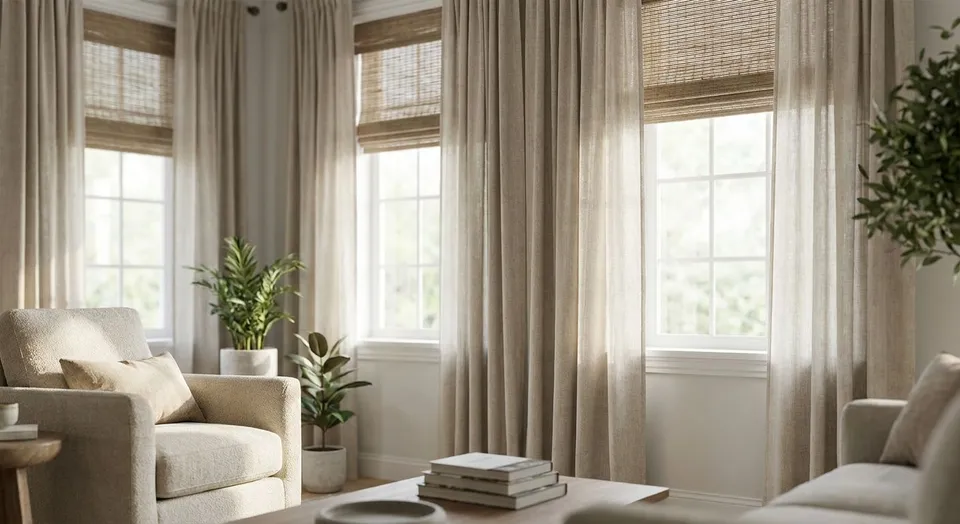
Staging a house for sale comes down to one job for window treatments: make every room look bigger, brighter, and neutral enough that a stranger can picture their own life in it. Get the coverings wrong and buyers notice mismatched blinds, sagging cords, or a bedroom that reads like someone else's taste. Get them right and the room disappears so the space can sell itself.
- Neutral light-filtering roller shades are the best window treatments for home staging in 2026. Buy them for every main living space.
- Cellular shades earn a Buy verdict in bedrooms and home offices where insulation and a clean look both matter.
- Zebra shades and woven wood roman shades rate Consider. They work in specific rooms but aren't a blanket staging choice.
- Skip heavy drapery panels in most staged rooms; they date a house and shrink window sightlines on camera.
- Compare measured quotes based on window size and fabric before committing to a full-house refresh ahead of listing.
Why this matters for a sale
A buyer's first scroll through listing photos happens in under 10 seconds per image, and dated or mismatched window coverings are one of the fastest ways to lose that attention. Faded curtains, cracked vinyl blinds, or a patchwork of styles from room to room signal deferred maintenance even when the rest of the house is in good shape.
The fix isn't expensive drapery or a designer look. It's consistency. Realtors and stagers across the Greater Seattle Area consistently push sellers toward the same handful of window treatments for home staging: light-filtering roller shades, cellular shades, and the occasional woven wood roman for warmth. Everything else is situational.
Sun exposure matters too. A south- or west-facing living room that's been baking under bare glass for years often shows faded flooring or furniture outlines buyers will notice on a walkthrough, the kind of damage covered in best solar shades for preventing furniture and flooring fade. Swapping in the right shade before listing photos protects the finishes you're trying to sell.
How this list is ranked
Each treatment below is scored on four things that actually move a staged listing: how neutral it photographs, how much light and privacy control it gives during showings, install speed before a listing deadline, and cost relative to the resale value it protects. Treatments that only work in one room type get a Consider or Hold verdict instead of a blanket Buy. Staging is about consistency, not novelty.
The ranked list
1. Light-filtering roller shades: the safe pick
Roller shades in a flat neutral (white, greige, or light linen) are the default staging choice in 2026 because they read as clean and modern in photos without pulling focus from the room. A single fabric across every window in the main living area creates the visual consistency buyers associate with a well-kept home. They install in under an hour per window and cost less than most alternatives on this list. Verdict: Buy. For entryways, living rooms, and kitchens, this is the default.
2. Cellular (honeycomb) shades: the practical pick
Cellular shades add a texture that photographs softer than a flat roller while still keeping the neutral profile buyers expect. Their honeycomb structure also helps regulate room temperature during showings scheduled at midday, when a west-facing bedroom can otherwise run warm under bare glass. They're a strong match for bedrooms and home offices staged as flex rooms. Verdict: Buy, especially where insulation and light control both matter to a walkthrough.
3. Sheer solar shades: the bright-room fix
Rooms with harsh west or south exposure need something that filters glare without blacking out the space during a 2 pm showing. Solar shades in a 3-5% openness fabric cut glare and UV while keeping the view intact, which matters when the yard or a territorial view is part of the pitch. They pair well with rooms already flagged for sun fade in the best solar shades for preventing furniture and flooring fade guide. Verdict: Buy, for sunrooms and west-facing living rooms specifically.
4. Woven wood roman shades: the warmth play
A woven wood roman shade in a natural tone works when a stager wants a room to feel finished rather than stripped bare, think a dining nook or a den staged as a reading corner. They add texture that a flat roller can't, but they're more expensive per window and take longer to fabricate. They're not a whole-house solution; save them for one or two feature rooms. Verdict: Consider. Use sparingly, not as the house-wide standard.
5. Zebra (dual-layer) shades: the flexible middle
Zebra shades let a stager show a room fully open, softly filtered, or private with one motion, which is useful for photographing the same window in different light conditions across a listing shoot. The banded look reads modern, but it's a stronger opinion than a plain roller and can compete with a room's other finishes. They work well in a primary bedroom or office being staged for a specific buyer type. Verdict: Consider, good for one or two rooms, not the whole listing.
6. Formal drapery panels: the risky one
Drapery can dress up a bare formal dining room or add height to a short window, but heavy or patterned panels are the single fastest way to date a room in photos. Most staging consultants strip drapery down to nothing or replace it with simple neutral panels only where a window genuinely needs the height trick. Unless a room specifically calls for it, drapery adds cost without adding sale value. Verdict: Hold. Use only in a formal dining room or entryway that needs the extra height illusion, otherwise leave it out.
Comparison table
| Treatment | Light control | Staging fit | Cost tier | Verdict |
|---|---|---|---|---|
| Light-filtering roller shades | Medium-high | Whole house | Low | Buy |
| Cellular shades | Medium-high | Bedrooms, offices | Low-mid | Buy |
| Sheer solar shades | Medium (glare cut) | Bright/sun-facing rooms | Mid | Buy |
| Woven wood roman shades | Medium | 1-2 feature rooms | Mid-high | Consider |
| Zebra shades | High (adjustable) | 1-2 rooms | Mid | Consider |
| Formal drapery panels | Low-medium | Formal dining/entry only | High | Hold |
Get a staging-ready quote
Measured and installed by Rainier Blinds' own crew across the Greater Seattle Area.
Where to buy
- Match every visible window before listing photos go live, a single mismatched blind in a photo gallery undercuts the consistency you're paying for elsewhere in the house.
- Set a per-window budget before you call anyone. The how to budget for custom window treatments breakdown covers what fabric grade and mount type actually cost in 2026, so you're not guessing at quote time.
- Share your listing date before ordering custom treatments. Supplier availability and installation scheduling vary, so confirm that the planned product can meet your deadline.
FAQ
What are the best window treatments for home staging in 2026?
Neutral light-filtering roller shades and cellular shades are the best window treatments for home staging in 2026 because they photograph clean and work in every room type. Save patterned zebra shades or woven wood romans for one or two feature rooms only.
Should I remove curtains before listing my house?
Remove heavy or patterned drapery in most rooms before listing. It tends to date a room in photos and shrink the apparent window size. Keep drapery only where a room genuinely needs the added height, such as a short window in a formal dining room.
Do blinds or shades sell a house faster?
Shades generally photograph cleaner than horizontal blinds because they show as a flat, uninterrupted plane rather than slats that can look dated or uneven in listing photos. A consistent shade style across the house reads as more finished than a mix of blinds and curtains.
How much do window treatments cost for staging a whole house?
Set the budget around your window sizes, selected fabrics, and installation scope, then compare complete quotes for roller and cellular shades. For a full-house refresh, confirm the total scope and consider completing the rooms that matter most first.
Is it worth replacing blinds before selling a house?
Yes, if the current blinds are visibly worn, mismatched, or outdated, since window coverings appear in nearly every listing photo. A cracked slat or a yellowed vinyl blind is one of the cheapest fixes relative to the buyer impression it creates.
What color window treatments show best in listing photos?
Neutral tones, white, warm greige, or light linen, photograph best because they don't compete with the room's furniture or wall color in listing photos. Bold patterns or dark colors tend to date faster and narrow the buyer pool who can picture the space as their own.
Can I stage with the same blinds I plan to leave for the new owner?
Yes, custom shades installed before listing typically stay with the house at sale and become part of the value pitch rather than something you remove. That's a point worth mentioning in the listing description if the treatments are recent.
Do motorized shades help or hurt a staged listing?
Motorized shades can help in higher-end listings where buyers expect smart-home features, but they add cost that doesn't always translate to a proportional bump in offer price. For most staging budgets, manual light-filtering roller or cellular shades deliver the same visual result for less money.
One last thing
The rooms that cost sellers the most in showings aren't the ones with outdated treatments, they're the ones with none at all. A bare window in a listing photo reads as unfinished even when the rest of the room is staged perfectly, and it's one of the cheapest gaps to close before your first open house in 2026.