
Our available controls: Rainier Blinds offers Roman and woven wood shades with motorized operation only. All other shade styles are available with manual, motorized, or smart control. Your consultation confirms the controls and power options for your product.
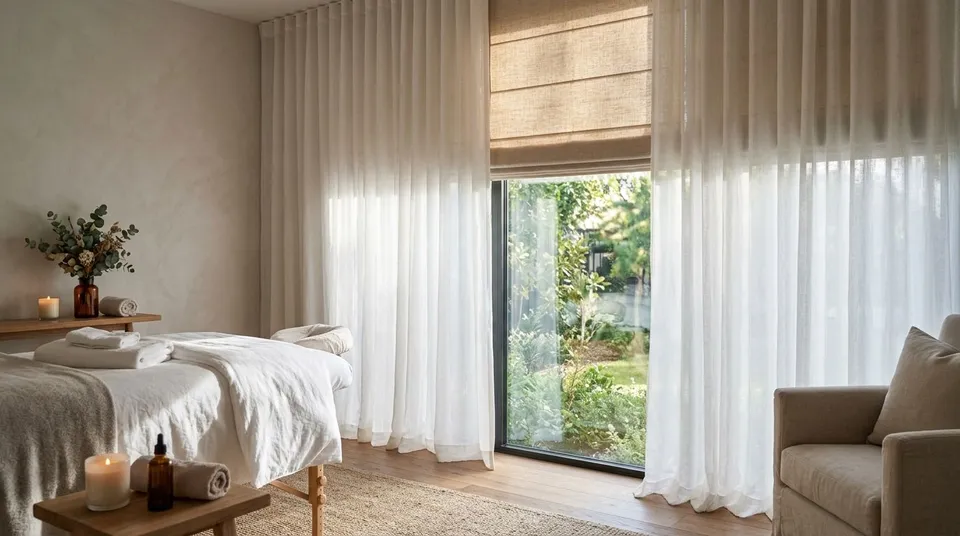
Window treatments for salons and spa treatment rooms are shades and drapery installed to control natural light, protect client privacy, and keep light levels consistent for services like color, facials, and lash work, with the aim of making the room feel calm without turning it into a cave. A retail nail bar with street-facing windows has different needs than a single treatment room used for waxing or light therapy, and the wrong fabric or opacity choice shows up fast in client complaints or awkward glare during appointments.
- Zebra and cellular shades handle daytime privacy for reception and color stations without full blackout.
- Single treatment rooms doing facials, lash extensions, or LED therapy need a true blackout layer, not just a light-filtering one.
- Moisture-resistant fabrics matter in wax and steam rooms since standard fabric shades absorb humidity and warp.
- Motorized window treatments for salons and spa rooms let staff adjust light between clients without touching a wand mid-service.
- [Rainier Blinds](https://rainierblinds.com/) measures and installs roller, zebra, cellular, and blackout shades across the Greater Seattle Area, no faux wood or venetian options.
Why window treatments matter for salons and spa treatment rooms
A salon or spa is a commercial space with residential-style windows, and that mismatch is where most problems start. Storefront glass built for retail visibility during the day becomes a privacy problem the moment a client is reclined for a facial or getting color foils applied near the window. Treatment rooms doing wax services or steam-based facials also deal with humidity that standard fabric shades were never built to handle.
The same logic applies to fitness and wellness spaces generally. Blinds and shades for fitness studios and yoga spaces face a similar tension between natural light for the space and glare control during sessions, and the fixes overlap with what works in a spa. Get the opacity and fabric choice wrong in either setting and you're either blinding clients with afternoon sun or blacking out a reception area that's supposed to feel inviting.
Salons and spas need window treatments that switch between full daylight for retail hours and full privacy for treatment hours, often on the same window.
Assess what each window actually does in your layout
Not every window in a salon needs the same treatment. A reception window facing the sidewalk has a different job than a window inside a single-client treatment room.
- Map which windows face public sidewalks, parking lots, or shared hallways
- Note which rooms are used for services requiring full privacy, like waxing or intimate treatments
- Identify rooms with recurring glare complaints during specific hours
- Flag any windows near water stations, steam rooms, or facial sinks where humidity is constant
- List windows visible from the front desk that affect first impressions
Choose the right opacity for privacy without losing light
Most salon reception areas do fine with light-filtering fabric that keeps the space bright and screens direct sightlines. Treatment rooms usually need more control.
- Light-filtering roller shades for reception and retail display windows
- Semi-opaque zebra shades where you want privacy during appointments but daylight between clients
- Room-darkening cellular shades for rooms doing color work where color accuracy matters under consistent light
- Full blackout fabric only in rooms doing light-sensitive treatments
- Dual shades on the same window if a room switches between open-house hours and private bookings
The free version of this step is walking your space at three different times of day and noting where glare or exposure actually becomes a problem, rather than guessing from a floor plan. How to choose shade opacity for privacy and natural light breaks down the opacity tiers in more detail if you want to work through it room by room before calling anyone.
Pick moisture-resistant fabrics for wax, steam, and facial rooms
Standard drapery fabric and some roller shade materials absorb humidity over time, which leads to warping, mildew smell, and fabric that sags out of its brackets.
- Vinyl-backed or PVC-coated roller shade fabrics for wax and steam rooms
- Cellular shades rated for moisture over standard cotton-blend options
- Wipeable fabric for shades near facial sinks or hot towel stations
- Avoid natural fiber drapery in any room with a steam or paraffin station
- Confirm fabric warranty terms cover humidity exposure before installing in a wet room
Layer for blackout in single treatment rooms
Rooms doing lash extensions, LED light therapy, or any service where ambient light interferes with the treatment need a true blackout layer, not a light-filtering shade with a dark color.
- Blackout roller shades mounted inside the window frame to limit light leak at the edges
- Side channels or light-blocking brackets for rooms with strict light control needs
- A secondary blackout liner behind a decorative shade for rooms that also need to look finished
- Cordless or motorized lift so staff aren't fighting a wand while a client is reclined
- Test the room with lights fully closed at midday, not just in the evening, before finalizing the order
This is where motorized shades start to earn their place. A single treatment room doesn't have room for a bulky pull-cord mechanism next to a treatment table, and staff moving between clients don't have time to manually adjust three windows between every appointment. Rainier Blinds measures and installs motorized and smart shades built for exactly this kind of quick-turnaround commercial space, alongside manual options for rooms that don't need it.
Coordinate the reception area with your brand look
Reception windows do double duty as both light control and a design statement, since it's the first thing a client sees.
- Match shade color to your existing palette rather than defaulting to white
- Consider drapery panels layered over roller shades for a more finished reception look
- Keep fabric choices consistent across all street-facing windows for a cohesive storefront
- Avoid heavy patterns that compete with retail product displays
- Confirm the shade color doesn't shift under your salon's specific lighting, since warm LED lighting reads differently than daylight
Plan for cleaning and wear in a high-traffic commercial space
Salons see more daily foot traffic and more product residue in the air than a typical home, and window treatments need to hold up to that.
- Choose wipeable roller shade fabric over textured fabric that traps dust and hair spray
- Set a monthly wipe-down schedule for shades near styling stations
- Avoid fabric roman shades in rooms with heavy aerosol product use
- Check cord and motor housings for buildup if the room runs a diffuser or steamer regularly
- Budget for earlier replacement in high-humidity rooms than in a standard reception area
Comparing window treatment options for salons and spa rooms
| Option | Best for | Key limitation |
|---|---|---|
| Roller shades | Reception and retail-facing windows | Light filtering only unless a blackout fabric is specified |
| Zebra shades | Treatment rooms needing adjustable daytime privacy | Sheer stripes still show silhouettes with interior lights on at night |
| Cellular shades | Facial and wax rooms needing humidity resistance and light control | Full blackout usually needs a room-darkening liner added |
| Blackout shades | Single rooms doing lash work, LED therapy, or color-sensitive services | Blocks all light, not suited for reception or retail windows |
| Drapery | Upscale spa reception or private suite entries | Takes floor space and needs regular cleaning near product stations |
| Outdoor shades | Covered patio treatment areas or courtyard spa entries | Exposed to weather, limited use for interior treatment rooms |
Zebra and cellular shades win for most treatment rooms in 2026 because they handle the daytime-to-appointment switch without a full blackout commitment. Blackout shades are the right call only when the service itself is light-sensitive.
Get a measure and quote for your salon
Free in-home consultation across the Greater Seattle Area, no online estimate.
Common mistakes salons and spas make with window treatments
- Installing the same shade in every room. A reception window and a wax room have opposite privacy needs, and one fabric choice rarely serves both.
- Skipping moisture resistance in wet rooms. Standard fabric shades near steam stations warp and smell within a year, forcing an early replacement.
- Choosing manual shades for high-turnover treatment rooms. Staff moving between clients every 30 to 60 minutes don't have time to fight a cord lift between appointments.
- Ignoring light leak at the edges of blackout shades. A blackout fabric mounted without side channels still lets in a strip of light along the frame, which defeats the point for light-sensitive services.
- Matching fabric to a mood board instead of the room's function. A textured, patterned fabric that looks good in a photo often traps hair spray and product residue that's hard to clean.
FAQ
What's the best window treatment for a spa treatment room?
Cellular or blackout shades work best for treatment rooms doing wax, facial, or light-sensitive services in 2026, since they handle both privacy and light control. Reception areas do better with lighter zebra or roller shades that keep the space bright.
Do salons need blackout shades in every room?
No, only rooms doing services where light interferes with the treatment, like LED light therapy or lash extensions, need full blackout. Reception and general styling areas usually work better with light-filtering or semi-opaque shades.
Is motorized better than manual for a busy salon?
Motorized shades save time in rooms with fast client turnover since staff can adjust light without touching a cord between appointments. Manual shades still work fine for reception areas with less frequent adjustment.
What fabric holds up best in a wax or steam room?
Vinyl-backed or PVC-coated roller shade fabric resists the humidity in wax and steam rooms better than standard cotton-blend fabric. Standard fabric shades tend to warp or develop a mildew smell within a year in wet rooms.
Can zebra shades provide enough privacy for a treatment room?
Zebra shades work well for daytime privacy in treatment rooms but still show silhouettes at night with interior lights on. Rooms doing services after dark or with strict privacy needs usually need a blackout layer instead.
How often should salon window shades be replaced?
Shades in high-humidity rooms like wax or steam stations typically need replacement sooner than reception-area shades due to moisture exposure. Wipeable fabric and regular cleaning extend the life of shades in high-traffic commercial spaces.
Does Rainier Blinds install window treatments for commercial spaces like salons?
Rainier Blinds measures and installs custom roller, zebra, cellular, and blackout shades along with drapery for commercial and residential spaces across the Greater Seattle Area including Auburn, Bellevue, and Tacoma. Quotes happen at a free in-home consultation, not online.
What's the difference between light filtering and blackout for a treatment room?
Light-filtering shades let diffused daylight through while blocking direct sightlines, good for reception and general styling areas. Blackout shades block light entirely and are needed only for services where ambient light interferes with the treatment.
One last thing
The detail most salon owners miss is that a single treatment room often needs two different shade settings in the same day: open and bright between clients for cleaning and turnover, then fully closed the moment a service starts. A dual shade setup, light filtering paired with blackout on the same headrail, solves this without asking staff to swap fabrics or install a second window covering. It costs one extra measurement during the consultation and saves a recurring headache every single appointment.