
Our available controls: Rainier Blinds offers Roman and woven wood shades with motorized operation only. All other shade styles are available with manual, motorized, or smart control. Your consultation confirms the controls and power options for your product.
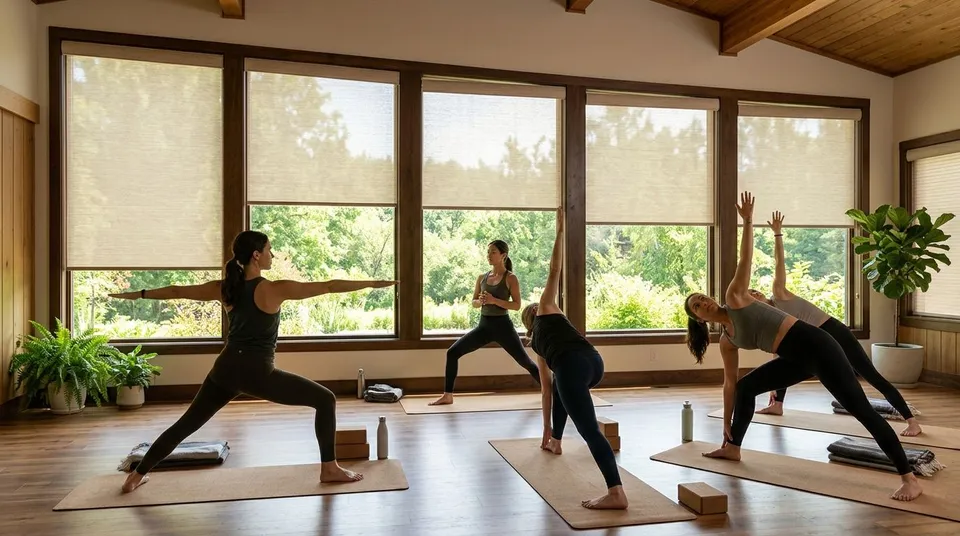
Fitness studios and yoga spaces need window shades that cut mirror glare, block street sightlines during evening classes, and hold up against the heat and humidity of a packed hot yoga session, and the right pick depends on how much natural light your instructors actually want on the floor.
- Blinds for fitness studios and yoga spaces work better as shades, since slatted blinds collect dust and rattle during floor work.
- Zebra shades give studios adjustable privacy without killing the natural light morning classes rely on.
- Cellular shades add insulation and cut outside noise, useful for studios sharing walls in a strip mall.
- Motorized shades let staff dim mirror glare between sessions without walking the room, a real time-saver on 2026 class schedules.
- Rainier Blinds measures and installs custom shades and drapery across the Greater Seattle Area, not slat blinds.
Why window shades matter for fitness studios and yoga spaces
The term people search is "blinds for fitness studios and yoga spaces," but the product that actually holds up in a studio is a shade, not a slatted blind. Slats collect dust, rattle when a class moves through sun salutations, and snag on resistance bands and mats.
A studio's windows do three jobs at once: they let in enough daylight to keep a room from feeling like a basement, they block direct glare off a mirror wall during afternoon sun, and they give instructors privacy control for evening classes when the lights are on and the street outside is dark. Get any one of those wrong and you either fight glare all day or black out a room that needed morning light. Window treatments for home gyms run into the same mirror-glare problem at residential scale, and the fabric logic is identical, just with bigger windows and more foot traffic in a commercial studio.
Why this matters for your class schedule, not just your windows
A 6am hot yoga class and a 7pm barre class need opposite things from the same window. Morning sessions want daylight without the sun hitting the mirror wall at a hard angle. Evening sessions want privacy from the sidewalk without going full blackout, since most studios still want visible activity from the street for foot-traffic marketing.
Shade fabric and opacity decisions have to serve both. That is why a single roller shade in one opacity almost never carries a full studio day in 2026.
Audit your glare before you pick a fabric
Walk the room at the two worst hours: mid-morning if you face east, late afternoon if you face west. Note where the sun actually lands on a mirror wall, not just where the window is.
- Mark which windows hit the mirror wall directly versus which only light the floor
- Check glare again in summer, when a higher sun angle changes where the hot spots land
- Note any street-facing glass that needs evening privacy after dark
- Flag skylights or clerestory windows separately, since they need their own shade type
Match opacity to each room's actual purpose
A reception area, a mirrored workout floor, and a quiet meditation room all need different light levels. Treating the whole studio with one opacity is the most common mistake studios make.
- Light-filtering fabric on the main floor keeps daylight without hard glare on mirrors
- Blackout fabric for meditation or restorative rooms where students close their eyes for 30 minutes or more
- Sheer or lighter opacity in reception areas that should look open and busy from the sidewalk
- Room-darkening but not full blackout for barre or reformer rooms running mixed daytime and evening classes
Studios that get this step wrong end up squinting through a glare-blasted vinyasa flow or running blackout shades in a lobby that now reads as closed for business. How to choose shade opacity for privacy and natural light breaks the opacity tiers down room by room.
Choose fabric built for sweat and humidity, not just looks
Hot yoga rooms run in the 95 to 105 degree range with added humidity from a room full of bodies, and that combination warps the wrong fabric fast.
- Ask specifically about commercial-grade heat tolerance, not standard residential ratings
- Vinyl-backed or PVC-coated roller fabrics hold up better in rooms that regularly hit high heat
- Skip natural fiber woven wood in any room running hot classes; humidity swings distort the weave over a season
- Moisture-rated cellular shades work in studios with heated rooms without the honeycomb collapsing
Get cords out of the way of floor work
A studio floor is not a living room. Standard corded shades become a liability the moment a class does floor stretches or partner work near a window wall.
- Cordless lift systems remove the biggest snag and trip risk on a studio floor
- Motorized shades eliminate cords entirely and are worth it in any room with regular mat work
- If motorized is not going in every room, prioritize cordless in the rooms with floor-based classes
- Keep any remaining corded units in non-floor spaces like reception or a back office
Decide between manual and motorized operation
Manual works fine for a single-room studio with one class type. It stops making sense once you run back-to-back classes with different light needs.
- Manual shades cost less upfront and need no wiring, fine for a small single-instructor studio
- Motorized shades let front-desk staff adjust light from a wall switch or app between sessions
- Smart shades on a schedule open before a 6am class and close before an evening barre session automatically
- Battery-powered motorized units avoid running wiring through a leased commercial space, which matters on a short lease
Book a free studio consultation
An on-site visit gets exact measurements and real pricing on the spot.
Plan for street-level privacy after dark
A studio with floor-to-ceiling glass looks great at 10am and turns into a fishbowl at 7pm once the interior lights are on and the street outside goes dark.
- Test privacy at night, not just during the day, since glass reverses visibility after dark
- Zebra shades dial privacy up for evening classes without costing you daylight during the day
- Full blackout only makes sense in rooms that never need street-facing visibility
- Layer sheer plus a privacy layer when the studio wants a visible-but-private look at night
Cut outside noise if you share walls
Strip mall and mixed-use studios deal with traffic, neighboring tenants, or a parking lot right outside the glass. A thin roller shade does nothing about sound.
- Cellular shades add an insulating layer that also buffers some ambient outside noise
- Double-cell honeycomb fabric dampens more sound than single-cell
- The same fabric logic behind cellular shades for noise reduction applies to a street-facing yoga room
- Add drapery on the loudest wall as a second layer when noise is a constant complaint
Shades and drapery options for fitness studios, compared
| Option | Best for | Key limitation |
|---|---|---|
| Roller shades | Reception areas and large studio windows needing simple light control | No added insulation or noise reduction |
| Cellular shades | Strip mall studios needing insulation and a noise buffer | Adds visible stack depth on very tall commercial windows |
| Zebra shades | Yoga rooms wanting adjustable privacy without going full blackout | Not a substitute for true blackout in a meditation room |
| Woven wood roman shades | Boutique studio lobbies and front-of-house spaces | Less light-blocking and less humidity-tolerant than coated fabrics |
| Outdoor shades, steel wire or zipper track | Studios running classes on a covered patio or deck | Not designed for interior room blackout |
| Drapery | Framing large glass walls in a studio lobby | Needs more regular cleaning in a space full of sweat and dust |
Verdict: for most Greater Seattle fitness studios, motorized zebra shades on the main floor plus blackout cellular shades in the meditation room is the combination that solves glare, privacy and scheduling at once, and Rainier Blinds measures and installs both with its own crew.
“Test your studio's privacy at 7pm with the lights on, not at 10am with the sun out. Glass reverses after dark.”
Common mistakes fitness studios make with window shades
- Using one opacity for the whole studio. A single light-filtering fabric everywhere means the meditation room never gets dark and the mirror wall never stops glaring.
- Skipping humidity-rated fabric in hot rooms. Standard residential fabric warps under sustained 95 to 105 degree heat with moisture.
- Leaving cords in floor-work rooms. A corded shade next to a stretching or partner-work area is a snag waiting to happen.
- Ignoring night-time visibility. Studios test privacy during the day, then get blindsided by how visible the room is after dark.
- Self-measuring commercial openings. Older buildings run out of square, which is why Rainier Blinds sends its own measuring crew instead of a self-measure kit.
FAQ
What is the best window shade for a yoga studio with a mirror wall?
Light-filtering roller or zebra shades work best on a mirror wall because they cut direct glare without blocking the daylight a morning class needs. Full blackout is usually reserved for a separate meditation or restorative room.
Do fitness studios need blackout shades?
Only in specific rooms, not the whole studio. A restorative or meditation room benefits from blackout fabric, while a main workout floor does better with light-filtering opacity.
Can shades handle the humidity from hot yoga classes?
Vinyl-backed or PVC-coated roller fabrics and moisture-rated cellular shades hold up in rooms running 95 to 105 degrees with added humidity. Untreated natural fiber fabrics distort over a season of regular hot classes.
Should a fitness studio use motorized or manual shades?
Manual works for a single-room studio running one class type all day. Motorized or smart shades pay off once you run back-to-back classes with different light needs, since staff adjust the whole room from a switch instead of walking to each window.
How do you stop street glare without blocking natural light?
Zebra shades and light-filtering roller shades cut hard glare while still passing daylight, which keeps a studio floor usable without darkening the room. Check the glare at the hour the sun hits your mirror wall directly.
Are zebra shades good for privacy in a ground-floor studio?
Yes. Zebra shades let you dial privacy up in the evening while keeping daylight during class hours, which suits street-facing ground-floor studios that still want visible activity for foot traffic.
How much does it cost to install shades in a fitness studio?
Cost depends on window count, size, fabric and whether rooms are motorized. Rainier Blinds gives real pricing on the spot after a free consultation rather than an emailed estimate.
Can window shades reduce noise in a yoga studio?
Cellular shades, especially double-cell honeycomb fabric, add an insulating layer that dampens some outside traffic and tenant noise. They help, but they are not full soundproofing.
One last thing
Studios running an early hot yoga class and a late barre class in the same room in 2026 get the most out of motorized cellular shades on a schedule: open before the 6am session, closed before the 7pm one. That single automation removes more daily friction than any fabric upgrade on this list, because nobody is carrying mats and fumbling with a wand at the same time.