
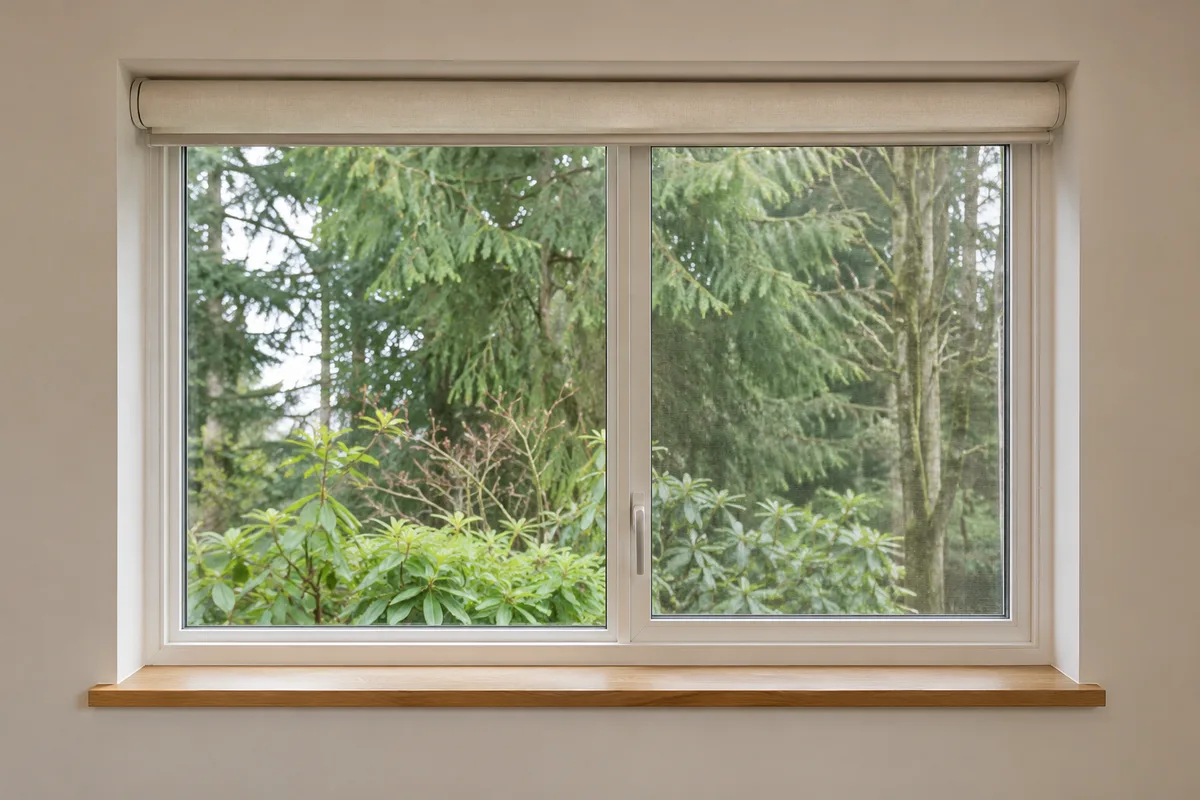
A shade can fit a window neatly and still get in the way when it’s time to take out the screen. The same goes for a sash that tilts in for cleaning. The brackets and the raised shade stay in place, even when the glass is uncovered.
If you’re choosing shades for an Auburn or Greater Seattle home, show your measurer how you use and maintain the window before settling on the mount. That quick walkthrough can reveal a clearance issue that width and height alone won’t show.
Quick takeaways
- Show how the window opens and how the screen is removed on your particular model.
- Check the space taken up by the shade and hardware when the shade is fully raised.
- Compare mount options using the actual screen and sash movement, not just the depth of the opening.
- Test normal window operation before the installer leaves.
Show how the window moves
Start with the window you already have. Open it the way you normally do and point out the latch, crank or handle. Then think about what you need to reach when you clean it. On some double-hung windows, a sash tilts inward for cleaning, taking up room that it doesn’t use when it simply slides up. See Pella’s window cleaning guidance and follow the instructions for your particular window model.
If two windows look alike from across the room but open differently, flag both. A fixed pane beside an operable pane may not need the same clearance, even if the shades are meant to match.
Check the screen’s removal path
At the consultation, point out the screen’s tabs or latches, the side it comes out from, and where you need to hold it. The useful question is whether you can still get the frame out and back in without forcing it. Andersen’s screen guidance points owners to model-specific instructions and explains how to avoid bending a screen during handling.
Leave the screen where you normally keep it. If you aren’t sure how it comes out, a photo of the window label or the owner’s manual can help. You don’t need to remove any hardware before the visit.
Look at the shade when it’s raised
A raised roller shade still leaves a roll and bottom bar near the top. A cellular shade gathers its fabric there instead, and a Roman shade lifts into folds. Before you choose, ask where the raised shade and its hardware will sit in relation to the sash, screen frame and the hand that operates them.
An inside mount sits within the opening. An outside mount places the shade on or above the trim or surrounding wall, depending on the setup. Moving it out of the opening may free space, but the new position still needs to clear the moving window and any nearby trim or drapery. For rollers, the fabric’s path matters too. See our guide to standard and reverse roll roller shades for the difference.
Keep the space around the window usable
Picture your cleaning day with the room laid out as usual. Can you get past the sofa to the sill? Do open drapery panels sit in front of a latch? If you’re replacing trim or adding a deeper sill, mention that before the final measure. Those details can matter more than a generic clearance recommendation.
After installation, raise the shade and try your normal window operation with the installer present. On a window you maintain from indoors, ask to review the relevant cleaning or screen access position, where appropriate for that model. If something catches, stop and point it out instead of pushing. Our shade installation prep guide has more suggestions for the visit.
Frequently asked questions
Will I have to remove the shade to clean the window?
It depends on the window and the mounting hardware. If you want to clean from indoors without removing the shade, make that a requirement at the measure so the proposed layout can be checked.
Does an outside mount guarantee that the screen will come out?
No. It can move hardware away from the opening, but the screen still needs room to release, move through its intended path and go back in. Check the actual window and treatment together.
Plan the fit before you order
Rainier Blinds brings samples, measures and installs custom indoor shades. If a screen, sash or handle is likely to be tight, show us how you use it during your in-home consultation. Consultations are free and without obligation within 60 driving miles of Auburn. See the FAQ for projects farther away.