
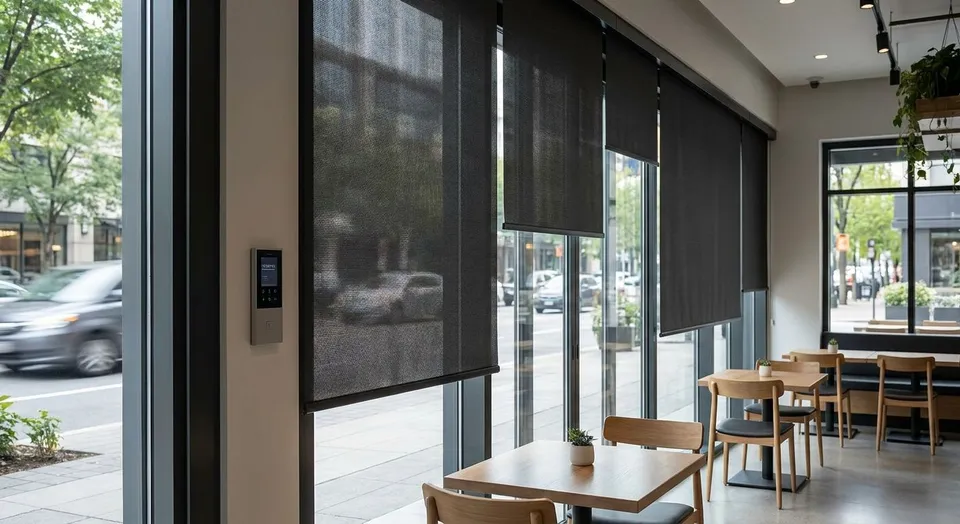
Motorized vertical blinds for commercial storefronts show up in a lot of searches from business owners trying to control glare on wide glass fronts, but Rainier Blinds does not sell or install vertical blinds of any kind and instead measures and installs motorized roller shades, zebra shades, and outdoor zipper shades for storefront glass across the Puget Sound. The old vertical slat track that runs along sliding storefront doors was built for offices in the 1980s, not for daily foot traffic, tempered glass, or the glare a modern retail counter deals with from open to close.
Storefronts have needs a living room never has: staff opening and closing the same window covering dozens of times a day, glass that runs floor to ceiling, and a need to keep signage and merchandise visible without cooking them in direct sun. Rainier Blinds measures and installs shades built around those constraints, not around a residential slat system retrofitted for commercial glass.
- Rainier Blinds does not install motorized vertical blinds for storefronts or any other application in 2026.
- Motorized zebra shades and roller shades control glare and privacy on storefront glass without a slat mechanism that jams under daily traffic.
- Outdoor zipper track shades cover recessed storefront patios and exterior seating where vertical blinds were never designed to go.
- Scheduling motorized shades to open at business hours and close after closing time replaces the manual vertical blind wand entirely.
Why motorized shades matter for commercial storefronts
A storefront's glass is its billboard and its liability at the same time. Direct sun on west facing storefront glass fades merchandise displays, washes out point of sale screens, and pushes customers away from window seating during the afternoon. A window covering that a manager has to hand crank or wand open every morning adds a task nobody has time for before opening.
Vertical blinds solve none of that well on commercial glass. The slats catch on cart traffic near entrances, the chain mechanism at the base wears out fast on doors that open dozens of times a day, and the stack width eats into usable glass on narrower storefront bays. Motorized roller and zebra shades solve the same glare and privacy problem with a single continuous fabric that rolls up out of the way and a motor that runs on a schedule instead of a hand crank.
Measure your storefront glass and door openings
Start with an accurate measurement of every glass panel, transom, and sliding door section before comparing options. This step decides mount type, fabric width limits, and whether a single shade or a multi-panel system covers the opening.
- Measure inside mount depth on each frame if the glass is recessed
- Note any obstructions like door handles, alarm sensors, or mullions
- Record height separately for transom glass above the main storefront window
- Flag any curved or arched storefront glass that needs a custom track
- Confirm whether doors slide, swing, or stay fixed, since that changes shade placement
Choose motorized roller shades or zebra shades over vertical blinds
Once the openings are measured, decide on fabric and control style. This is the step where the vertical blind question gets settled for good.
- Motorized roller shades for a single continuous fabric look with strong glare control
- Motorized zebra shades for alternating sheer and solid bands that switch from daytime visibility to full privacy
- Light filtering fabric to keep the storefront bright while cutting direct glare
- Blackout fabric for back office windows or storage room glass that faces the street
- Skip vertical blinds entirely; the chain drive and slat stack were never built for commercial glass cycles
Plan for commercial grade motors and power access
Commercial motorized shades run far more open and close cycles per week than a residential window, so the motor and power plan matter more here than in a house.
- Confirm whether an outlet is already near the header for a plug in motor
- Ask about hardwired motor options if the storefront is mid-renovation and walls are open
- Check battery backup runtime if the shade needs to keep working during a power blip
- Plan for a wall switch or keypad near the register for staff who need manual override
- Confirm the motor's duty cycle rating can handle multiple daily opens and closes
Schedule installation around business hours
A storefront cannot close for a full day to get shades installed, so scheduling matters as much as product choice.
- Ask for early morning or after hours install windows before or after the storefront opens
- Confirm how long a single bay of storefront glass takes to complete
- Coordinate with any signage or awning installers working the same week
- Protect display fixtures and flooring near the glass during install
- Test the motor and remote on site before the crew leaves
Set operating schedules for glare, privacy and after-hours display
Once shades are in, the real value shows up in how they are scheduled, not just how they look.
- Program shades to open at business open and close at business close automatically
- Set a partial close position for peak glare hours on west facing glass
- Pair the schedule with a smart home hub if the storefront already runs on one; see how to pair motorized shades with a smart home hub for setup notes
- Use a night position that shows product displays through zebra shade sheer bands while blocking direct view of the register
- Review the schedule seasonally since Puget Sound sun angles shift from summer to winter
For step by step programming details on any motorized shade system, see how to program motorized window shades.
Coordinate multiple bays or multi-location storefronts
A single retail chain with several storefronts across South King County needs a consistent approach across every location, not a one off fix per store.
- Standardize on one fabric and control system across locations for easier service calls
- Keep a record of exact glass measurements per location for reorders
- Assign one point of contact per property for scheduling future service
- Budget for a phased rollout if all locations cannot be measured in one visit
- Coordinate with property managers on buildings with shared storefront glass; see custom blinds for multi-family property managers for a similar multi-unit approach
Maintain and service commercial shades
Commercial shades take more wear than residential ones, so a maintenance routine keeps them running through 2026 and beyond.
- Wipe fabric down monthly to clear storefront dust and exhaust residue
- Check motor mounting hardware twice a year for loosening from vibration near doors
- Replace batteries on schedule if the shade runs on battery power rather than hardwired
- Watch for fabric fraying near high traffic entry points and address it early
- Keep a spare remote or keypad on site in case the primary control is lost
Comparison: shade options for storefront glass
| Option | Best for | Key limitation | Verdict |
|---|---|---|---|
| Motorized zebra shades | Storefronts needing daytime visibility and after hours privacy | Banded look may not suit a historic storefront facade | Buy |
| Motorized roller shades | Simple, continuous glare and heat control | No dual sheer/privacy layering | Buy |
| Motorized outdoor zipper shades | Recessed storefront patios or exterior seating areas | Requires weather rated exterior hardware | Buy for exterior bays |
| Manual roller shades | Single bay storefronts on a tight renovation timeline | Staff must operate by hand at open and close | Hold as a budget bridge |
| Vertical blinds | Nothing on a modern storefront | Chain mechanism and slat stack fail under daily commercial traffic | Skip |
Rainier Blinds does not install vertical blinds, full stop, and for storefront glass across the Greater Seattle Area recommends motorized roller shades or zebra shades instead. For picture-window scale storefront glass, the same motor and fabric logic used on residential picture windows applies; see motorized shades for large picture windows for the fabric and mount notes that carry over. Storefront sliding doors get the same treatment as any large sliding glass opening; see best motorized shades for sliding glass doors for how those systems handle heavy daily use.
Get a storefront shade consultation
Rainier Blinds measures and installs motorized shades for storefront glass across the Puget Sound.
Common mistakes storefront owners make
- Searching for vertical blinds instead of a system built for commercial traffic. The slat and chain design was never rated for dozens of daily opens on a retail door.
- Skipping the power plan until after ordering. A motor with no nearby outlet or hardwire path stalls installation and adds a second site visit.
- Measuring only the main glass panel and missing transom windows. Transom glass above a storefront door still needs coverage or it undoes the glare control below it.
- Setting one static schedule and never adjusting it. Puget Sound sun angles shift enough between summer and winter that a fixed schedule leaves glare uncontrolled for weeks at a time.
- Treating every location in a multi-store chain as a separate project. Standardizing fabric and controls across locations cuts future service time significantly.
FAQ
What's the best window covering for a commercial storefront?
Motorized roller shades or motorized zebra shades are the best fit for commercial storefront glass in 2026 because they handle daily open and close cycles without the chain mechanism failures common on vertical blinds. Zebra shades add the option of daytime visibility with after hours privacy from the same fabric.
Is motorized better than manual for storefront shades?
Motorized is the better fit for any storefront that opens and closes shades daily, since a schedule removes the task from staff entirely. Manual shades work as a short term budget option for a single bay storefront on a tight renovation timeline.
Do vertical blinds work for storefront glass?
Vertical blinds are not a good fit for storefront glass and Rainier Blinds does not install them for that reason. The chain drive and slat stack wear out fast under the daily traffic a retail entrance sees.
How much does it cost to motorize storefront shades?
Storefront pricing depends on panel dimensions, access, fabric, mounting, and controls. We prepare a quote for the selected configuration after reviewing the project.
Can motorized shades survive daily commercial use?
Yes, motorized roller and zebra shades built for commercial glass are rated for multiple daily open and close cycles, unlike a vertical blind chain mechanism. The motor's duty cycle rating is the number to check before ordering for a high traffic storefront.
What power source do motorized storefront shades need?
Motorized shades run on a plug in transformer, a hardwired connection, or battery power with a backup runtime. Storefronts mid-renovation with open walls are the easiest place to add a hardwired connection before drywall goes up.
How long does installation take for a storefront?
Installation time depends on the number of glass panels and whether the crew works during or outside business hours. Early morning or after hours scheduling is standard for storefronts that cannot close during the day.
Can shades be scheduled to open and close automatically?
Yes, motorized storefront shades can be programmed to open at business start and close at business end without staff involvement. A partial close position can also run automatically during peak glare hours on west facing glass.
One last thing
The detail most storefront owners miss is that zebra shades solve two problems vertical blinds never could at once: they let product displays stay visible through the sheer bands during business hours, then shift to full privacy after closing without swapping any hardware. That single fabric change is the reason motorized zebra shades have replaced vertical blinds on commercial glass across most of the Puget Sound heading into 2026.
Related guides
- Motorized shades for large picture windows
- Best motorized shades for sliding glass doors
- Custom blinds for multi-family property managers
- How to program motorized window shades
- How to pair motorized shades with a smart home hub
In-home consultations are free within 60 driving miles of Auburn. Farther projects are considered individually; any consultation fee is quoted before booking and credited toward your order.