
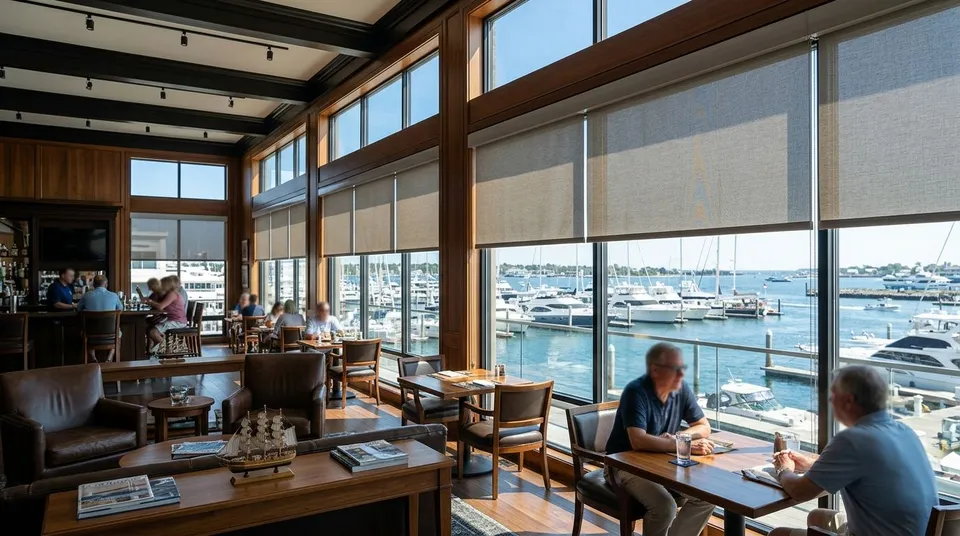
Motorized shades for yacht club clubhouses solve a specific problem: floor-to-ceiling water views that flood a great room with glare by midmorning and turn bar tops into hot spots by mid-afternoon. This guide covers which shade types hold up in a marina environment, how motorization changes daily operations for clubhouse staff, and what to check before anyone signs a contract in 2026.
- Motorized roller shades in a solar or light-filtering fabric are the default pick for yacht club clubhouse great rooms facing open water.
- Outdoor zipper-track and steel wire shades handle covered decks and marina-facing patios where wind and salt air rule out standard indoor fabric.
- Manual chain-operated shades still work fine on small, low, easy-to-reach windows; motorization earns its cost on tall clerestory glass and multi-window walls.
- Smart scheduling lets clubhouse staff set one shade position for breakfast service and another for a sunset event without touching a wall switch.
- Rainier Blinds measures and installs motorized shades for waterfront and clubhouse properties across the Greater Seattle Area.
Why motorized shades matter for a yacht club clubhouse
A clubhouse isn't a house. Most have a wall (or three) of glass pointed straight at open water, which means direct glare for a large chunk of the day and no neighboring building to break it up. Staff turnover is common in hospitality and food service settings, so a shade system that requires training or a stepladder becomes a problem within a season, not a decade.
Events compound this. A breakfast meeting, an afternoon board lunch, and an evening wedding reception all need different light and privacy in the same room, sometimes on the same day. Manual cords on a 12-foot window wall mean someone is climbing or reaching every time the light changes. Rainier Blinds measures and installs both manual and motorized shades, and for clubhouse-scale rooms in 2026, motorized is the option that actually gets adjusted instead of left in one position all season.
Salt air and humidity are the other variable a residential shade guide won't mention. Standard indoor hardware corrodes faster near open water, and that alone rules out several product categories clubhouses might otherwise consider.
Step-by-step: outfitting a yacht club clubhouse
Assess sun exposure window by window
Don't treat the whole building as one project. Walk the space at three points in the day (morning, midday, late afternoon) before ordering anything.
- Note which walls face the marina or open water directly; those get the worst glare
- Flag any clerestory glass or windows above eight feet separately, since they need a different operation plan
- Mark rooms where heavy drapery currently blocks the water view entirely just to manage glare
- Identify rooms used for food service, where sun on glassware and place settings matters more than in a meeting room
Match fabric openness to each room's job
The fabric decision should follow how the room is actually used, not a single house-wide standard.
- Bar and lounge windows facing west: a lower-openness solar fabric that cuts glare without going fully opaque
- Dining and banquet rooms: light-filtering fabric that keeps the water view visible during daytime events
- Meeting and back-of-house rooms: cellular shades add some thermal benefit where insulation matters more than the view
- Keep openness percentages consistent within a single room so light doesn't look uneven across a window wall
Solve tall and hard-to-reach glass with motorization
This is where motorized shades stop being a nice-to-have and start being the only practical answer. Clerestory windows, multi-panel walls, and anything above a normal reach need power, not a wand.
- Motorized roller shades handle wide window walls in one continuous line instead of several manual units
- Battery-powered motors work for retrofit clubhouses where running new wiring isn't practical
- Remote or app control removes the need for a ladder or pole every time the light shifts
- Grouped motors let one command move an entire wall of glass instead of five separate shades
Add smart scheduling for staff and events
Once shades are motorized, smart control is the layer that actually changes daily operations.
- Program one preset for daytime service and another for evening events, so staff aren't adjusting shades manually between shifts
- Group shades by room through a smart hub so a single command covers the whole great room
- Hand front desk or event staff one app instead of a wall of individual switches
- Set a seasonal schedule that adjusts automatically as sun angles shift through the year
Book a clubhouse shade consultation
Free in-home measure and quote for waterfront and clubhouse properties.
Protect outdoor deck and patio seating
Most marina clubhouses have a covered deck or patio that sees more foot traffic than the interior on a good weekend, and that space needs its own shade line, not an indoor product pushed outside.
- Outdoor zipper-track shades hold their line against wind better than a standard roller in an open opening
- Steel wire guided shades cover larger openings where a track system isn't practical
- Keep the outdoor shade product line separate from the indoor line; they aren't rated the same way
- Motorized outdoor shades avoid a manual crank in a spot where wind resistance makes hand operation harder
Plan for humidity and salt air before you install
This step gets skipped constantly and it's the one that causes callbacks within a year or two.
- Ask specifically about corrosion-resistant hardware for any shade near an open deck or slip
- Schedule a hardware check each season rather than waiting for something to fail
- Keep motor housings sealed and away from direct spray zones
- Avoid product lines that absorb moisture in a marine environment
For a comparison of how a similar hospitality property approached this, motorized shades for boutique hotel lobbies covers a lot of the same glare and staff-control issues on a smaller scale.
Comparison: which shade type for which clubhouse room
| Shade type | Best for | Operation tiers | Key limitation |
|---|---|---|---|
| Roller shades (solar/light-filtering) | Great room windows facing open water | Manual, motorized, smart | Adds less insulation value than cellular shades |
| Cellular shades | Meeting rooms, offices, back-of-house | Manual, motorized, smart | Bulkier fold than roller shades on very wide window walls |
| Zebra shades | Lounge and bar areas needing adjustable light | Manual, motorized, smart | Sheer bands still let some glare through at direct angles |
| Outdoor shades (zipper track/steel wire) | Covered decks and patios facing the marina | Manual, motorized, smart | Not rated for fully exposed, unenclosed openings |
| Drapery | Banquet rooms and event spaces | Manual, motorized | Needs more wall or ceiling space than a shade pocket |
Verdict: motorized roller shades in a solar fabric are the right default for a yacht club clubhouse great room, with outdoor zipper-track shades handling the covered deck separately. For rooms like a small board office or storage area with one low window, a manual shade is still the sensible, lower-cost choice.
Common mistakes yacht club clubhouses make
- Running manual cords on tall clerestory glass because it looks cheaper upfront, then finding staff avoid adjusting it because it's slow and requires a ladder.
- Choosing blackout fabric for the main water-view room to fix afternoon glare, which also kills the view during every daytime event.
- Installing standard indoor-grade hardware on a covered but open-air deck, then replacing it within a season or two once salt air gets to it.
- Skipping a wiring plan before a renovation, which forces exposed cords or constant battery swaps on hard-to-reach motorized shades.
- Treating every room the same product line instead of matching fabric and operation type to how each room is actually used, bar versus meeting room versus open deck.
FAQ
What's the best motorized shade for a yacht club clubhouse great room?
A motorized roller shade in a solar or light-filtering fabric is the standard pick for a clubhouse great room facing open water in 2026. It cuts glare without fully blocking the view, and motorization handles the tall or multi-panel windows common in these rooms.
Are motorized shades worth the cost over manual shades in a clubhouse?
Yes for tall, wide, or multi-window walls where staff would otherwise need a ladder or pole to adjust light throughout the day. Manual shades still make sense for small, low, easy-to-reach windows in back-of-house rooms.
Can outdoor shades handle a marina-facing deck?
Outdoor zipper-track and steel wire shades are built for covered, open-air spaces like a marina deck, but they aren't rated for fully exposed openings with no cover at all. A covered patio or breezeway is the right application.
Do zebra shades work for a bar or lounge area?
Zebra shades give adjustable light and privacy through their banded sheer and solid layers, which suits a bar or lounge where light needs change through the day. Direct sun angles still let some glare through even at the tightest banding.
Do motorized shades require a full rewiring project?
No. Battery-powered motorized shades are a common retrofit option for existing clubhouses where running new low-voltage wiring through finished walls near water isn't practical.
Can clubhouse staff control shades in multiple rooms from one app?
Yes, motorized shades grouped through a smart hub let one preset or command move shades across an entire room or building section instead of adjusting each window individually.
Do cellular shades make sense in a clubhouse setting?
Cellular shades work well in meeting rooms and back-of-house spaces where some thermal insulation matters more than an open water view. They're bulkier than roller shades on very wide window walls, which is why great rooms usually go with roller shades instead.
How often should shade hardware be checked in a marine environment?
Hardware near open decks or slips should get a seasonal check, since salt air corrodes standard fittings faster than it would in a typical inland home. This is separate from the shade fabric itself, which doesn't need the same attention.
One last thing
Battery-powered motorized shades are often the fastest fix for an existing clubhouse, not the compromise option. Running new wiring through finished walls near a marina slip is disruptive and, in older buildings, sometimes not worth the disturbance for a shade upgrade. Starting with battery-powered motorized shades on the highest-glare walls and adding wired motors only during a future renovation gets most of the benefit in 2026 without tearing into finished construction now.