
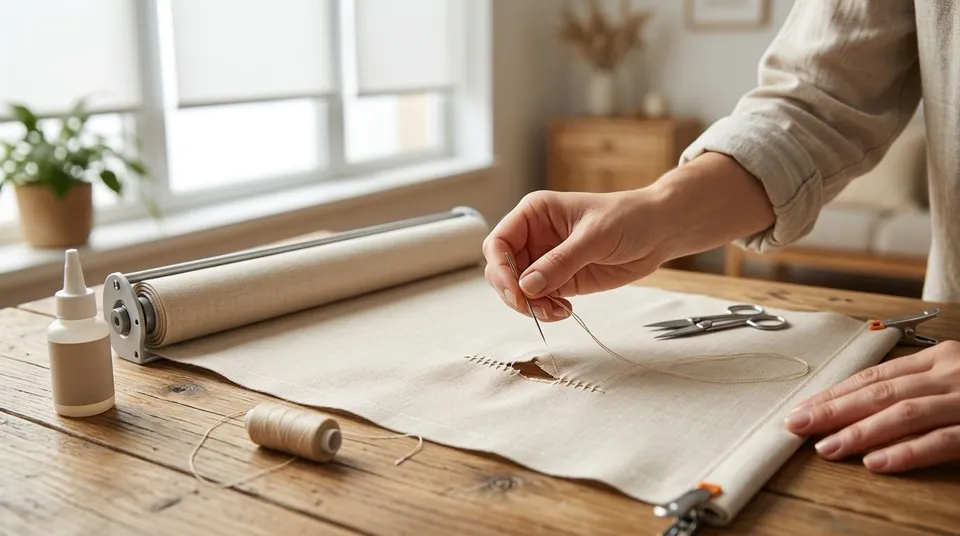
A torn roller shade fabric panel can often be saved with a patch, but only if the tear is small and away from the hem bar or the fabric-to-tube seam. Tears under about 2 inches in the middle of the panel usually take a fusible fabric patch or clear repair tape applied from the back; tears at a seam, at the hem bar, or longer than a few inches almost always mean ordering a new fabric panel instead. The catch most people miss in 2026: roller shade fabric is custom-cut from a wholesale roll, so matching an older panel exactly, especially one that's seen a few years of sun, is not guaranteed even when you go back to the same supplier.
- Patch tears under 2 inches with fusible interfacing or clear fabric tape applied from the back of the panel.
- Tears at the hem bar or fabric seam are structural failures, not cosmetic ones, and need a new panel.
- UV-faded fabric rarely matches a fresh roll exactly, even from the same wholesale source.
- Motorized roller shades need the tube checked before any patch goes on, since fabric tension differs from manual shades.
- Rainier Blinds measures the tear and the mount type during a free in-home visit before recommending patch or replace.
Why this matters
A torn roller shade panel is one of the few window treatment problems that gets worse the longer you wait. Pets, cats especially, tend to widen a small snag every time the shade cycles up and down, and a pinhole near a seam can pull into a two-inch gap within a few weeks. Fabric roller shades installed before 2020 are also more likely to have faded unevenly from window to window, which matters if you're trying to match a patch or a replacement panel later.
The fix depends almost entirely on where the tear sits and how the fabric is made, not on how big the shade is.
How do you repair a torn roller shade?
Follow these steps for a mid-panel tear, which is the most repairable kind of damage:
- Lower the shade fully and lay it flat, or leave it mounted if the tear is easy to reach from both sides.
- Vacuum the area with a brush attachment to clear dust before anything sticks to the fabric.
- Cut a fusible interfacing patch slightly larger than the tear, or use clear fabric repair tape rated for vinyl or polyester screen fabric.
- Apply from the back of the panel so the patch sits away from direct light, not the front, where it will show as a shadow.
- Press or smooth the patch according to the product instructions and let it set flat for several hours before rolling the shade back up.
- Test the roll a few times to confirm the patch doesn't catch on the tube or the bottom bar.
If the fabric keeps unraveling at the edges after patching, that's a sign the weave has degraded from UV exposure and a patch won't hold long term. At that point you're looking at a new panel, not a better patch, and it's worth a look at the routine for keeping fabric roller shades clean before the next install, since grit buildup accelerates fiber breakdown.
Small tears and pinholes: patch from the back
This is the only category of damage where a DIY patch genuinely works. A pinhole or a tear under 2 inches, away from the hem bar, away from the roller tube seam, and on light-filtering or screen fabric rather than blackout vinyl, takes a patch well. Verdict: repair, don't replace.
Tears along the fabric seam or hem bar: replace the panel
The hem bar pocket and the seam where fabric wraps the roller tube carry the load every time the shade moves. A tear here is a structural failure, not a surface scratch, and taping over it just relocates the stress to the next inch of fabric. Verdict: order a new panel.
Torn blackout or screen fabric: match the coating, not just the color
Blackout roller shades have a vinyl or acrylic backing that a patch won't replicate, so a patched blackout panel usually leaves a visible light leak even if the color matches. Screen fabric has an open weave rated by percentage of openness, and a patch changes that opacity locally. Verdict: patch buys time, but plan on replacement for blackout.
Torn motorized shade fabric: check the tube before you patch
Motorized and smart roller shades wrap fabric around a tube that also houses the motor, so a tear near that end can mean the fabric shifted off true, not just ripped. If the shade is also failing to respond to commands, that's a separate issue worth ruling out first, covered in what to check when a motorized shade motor won't respond. Verdict: rule out the motor and tracking before you patch fabric on a motorized unit.
Why roller shade repair outcomes vary
- Fabric weave and weight – tightly woven screen fabric holds a patch better than loosely woven light-filtering material.
- Tear location – mid-panel damage is repairable; hem bar and tube-seam damage is not.
- UV fade on the rest of the panel – a patch or new panel section stands out more against fabric that's faded unevenly.
- Operation type – manual, motorized, and smart roller shades all wrap fabric differently around the tube, which changes how much slack you have to work with during a repair.
- Mount type – inside-mount shades have less clearance around the fabric edge than outside-mount, so a patch that adds even a little bulk can bind against the window frame.
- Age of the shade – fabric older than five to seven years has usually lost enough tensile strength that a patch pulls loose faster than on newer material.
Get the tear measured in person
A free in-home visit tells you patch or replace, no guessing from photos.
Can a torn roller shade be repaired without replacing the whole shade?
Yes, in most cases the fabric panel is the only part that needs attention, not the tube, brackets, or motor. Roller shade hardware, the tube, brackets, and chain or motor, typically outlasts the fabric by years, so a torn panel is usually a fabric-only fix rather than a full shade replacement. The exception is a motorized unit where the tear coincides with a motor or tracking fault, which is a separate mechanical problem.
Is roller shade fabric sold separately from the shade?
Roller shade fabric is custom-cut to the width of your original tube, so it isn't something you buy off a shelf to match an existing shade. Because the fabric comes from a wholesale supplier's current roll stock, an exact color and opacity match for a shade installed years earlier isn't guaranteed, which is why a professional measure before ordering matters more than it would for a stock product.
When should you replace the roller shade instead of patching it?
Replace the panel once the tear reaches the hem bar, runs along the tube seam, or exceeds a few inches, since none of those hold a patch reliably. The same call applies if the fabric elsewhere on the panel has visibly thinned or faded, because a patch will look worse against degraded material than it would on fabric that's otherwise in good shape.
For damage on mechanical parts rather than fabric, stuck cords or uneven pull on a cellular shade point to a different fix, covered in cellular shade repair for stuck or uneven cords. Rainier Blinds' installers see the same three failure points on almost every torn roller shade panel: hem bar pull-out, tube-seam splitting, and mid-panel tearing from pets or blinds getting caught on furniture, and only the last one is a real DIY fix.
FAQ
How do you fix a small tear in a roller shade?
A small tear under about 2 inches, away from the hem bar, patches well with fusible interfacing or clear fabric repair tape applied from the back of the panel. Let the patch cure flat for several hours before rolling the shade back up.
Can you use fabric glue on a roller shade?
Fabric glue works on woven light-filtering fabric but tends to cloud or discolor blackout and vinyl-backed roller shade material. Test glue on a hidden edge first, or use a fusible interfacing patch instead, which doesn't risk clouding the coating.
Why did my roller shade fabric tear near the bottom?
Tears near the bottom usually start at the hem bar pocket, the seam that carries the most tension every time the shade cycles. That's a structural failure rather than surface damage, so a patch there rarely holds for long.
Do roller shade fabrics fade differently across a window?
Yes, fabric closer to direct sun exposure fades faster than the section that stays rolled up inside the tube. That's why a replacement panel ordered years after the original install often doesn't match perfectly, even from the same fabric line.
Is it cheaper to patch or replace a torn roller shade?
A patch on a small, mid-panel tear costs only your time and a repair tape or interfacing kit, while a hem bar or seam tear requires a new fabric panel through a professional measure. Which option applies depends on the tear's location and size, not on the size of the window.
Can a torn motorized roller shade fabric be patched the same way?
Motorized roller shades can be patched the same way for mid-panel tears, but check that the fabric hasn't shifted off true on the tube first. If the motor is also unresponsive, that's a separate issue to rule out before doing any fabric work.
How long does a fabric patch last on a roller shade?
A patch on tightly woven screen fabric can hold for a year or more with normal use, while patches on looser light-filtering weaves tend to loosen sooner. Fabric older than five to seven years holds patches less reliably regardless of weave.
One last thing
A patch that's invisible in daylight often shows up clearly at night, because backlighting from an interior lamp exposes the denser patch material against thinner surrounding fabric in a way sunlight doesn't. If the shade sits in a room used after dark, factor that into whether a patch is worth doing at all, or whether it's time to order a new fabric panel for that window in 2026.