
Our available controls: Rainier Blinds offers Roman and woven wood shades with motorized operation only. Available controls and power options for other products are confirmed at your consultation.
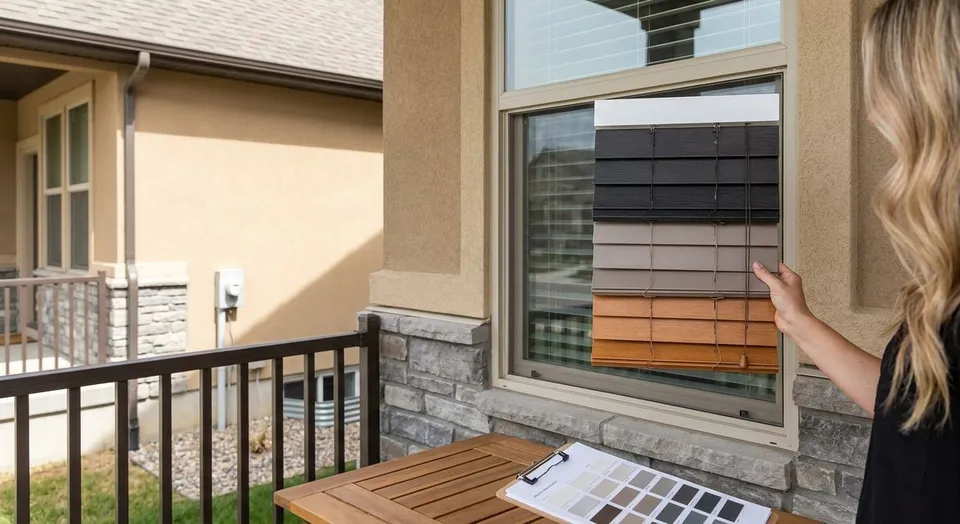
Matching blinds to your home's exterior color scheme comes down to reading undertones and light reflectance value, not just picking a shade that seems to "go" with the siding. Get the undertone and LRV right and the windows read as part of the architecture from the street; get it wrong and every window looks like a mismatched patch stapled onto the facade.
- Match blinds to exterior home color by pairing undertones first, then light reflectance value (LRV), not hue alone.
- White and light-gray exteriors pair best with roller or cellular shades in the LRV 60+ range.
- Dark and charcoal facades read cleaner with LRV 20-40 interior shades, not stark white.
- Warm earth-tone siding (tan, brown, terracotta) pairs with woven wood or warm-neutral roman shades.
- Rainier Blinds measures color and sun exposure on-site before recommending a fabric for Auburn and Seattle-area homes in 2026.
Why This Matters
Blinds and shades are the largest single block of color visible from the street after siding, trim, and roofline. A homeowner who picks fabric by holding a swatch against a paint chip indoors often ends up with something that clashes the second the sun hits it from outside.
The fix is a two-step check: undertone (warm vs. cool) first, light reflectance value (LRV) second. Rainier Blinds uses this same two-step process on-site in Auburn, Bellevue, Tacoma, and Seattle in 2026, because photos and paint chips never show how a shade behaves against real siding in real daylight.
How to Match Blinds to Your Home's Exterior Color
Start with the dominant exterior color family, then work down to trim and roofline. The table below is the fastest way to shortcut the guesswork before you select shades.
| Exterior Color Family | Recommended Shade Color | Best Material |
|---|---|---|
| White / light gray | Warm white, dove gray | Roller shades, cellular shades |
| Charcoal / black | Soft white or matching charcoal (LRV 20-40) | Roller shades, drapery |
| Brown / tan / earth tones | Camel, wheat, warm taupe | Woven wood roman shades, roller shades |
| Blue-gray / coastal | Cool gray, muted neutral | Cellular shades, zebra shades |
| Brick red / terracotta | Warm cream or clay | Roman shades, drapery |
The classic 60-30-10 color-balance rule applies here just like it does indoors: siding is your 60%, trim and roofline are your 30%, and window treatments plus accents make up the remaining 10%. Shades that fight the 10% slot read as a mistake even when the individual colors are fine on their own.
Light and White Exteriors: Match With LRV 60+ Shades
White, cream, and light-gray siding needs interior shades in the LRV 60+ range to avoid a dingy contrast when viewed from outside. LRV (Light Reflectance Value) measures how much light a color bounces back on a 0-100 scale, and it's a more reliable match tool than eyeballing paint chips.
A warm-white roller shade or a dove-gray cellular shade both sit comfortably in that range. Best for light exteriors: warm white or dove gray; avoid: stark bright-white fabric, which can look chalky next to a warmer siding tone.
Dark and Charcoal Exteriors: Balance With LRV 20-40 Interiors
Charcoal, black, and deep navy exteriors have become common on new-construction homes across Puyallup, Bonney Lake, and Bellevue in 2026, and they need the opposite treatment. Bright white shades against a charcoal exterior create a stark punch-out effect from the street.
An LRV 20-40 interior shade, soft white, warm gray, or a charcoal that echoes the siding keeps the window openings from looking like holes cut into the facade. Roller shades and blackout-lined drapery both hold this range well. Best for dark exteriors: soft white, warm gray, or matching charcoal; hold off on pure white until you've seen a sample against the actual siding at midday.
Warm Earth-Tone Exteriors: Pair With Warm Neutral Fabrics
Brown, tan, and terracotta siding is common in older Auburn and Kent neighborhoods, and it carries a warm undertone that clashes with cool grays. Camel, wheat, and warm taupe woven wood roman shades pick up the same undertone family instead of fighting it.
Roller shades in a warm neutral also work here and cost less to cover multiple windows. Best choice: woven wood roman shades for a farmhouse-style warm exterior; avoid: cool-gray fabrics, which read blue-tinted against brown siding.
Blue-Gray Coastal Exteriors: Cool Undertone Shades
Blue-gray and slate-toned siding, popular in waterfront properties around Des Moines and Kirkland, needs a cool-undertone match. Warm beige or camel fabric next to blue-gray siding produces a visible clash even at a glance from the sidewalk.
Cellular shades and zebra shades in a cool gray or muted neutral hold the undertone without adding a competing color. Best choice: cool-toned cellular or zebra shades for coastal-style homes; avoid: warm beige entirely.
Why Blind Color Choice Varies
- Sun orientation: south- and west-facing windows fade lighter fabrics faster, which changes how a color reads over the years.
- Trim color, not just siding: white trim against dark siding shifts the match toward the trim, not the wall.
- Roofline color: dark roofs pull the eye and can make a light shade look brighter than it does on a swatch.
- HOA design guidelines: some South King County communities restrict visible exterior-facing shade colors from the street.
- Material sheen: matte fabrics read truer to the paint chip; sheened fabrics reflect more ambient light and can look lighter than expected.
- Interior sightline: a shade that matches the exterior perfectly can still clash with interior wall color when viewed from inside.
"Match undertone first, LRV second. Hue alone will get the color close and the light wrong every time."
Get Your Exterior Color Matched On-Site
A measure-and-consult visit beats guessing from paint chips indoors.
Should Interior Shades Match Exterior Trim or Siding?
Interior shades visible from the street should match trim color first, siding second, since trim frames the window opening and reads more prominently from the sidewalk. A shade that matches siding but clashes with white or dark trim still looks off from outside.
Do Outdoor Shades Need to Match the House or the Deck?
Outdoor shades on a deck or patio should match the house's dominant exterior color, not the deck stain, since the shade is viewed against the wall behind it far more than against the decking below. Steel wire and zipper track outdoor shades in a neutral that echoes the siding blend in year-round.
What Color Blinds Hide Dirt and Fading Best?
Mid-tone neutrals, dove gray, warm taupe, soft charcoal, hide dust, pollen, and UV fading better than pure white or deep black, both of which show wear at the extremes of the LRV scale. This matters more on west- and south-facing exteriors that see the most direct sun exposure in 2026's longer summer days.
FAQ
How do I match blinds to my exterior home color in 2026?
Match undertone (warm vs. cool) first, then light reflectance value (LRV) second, white and light exteriors pair with LRV 60+ shades, dark exteriors pair with LRV 20-40 shades. Hue alone, without checking undertone and LRV, is the most common mismatch mistake.
What color blinds go with gray siding?
Gray siding pairs with cool-toned neutrals like dove gray or muted white, avoiding warm camel or beige tones that clash with the blue-gray undertone. Cellular and zebra shades in a cool gray hold this match well.
Do blinds need to match the exterior or the interior décor?
Blinds visible from the street should lean toward matching exterior trim and siding undertone, while the fabric texture and opacity can still serve interior décor needs. A neutral within the right LRV range usually satisfies both.
Should outdoor shades match the roof or the siding?
Outdoor shades should match the siding, since the shade sits against the wall far more of the time than against the roofline. A neutral that echoes the siding undertone blends in across seasons.
What is LRV and why does it matter for matching blinds?
LRV, or Light Reflectance Value, measures how much light a color reflects on a 0-100 scale, and it's a more reliable exterior color-match tool than comparing hues by eye. Light exteriors need LRV 60+ interiors; dark exteriors need LRV 20-40.
Can I use the same blind color on every window regardless of exterior color?
A single neutral within the right LRV range for your dominant exterior color works on most windows, but west- and south-facing windows may need a slightly darker option to manage fade and glare. Orientation, not just color, factors into the pick.
Do HOA rules affect which blind colors I can choose?
Some South King County HOA communities restrict visible exterior-facing shade colors, so checking design guidelines before making a selection saves a reorder. This applies mainly to street-facing rooms, not interior-only windows.
One Last Thing
Most homeowners assume siding color drives the match, but trim color and LRV do more of the visual work from the street. A charcoal exterior with white trim reads completely differently than the same charcoal with black trim, and the shade color that works for one will clash with the other. Check trim before selecting shades, not after.