
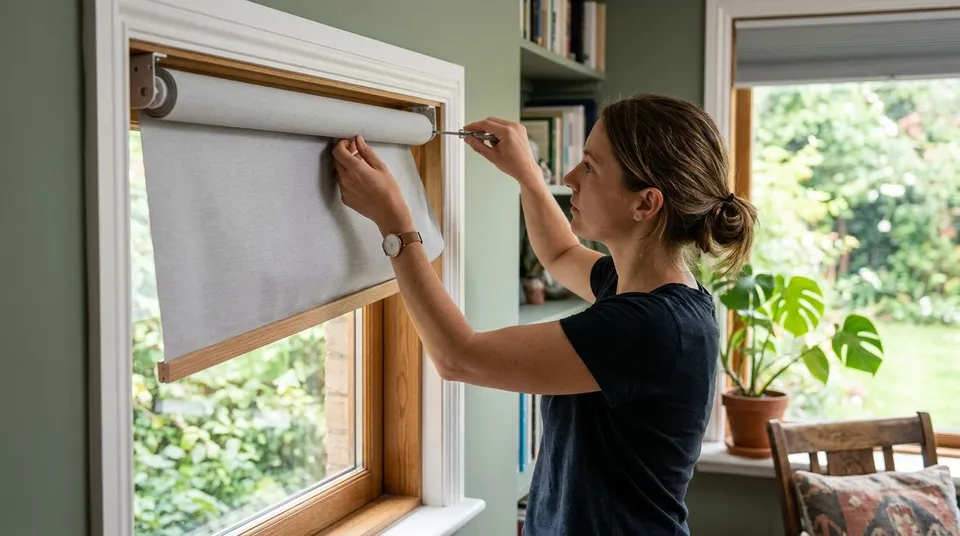
A roller shade that won't roll up evenly is almost always a fabric wrap problem, not a failing spring: the material has crept off square on the tube and needs to be unrolled and reset by hand. On motorized units the same crooked look usually traces back to a limit calibration that slipped after a power blip, and resetting the limits fixes it faster than swapping the motor. Either way, the fix is mechanical and cheap before it ever becomes a reason to replace the shade.
- A roller shade that won't roll up evenly is almost always a crooked fabric wrap, fixable by hand in under five minutes.
- Clutch tension inside manual shades fatigues unevenly with daily use, which is why the roll looks crooked instead of just stiff.
- Motorized roller shades that roll unevenly usually need a limit reset through the app, not a new motor.
- A bent tube or a bracket that's slipped needs replacement, not a rewrap, and is best handled by a professional installer.
- Rainier Blinds measures and installs roller shades across Auburn, Tacoma, Bellevue, and Seattle if the fix goes past a DIY rewrap.
Why this matters
An uneven roll isn't just cosmetic. A shade that climbs crooked strains the fabric against one bracket every cycle, and by year three or four that stress can crack the tube seam or snap the idle end pin. This same wear pattern shows up in cellular shades with stuck or uneven cords, where internal hardware wears unevenly under repeated use rather than failing all at once.
Left alone through a Pacific Northwest winter, the gap an uneven roll leaves also lets in cold air and light along whichever edge sits low. Catching it in 2026 while it's still a wrap issue, not a hardware failure, keeps the repair a five minute job instead of a shade replacement.
Why does my roller shade roll up unevenly?
Work through this order before assuming the shade is broken. Most manual roller shades fix on step two or three, and this sequence works whether the fabric is light filtering or blackout.
- Lower the shade fully and look at the tube. A visible diagonal wrap line means the fabric is climbing off square, and that's your answer.
- Unroll the fabric by hand, keeping both edges flush with the tube ends as you go. Don't force it. Let gravity hold it square.
- Reroll slowly, checking that both edges reach the brackets at the same time every few turns. Cycle it three times to confirm.
- Check the idle end bracket. If the shade slipped off the pin or the bracket shifted in its screw holes, it will pull crooked no matter how straight you reroll it.
- Test the clutch. If the shade catches, slows, or drops on one side partway through the cycle instead of rolling smoothly, tension inside the clutch has gone weak, and rewrapping won't hold.
Here's how the common causes stack up against each other:
| Cause | Manual or Motorized | Typical Fix | DIY or Pro |
|---|---|---|---|
| Crooked fabric wrap | Both | Unroll and rewrap by hand | DIY |
| Worn clutch spring | Manual | Replace clutch mechanism | Pro |
| Bent or slipped bracket | Both | Re-seat or replace bracket | DIY or Pro |
| Limit calibration drift | Motorized | Reset limits through app or remote | DIY |
| Bent tube (rare) | Both | Replace tube and rehang shade | Pro |
Crooked fabric wrap is the most common cause
This happens when the shade gets raised or lowered off angle, often from someone pulling one side of the hem bar instead of lifting the center. A rewrap fixes it in under five minutes on nearly every fabric roller shade, whether it's light filtering or blackout.
Worn clutch tension shows up as slow, uneven lift
Cordless roller shades run on a spring loaded clutch, and clutches fatigue with daily use, not calendar age. A shade opened and closed daily for three or four years puts thousands of cycles on that spring, and it typically loses tension unevenly instead of all at once, which is why the roll looks crooked instead of just stiff.
Bent or misaligned brackets pull the shade off track
If the bracket holding either end of the tube has bent or backed out of the wall, the tube sits at a slight angle even when the fabric is wrapped perfectly. Tighten the screws first. If the bracket itself is bent, it needs to be swapped, not bent back, because bent metal loses its holding strength.
Motorized shades need a limit reset, not a new motor
A motorized roller shade that rolls unevenly after a battery change, a power outage, or a firmware update almost always needs its upper and lower limits reset through the app or remote. Don't assume the motor failed. A limit drift looks identical to a mechanical fault from across the room, and resetting takes about two minutes compared to a motor swap. If the shade also won't respond to any command at all, that's a separate issue with its own fix, covered in this guide to a motorized shade motor that won't respond.
Why roller shades roll unevenly varies by home and shade
- Shade width. Wider shades show a crooked wrap sooner because there's more fabric surface to drift off square.
- Fabric weight. Heavier blackout fabric holds tension differently than a light filtering weave, and heavier rolls are less forgiving of a sloppy rewrap.
- Mount type. Outside mounted shades sit further from the wall and show bracket misalignment more visibly than inside mounted ones.
- Duty cycle. A shade cycled multiple times a day wears its clutch faster than one raised and lowered once.
- Hardware quality. Big box store roller shades often use lighter gauge clutches than shades measured and installed by a dedicated crew, and lighter hardware fatigues sooner.
- Motorized vs manual. Motorized shades trade clutch wear for occasional limit drift, a different failure mode with a different fix.
Can I fix an uneven roller shade myself?
Yes, in most cases. A crooked wrap, a loose bracket screw, or a motorized limit reset are all fixable without tools beyond a screwdriver, and none of them require removing the shade from the wall.
How do I know if I need a new clutch instead of a rewrap?
If the shade still rolls crooked after three clean rewraps, the clutch is worn, not the fabric. A failing clutch also tends to catch or drop suddenly partway through the cycle instead of drifting gradually off square.
Why does my shade only lean to one side when it's partly open?
A lean that only shows up mid cycle, not at the top or bottom, usually means the tube itself is bent, not the bracket or the fabric. A bent tube needs replacement since straightening it doesn't hold under repeated tension.
If the tube's bent, the bracket's stripped out of the wall, or you've rewrapped it three times and it still climbs crooked, that's past the point of a DIY fix. Rainier Blinds measures and installs roller shades across Auburn, Tacoma, Bellevue, and the greater Seattle area with its own crew, not a subcontractor, and a free in-home consultation can tell you in minutes whether it's a hardware swap or a full replacement.
Get a free shade consultation
An in-home visit tells you if it's a rewrap, a clutch swap, or a new shade.
FAQ
Why won't my roller shade roll up evenly?
A roller shade that won't roll up evenly is almost always a crooked fabric wrap, not a broken shade, and hand rewrapping the fabric on the tube fixes it in most cases. If it still climbs crooked after three clean rewraps, the clutch spring inside has worn out.
Can a roller shade be fixed without replacing it?
Yes. Crooked wraps, loose brackets, and motorized limit drift are all repair fixes, not replacement issues, and none require removing the shade from the window.
How long does it take to fix an uneven roller shade?
A basic rewrap takes under five minutes. A clutch or bracket swap takes longer and is best handled by a professional installer.
Is a motorized roller shade harder to fix than a manual one?
Not necessarily. Motorized shades that roll unevenly usually need a limit reset through the app or remote, which takes about two minutes, while manual shades need a hand rewrap or a clutch check.
What causes a roller shade to lean to one side?
A lean that shows up only mid cycle points to a bent tube, while a lean that's consistent from top to bottom points to a slipped or bent bracket.
Do roller shade clutches wear out?
Yes. Clutch springs fatigue with repeated daily use, and a shade cycled multiple times a day wears its clutch faster than one raised once a day.
Should I call a professional for an uneven roller shade?
Call a professional once you've rewrapped the shade three times with no change, or if the bracket or tube itself looks bent, since bent hardware needs replacement rather than adjustment.
Are custom roller shades from a local installer more durable than big box store shades?
Custom roller shades measured and installed by a dedicated crew typically use heavier gauge clutch hardware than off the shelf big box shades, which fatigue less over daily use.
One last thing
Most homeowners rewrap the shade once, see it still climb crooked, and jump straight to buying a replacement. Do three clean rewraps before you write off the shade. Clutch fatigue and bracket drift are the real repeat offenders behind 2026 service calls, and both are cheaper fixes than a new shade if caught before the tube itself bends.