
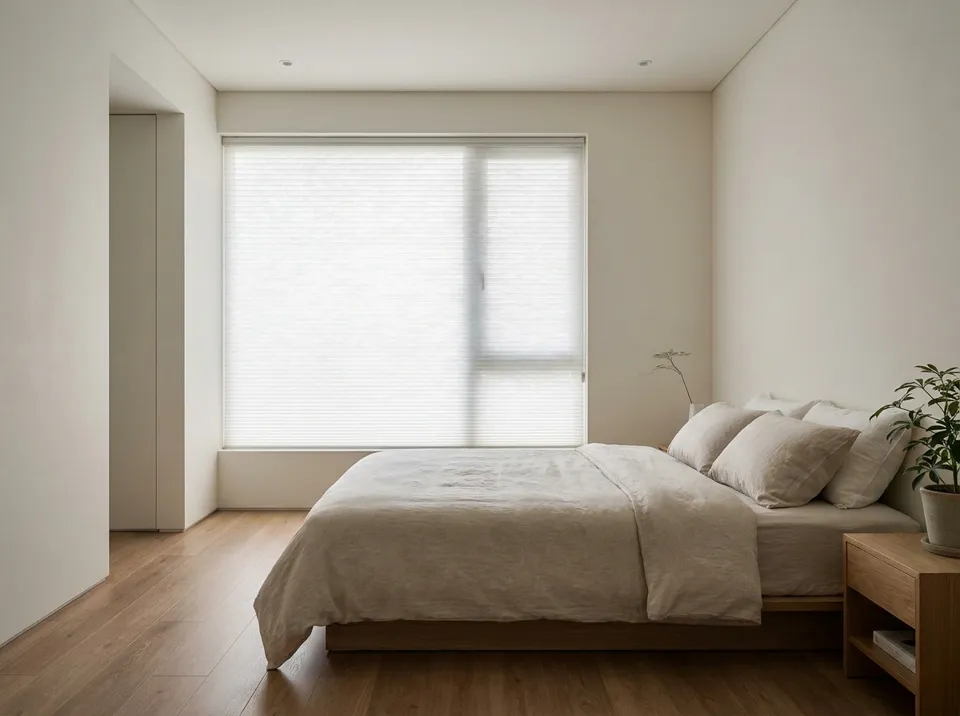
Cellular shades are the highest-value window treatment for Covington, WA homes because the honeycomb cells trap a layer of air at the glass, and that trapped air is what keeps January heat in and July heat out. Covington sits on the wet side of the Puget Sound lowlands — around 150 days a year see measurable rain, and the heating season runs from October into April. Tract and custom builds along Jenkins Creek, SE 272nd Street, and the Kent East Hill edge carry large window walls, and glass is the weak point in every one of those rooms. This 2026 guide explains how cellular construction works, which cell and fabric combinations fit which rooms, what the ordering process looks like with a local crew, and why an in-home measure beats big-box guesswork. Rainier Blinds serves Covington and South King County with measure, quote, and install from our own crew — see the Covington service area for coverage details.
TL;DR
- Double-cell cellular shades insulate best — two air pockets beat one for the money.
- Blackout cellular wins bedrooms; light-filtering cellular wins living areas.
- Cordless lift is the safe default in Covington homes with kids or pets.
- Custom cellular shades start from $275 for a standard rectangular window.
- Rainier Blinds measures, quotes on the spot, and installs with our own crew.
Why cellular shades matter in Covington homes
Covington homes face a double-sided window problem. From October through April, heated air escapes through single- and double-pane glass, and rooms on the north side of the house run cold all season. From June through August, west- and south-facing glass overheats rooms by mid-afternoon — exactly when the rain finally stops. A cellular shade attacks both directions at once: the honeycomb cells form dead-air pockets that slow heat transfer in winter and slow heat gain in summer.
Off-the-shelf cellular shades from big-box shelves or online sellers arrive cut to nominal sizes. A window measured at "roughly 36 inches" gets a 34-and-a-half-inch or a 36-inch shade, and the light gaps at the edges are where drafts and glare walk in. Custom cellular shades are built to a professional measurement taken in your home, which is what makes the insulation claim real instead of decorative. The measurement step — done on site, not from a phone screen — is the difference between a shade that performs and a shade that hangs there looking fine while the room still leaks.
What to look for in cellular shades for Covington homes
Cellular shades look alike in a catalog and behave very differently in a room. Four decisions drive the outcome: cell count, cell size, fabric opacity, and lift hardware. Get those right for each room and the shade does its job for a decade; get one wrong and the draft or the glare comes back.
Cell construction: single, double, and triple cell
Cell count decides insulation. A single-cell shade forms one insulating air pocket; a double-cell stacks two, putting two barriers of dead air between the room and the glass; triple-cell adds a third. Double-cell is the right default for Covington homes in 2026 — it balances insulation, stack height, and price, and it fits standard window depths without crowding cranks or handles. Single-cell suits small windows where stack height matters more than insulation. Triple-cell earns its cost on bedrooms over busy roads and on windows treated as a season-long energy project, but the stack gets tall and the price climbs with it.
Cell size: 3/8-inch vs. 3/4-inch
Cell size trades fit depth against insulation. A 3/8-inch cell suits shallow frames and narrow sashes. A 3/4-inch cell moves more air and insulates better on standard and large windows. Many 1990s and 2000s tract homes around Covington have aluminum-frame windows with slim jambs, so the measure visit matters: the crew checks depth before you order, because a 3/4-inch double-cell shade that does not fit the recess ends up outside-mounted with visible gaps at the sides.
Fabric and opacity, room by room
Cellular fabric comes in three practical levels. Light-filtering cellular softens daylight and holds privacy in living rooms, dining rooms, and kitchens. Blackout cellular is the pick for bedrooms — early summer mornings run bright in the Puget Sound region, and top-floor rooms wake first. Room-darkening sits between the two for media rooms and nurseries that need more than light-filtering but less than full blackout. Pick opacity per room, not per house: the same home usually wants blackout cellular upstairs and light-filtering cellular downstairs.
Lift systems and safety
Cordless spring lift is the safe, clean default — no dangling cords, no tangles, nothing within reach of kids or pets. Continuous-loop lift suits tall windows where a spring lift gets heavy to run. Battery motorization adds remote, app, and scheduled control, which earns its cost on high transoms, stairwell windows, and hard-to-reach glass. Whatever you pick, keep lift cords out of any room children use; cordless is the default answer in 2026.
Inside mount vs. outside mount
Inside mount sets the shade inside the window recess — the trim stays visible and the fit looks built-in. Outside mount covers the frame and suits shallow or off-square openings. Inside mount demands accurate depth; outside mount demands added width so the fabric overlaps the opening on both sides. A five-minute check per window during the measurement visit settles it, and getting it wrong by an inch is the most common do-it-yourself remake in this category.
Top picks for cellular shades in Covington homes
The energy pick: double-cell light-filtering
The default pick. A double-cell cellular shade in light-filtering fabric covers the most common Covington window — a large living-room or dining-room rectangle — with two insulating air pockets and softened daylight. Privacy holds day and night; the view stays readable. Buy for living rooms, dining rooms, and kitchens where you want light control without closing the room off.
The sleep pick: blackout double-cell with side channels
The bedroom pick. Blackout cellular fabric paired with side channels along the window jambs closes the light gaps a bare blackout shade leaves at the edges. Early summer mornings land before 6:00 AM in this region, and edge glow is what actually wakes a room. Buy for primary bedrooms, kids' rooms, and shift-worker bedrooms.
The quiet pick: triple-cell blackout
The road-noise pick. The honeycomb structure dampens sound along with heat, and triple-cell blackout is the densest version of it. Homes facing SE 272nd Street or backing Highway 18 frontage get the most out of it — traffic hum softens along with the light. Consider where road noise bothers sleep; stack height and price run higher than double-cell.
The smart pick: motorized double-cell
The high-window pick. Battery motors pair with remotes, phone apps, and schedules, so a whole wall of shades can drop on a timer. Reserve motorization for tall transoms, stairwell and landing windows, and any glass above reach or behind furniture. Consider for second-story window walls; skip it for windows you adjust by hand every day anyway.
What to avoid
Nominal-size ordering from a phone screen
"About 36 inches wide" builds a shade that is wrong by a quarter inch or a quarter foot — and cellular fabric cannot be trimmed after the fact. Measure with a steel tape to the sixteenth of an inch, or have a professional do it. The measurement is free with Rainier Blinds, so guessing the size yourself buys nothing.
Single-cell everywhere to save a few dollars
Single-cell shades cost less per window, and across ten windows the savings look real — so does the heat loss. Put single-cell only where stack height or budget genuinely forces it. Custom cellular shades with double-cell construction on the main windows are where the upgrade pays for itself over one heating season.
Corded lift in kids' rooms
Looped lift cords on a child's window are a safety hazard and a daily tangle. Cordless spring lift removes the cord entirely, and it is standard on most custom cellular builds. Pay for the cordless upgrade once instead of rigging cord cleats later.
Verdict comparison
| Pick | Best for | Key detail | Verdict |
|---|---|---|---|
| Double-cell light-filtering | Living rooms, kitchens | Two air pockets, soft daylight | Buy |
| Blackout double-cell + channels | Bedrooms | Side channels close edge glow | Buy |
| Triple-cell blackout | Road-facing bedrooms | Best insulation and noise damping | Consider |
| Motorized double-cell | High or hard-to-reach windows | Remote, app, scheduled lift | Consider |
| Nominal-size stock ordering | Nobody | Fabric cannot be trimmed | Skip |
How local measure and install works in Covington
We bring fabric samples to your home and help you choose cell count, opacity, and color in your own light. Your shades are custom-made to your measurements by our wholesale supplier, and our local crew handles measuring and installation — our own crew, not a subcontractor.
- Consult: tell us the rooms; we flag which windows need blackout, which need view retention, and which sit within reach of kids.
- Measure on site: steel-tape measurements to the sixteenth of an inch, with mount-depth and window-crank checks on every opening.
- Quote on the spot: real pricing before we leave — standard rectangular windows start from $275, backed by a warranty of up to 5 years depending on package.
- Custom-made and installed: shades typically arrive 2-4 weeks after measurements are confirmed; one visit hangs them, and cordless and motorized units are tested before the crew leaves.
Book the free in-home quote and one crew covers Covington plus the neighboring cities — Kent East Hill, Maple Valley, and Black Diamond included.
FAQ
How much do cellular shades cost in Covington, WA?
Are cellular shades worth it in the Pacific Northwest?
What is the difference between single-cell and double-cell cellular shades?
Do cellular shades block street noise?
Are cellular shades safe for homes with kids and pets?
How long does it take to get custom cellular shades?
Which rooms should get blackout cellular shades in Covington homes?
Do cellular shades really insulate windows?
One last thing
The detail most homeowners miss: cellular shade performance lives or dies at the edges. The cells insulate the center of the glass; the sides are where air moves, and a shade that hangs a half-inch proud of the opening trades its insulation for a draft path. Side channels on blackout orders and a precise inside-mount fit on the rest close it. Ask about edge fit at the measurement visit — it costs nothing to confirm and it is the whole difference between honeycomb shades that insulate and honeycomb shades that just look insulated. Homeowners comparing notes across the county line can read how the same lineup is specified in cellular shades Auburn WA.