
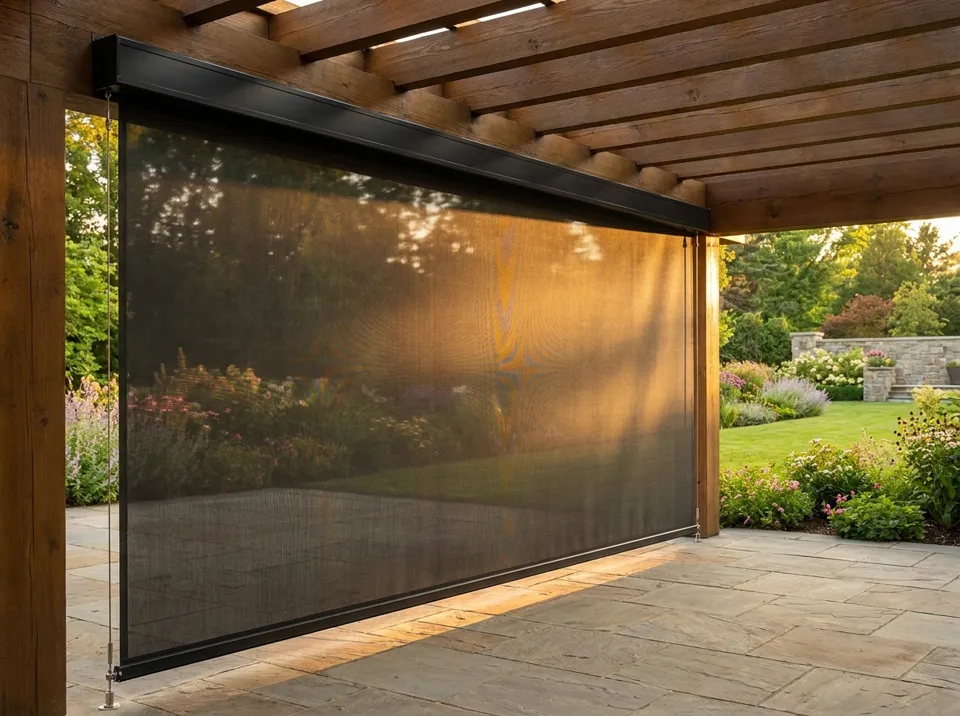
Outdoor shades in Auburn, WA turn west-facing patios and covered decks back into usable rooms when afternoon glare and wind shut them down. This 2026 guide covers cable-guided vs zipper-track systems, motor power, fabric that survives Puget Sound weather, mount math on real South King County porches, and how a local crew that measures, has shades custom-made, and installs keeps the drop clean.
TL;DR
- Outdoor shades Auburn WA homes buy in 2026 when the patio fails after 3 p.m. sun or wind.
- Cable-guided for covered decks; zipper-track when bugs, drift rain, and side seal matter.
- Motorize patio-width drops. Solar and battery motors fit retrofit posts without trenching.
- Rainier Blinds measures, has shades custom-made, and installs with our own crew.
Key numbers
Why this matters
Auburn summers are short. West and southwest patios along Lea Hill ridges, Lakeland Hills builds, and valley-floor decks take low sun straight into seating from mid-afternoon into dinner. Heat off the slab plus glare off railing glass ends cookouts at the exact hour guests want to sit down. Indoor rooms behind big sliders warm up next because direct sun hits the glass first.
Outdoor shades stop that solar load before it reaches the glass and still leave airflow and a filtered view. That is a different job from indoor rollers. Indoor fabric fails outside. Hardware that works on a dining-room casing fails in wind. Mounting on a 2x post, fascia board, or soffit needs engineering the patio actually has, not a showroom wall mockup.
South King County wind is not desert wind. Gusts off the valley floor and shoulder-season mist soak half-screened rooms. A drop that flaps thrashing at the hem bar is unsafe and noisy. Guide systems lock the fabric path. Pick the wrong guide for the exposure and the shade spends half its life rolled up.
Big-box each-panel kits assume squarely framed posts and short runs. Custom outdoor drops made after an on-site measure match post spacing, header height, and cross-slope. That fit difference shows every time you drop the shade in 2026.
Who this is for
Auburn and South King County homeowners with covered patios, porches, or deck roofs who lose the space to afternoon sun, glare into the house, wind-blown debris, or evening bugs. If you barbecue west of the house, host in a three-season room, or own large sliders that bake the living room by 4 p.m., this guide applies.
It is also for buyers who already know outdoor rollers exist but keep getting stapled indoor fabric quotes or national charts that ignore Puget Sound humidity and post construction. It is not for renters packing temporary screens, and it is not a catalog of products outside the outdoor shade and interior shade and drapery range Rainier Blinds measures and installs.
Homeowners comparing a fabric drop to a fixed structural cover should stay here when the goal is on-demand shade that still opens fully for cloudy days and winter light. Fixed roofs are a different project. Outdoor shades win when you want seasonal control without a permanent roof change.
What to look for in outdoor shades for Auburn homes
Guide system: cable vs zipper track
This is the first hardware decision. Everything else hangs on it.
- Cable-guided (side wire rope): stainless cables run from the cassette brackets down to deck or footer anchors. The hem bar rides the cables so fabric stays in plane under moderate wind. Clean look. Best on covered patios where rain is mostly vertical and wind is limited by roof depth.
- Zipper-track system: fabric edges zip into enclosed side channels. Seals tighter against side wind, spray, and bugs. Reads more like a temporary outdoor room wall when closed. Needs straight, aligned tracks and a structure that accepts channel mounts.
Buy cable-guided for deep covered decks and porches where wind is moderate and you want the least hardware mass. Buy zipper-track when evening bugs kill the patio, rain drifts sideways, or you want a sealed outdoor room feel. Mixing systems on multi-bay patios is normal when only one bay faces the worst exposure.
A zipper track installed out of plumb binds. Cables tensioned wrong allow flutter at midspan. Both failures show on install day when travel limits get set, not three months later. That is why the measure visit includes post plumb checks, not only a width tape shot.
Fabric rated for exterior abuse
Outdoor fabric has to handle UV, wet/dry cycles, mildew pressure, and stretch under load. Indoor light-filtering cloth looks similar on a sample board and fails outside. Ask for exterior-rated mesh or solid outdoor textile with a published openness factor for view fabrics and a waterproof or water-resistant face when rain seal is part of the job.
Open-weave mesh keeps airflow and a view while cutting glare and a large share of heat. Denser outdoor fabric blocks more light and sprays but needs zipper tracks or strong hem guidance so it does not act like a sail. Match density to what the patio does at 5 p.m. on a clear July day in Auburn, not how the fabric looks under retail LEDs.
Color matters more outside than inside. Dark mesh hides dirt from pollen season. Very light fabric shows splatters and runs hotter to the touch in sun. Sample swatches on the actual patio wall in afternoon light before locking the choice.
Width, tube diameter, and multi-bay splits
Patio bays past about 10 to 14 feet of free span often split into multiple shades instead of one huge tube. Larger tube diameters handle wider single drops. Undersized tubes telescope, smile, and stress motors. Tell the measuring crew the real clear span between posts so the supplier builds the right core and motor torque.
Newer Lakeland Hills and Lea Hill homes with long linear covers frequently need staged multi-shade runs. One remote or one smart scene can still drive the whole elevation. The fabrication is modular. Pretending one 20-foot tube is cleaner on a quote line often creates the worst visual shear and the hardest service call.
Motor power: battery, solar, hardwired
Patio-width outdoor fabric is heavy. Manual pulls become a workout and a safety issue. Motorization is the 2026 default on full patio runs, not a convenience add-on.
- Battery motors: retrofit-friendly, USB recharge roughly every 6 to 12 months depending on cycle count and shade weight.
- Solar assist: strong match outdoors where roof eave daylight can top batteries without wall chargers.
- Hardwired or PoE: best when electrical is already opened during a remodel or new cover build.
Pair motors with a wall remote, phone control, or a full smart package when the patio joins an interior automation system. Travel limits set on install day decide whether the hem parks cleanly every drop. Motor pairing options live with the smart shades package lineup when you want interior and exterior shades on one scene.
Count cycles. A patio dropped for dinner and raised at bedtime most summer nights burns more duty than a shade parked half-year. Budget recharge cadence honestly on battery sets before you scrap solar as extra.
Mount structure, anchors, and clearances
Outdoor mounts need real structure: solid fascia, knee braces, posts with meat for lag bolts, or engineered headers, not hollow cladding alone. Deck slope and post lean show up when the track is lasered. A measure crew marks fastener locations, power routes, and swing clearance for doors and railing openings.
Sliding doors that swing or pocket into the shade plane kill travel paths. Outdoor kitchen vents, light fixtures, and ceiling fans steal cassette height. Flag every obstacle before fabric is cut. Remakes on outdoor-rated fabric cost more than a second visit with a longer tape and a ladder.
Winter storage posture matters in South King County. Even outdoor-rated systems prefer full-up parking in prolonged wet storms when the space is unused. Ask how the cassette sheds drip lines so the rolled fabric is not soaking in a ponded rail.
Warranty that actually covers outdoor and motors
Outdoor and motorized products are where warranty language often shrinks. Rainier Blinds packages cover outdoor and motorized installs under the same tier structure as interior work, up to 5 years depending on the package, backed by the local crew that hung the shade. Confirm labor and product pieces separately so a motor if out mid-term is not a ship-to-factory orphan.
UV fade exclusions on west exposures, wind-event carve-outs, and battery-only vs full motor coverage are the three lines worth reading aloud before you sign. Vague limited lifetime text that ends at the manufacturer with no local labor is worse than a shorter local term you can call.
Top picks for Auburn and South King County
The safe pick: cable-guided mesh on covered decks
The everyday patio pick. Open-weave outdoor mesh on stainless side cables cuts afternoon glare, keeps airflow, and holds a filtered yard view. Buy for deep covered decks and porches across Auburn, Federal Way enclave decks, and Kent valley covers where wind stays moderate under the roof line. Custom-made after on-site measure of post spacing and header height, not from a stock kit width.
Hem bar weight and cable tension decide flutter. A lightweight bar on cable looks tidy and chatters in a valley gust. Ask the install crew to demonstrate a full drop in the windiest direction of the patio before they leave.
The outdoor-room pick: zipper-track sealed drops
The bug-and-spray pick. Zipper side channels lock fabric edges for a tighter outdoor room. Buy when evening mosquitoes, drifting rain, or side wind make open cable runs miserable, or when you want dining space that feels enclosed without a permanent wall. Skip zipper only when posts are too crooked to align tracks without sistering lumber, fix the structure first.
Zipper systems reward square framing. If posts lean a half-inch over eight feet, plan shims or sistering on measure day so the track does not bind at full drop in 2026 humidity swell.
The heat-first pick: exterior shades on west slider walls
The house-cooling pick. Exterior fabric in front of large west sliders stops solar gain before glass. Living rooms behind those walls stay cooler without running AC all afternoon. Buy when interior shades alone leave the room roasting because heat already entered the glass. Pair denser outdoor fabric here and leave more open mesh on a social seating bay that wants an evening view.
This is not a substitute for roof overhang design. It is the control layer when the architecture already opens a wall of glass to the afternoon sun.
The multi-bay pick: staged motorized runs on long covers
The long-patio pick. Split wide linear covers into matched motorized shades on one set of remotes or one smart scene. Buy when a single tube would exceed sensible span or motor torque. Keep fabric and cassette finish matched so the elevation still reads as one design. Skip forced single-tube glory widths when the supplier tube chart says the core is undersized, smile lines show by season two.
Scene control lets dinner bay drop while kitchen bay stays open for cook smoke. That flexibility is why modular fabric wins over one giant sail on South King County-sized decks.
The power pick: solar-assisted outdoor motors
The retrofit power pick. Solar topside panels keep battery motors charged where running power to every post is ugly or expensive. Consider on freestanding covers and multi-post deck fields where hardwire access is buried. Confirm panel orientation gets real sky hours under eaves. A panel in constant eave shadow is a battery unit with a useless brick attached.
Battery-only still wins small single bays near an indoor outlet used twice a year. Match power to duty cycle, not the catalog photo.
The clean-finish pick: cassette-first outdoor hardware
The finished elevation pick. A proper outdoor cassette sheds water and hides the tube so the cover line stays architectural. Buy when the patio faces HOA sightlines, street views, or a designed rear elevation you already spent money on. Bare tubes outdoors collect grit and look half-done next to painted fascia.
Cassette depth and drop clearance must clear fans, lights, and door swings. Measure those trades on the same visit as the fabric width.
What to avoid
Indoor fabric or indoor hardware moved outside
Indoor rollers and indoor guides rot, mildew, and tear under UV and wet cycles. Exterior-rated textile and exterior hardware cost more up front and last through multi-year Puget Sound weather. A deal indoor shade on a patio is a replacement project inside two seasons.
Self-measure kits on post-and-beam work
Post plumb, header crown, deck slope, and door swings do not show in a single centerline tape photo. Width too wide binds in tracks. Width too narrow leaves light and bug rails that kill the job. Custom outdoor fabric cut to bad numbers is rarely returnable at full value in 2026.
Three width points, three height points, and a structure check for fasteners are the minimum a local crew already takes. That process is the real price difference, not the online cart savings.
Undersized tubes on wide single spans
A showroom sample four feet wide hides tube flex that appears at twelve feet. Wide outdoor textile needs supplier-rated cores and motors. If the quote lines a standard tube on an oversized bay, insist on the fabric weight check before the build is finalized.
Choosing zipper or cable without matching exposure
Zipper on a perfectly covered deep porch can be overkill. Cable on a wind-tunnel side yard will slap itself to death. Walk the patio at 4 p.m. on a clear day and on a breezy shoulder-season afternoon before you lock the guide system. Exposure decides hardware.
No local motor service path
A patio motor that dies mid-summer with only a national RMA shipping label leaves the fabric stuck. Prefer a vendor path where the crew that installed can return for motor and limit service. Package warranty language on labor is as important as the motor brand name.
Verdict comparison
| Option | Best for | Key spec | Verdict |
|---|---|---|---|
| Cable-guided mesh | Covered decks, airflow + view | Stainless side cables | Buy |
| Zipper-track sealed drop | Bugs, drift rain, side wind | Enclosed side channels | Buy |
| Exterior shade at west sliders | Cool the house behind glass | Solar load stopped outside | Buy |
| Multi-bay motorized set | Long linear covers | Split spans, shared scene | Buy |
| Solar-assisted motor | Retrofit posts, no trench | Daylight tops battery | Consider |
| Indoor fabric outdoors | Dry patios only in theory | Not exterior-rated | Skip |
How local measure, custom-make, and install works
We bring fabric samples to your home and help you choose the weave, texture, and finish in your own light. Your shades are custom-made to your measurements, and our local crew handles measuring and installation.
- Consult and measure: on-site on the actual patio, noting guide type, post spacing, header structure, power options, door swings, and wind exposure.
- Quote on the spot: real pricing for fabric grade, cable vs zipper, motor power, bay count, and smart add-ons. No showroom visit required.
- Custom-made to your measurements: built by our wholesale supplier to your exact patio dimensions. Lead time is typically 2-4 weeks.
- Install: usually one dedicated visit. Motors get paired, limits set, and a full drop tested before the crew leaves.
That process is built for South King County outdoor framing that does not match catalog kit charts. Coverage and scheduling detail for home-base jobs sits on the Auburn service area page.
Bring your priority list: which bay needs bug seal first, which bay stays social and view-open, whether cooling the glass wall is half the job. A clear priority map keeps the quote honest and the fabric choices matched to how you actually use the patio through 2026 summer peaks.
For interior room treatments on the glass behind the outdoor drop, pair this page with our custom window treatments Auburn WA guide so outside and inside layers do not fight each other on light and heat.
FAQ
What are the best outdoor shades for Auburn WA homes in 2026?
Can outdoor shades handle Pacific Northwest rain and wind?
How much do outdoor patio shades cost in Auburn, WA?
Do outdoor shades need to be motorized?
What is the difference between cable-guided and zipper-track outdoor shades?
Will outdoor shades cool the rooms behind my sliders?
Does Rainier Blinds make outdoor shades in-house?
How long do outdoor shades last in South King County?
One last thing
The detail most Auburn homeowners miss in 2026 is door and fan clearance when the shade is fully down. A zipper drop that seats perfectly still clips a slider handle, traps a screen door, or kisses a ceiling fan blade if those obstacles were not mapped on measure day. One obstruction turns a sealed outdoor room into a system you never fully drop.
Walk every swing arc and fan circle during the consult with the shade plane taped in chalk or laser lines. Fix cassette height or track start points on the order sheet, not after fabric arrives. Outdoor shade success is mostly geometric honesty about the patio you already built.