
Our available controls: Rainier Blinds offers Roman and woven wood shades with motorized operation only. Available controls and power options for other products are confirmed at your consultation.
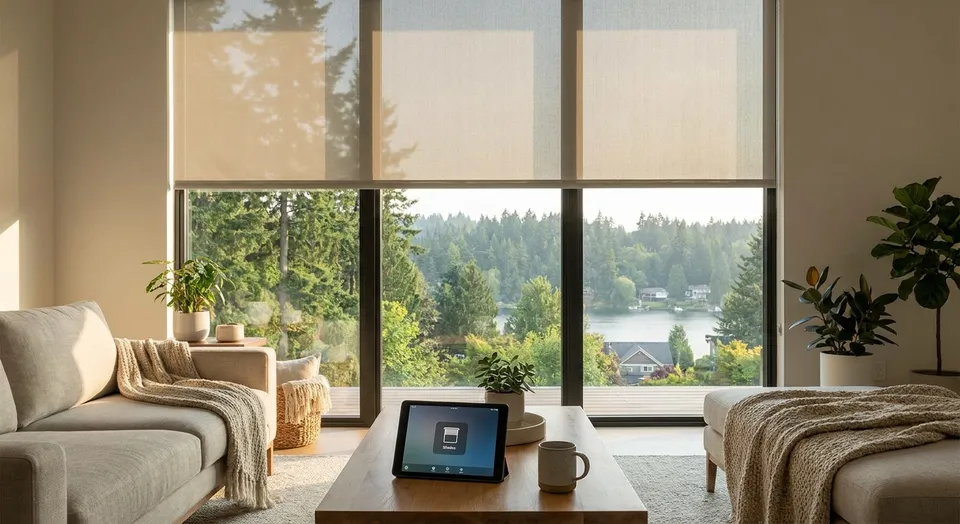
Sammamish smart homes run on view glass, high ceilings, and app-controlled everything. And motorized shades are the one window feature homeowners regret not planning for during the build or remodel.
- Choose a motor and controller explicitly supported by your planned smart-home system; a protocol label alone is not enough.
- Cellular construction can add an insulating layer at the window. The result depends on the exact product, fit, glazing, climate, and how the shade is used; it does not establish a particular temperature change or utility-bill saving.
- Outdoor motorized shades handle covered decks and patios but need a hardwired run, not battery power, past year one.
- Buy: hub-compatible roller and cellular shades. Skip: cheap Bluetooth-only motors that drop out past 30 feet.
Why this matters
Sammamish homes built or remodeled since 2020 lean heavily on smart home ecosystems, Control4, Savant, Lutron, HomeKit. And window coverings are usually the last piece integrated, not the first. That order matters: a shade motor picked for looks instead of protocol compatibility becomes the one device in the house that needs its own separate app, which defeats the point of a smart home in the first place.
A motor’s protocol is only part of compatibility. Confirm the exact device and controller are supported together, including any bridge, driver, or account requirements. Certification alone does not promise integration with every smart-home platform.
Who this is for
This guide is built for Sammamish homeowners with an existing or planned smart home hub, Control4, Lutron Caséta, SmartThings, HomeKit, or a Matter-based system, who want motorized shades that join that ecosystem instead of running beside it. If you're buying shades for a home with no hub and no plan for one, a simpler remote-only motor will save you money and confusion; this guide isn't for that buyer.
What to look for in motorized shades for a Sammamish smart home
Hub compatibility, not just an app
Any motor with its own standalone app is a second system to manage. Look for Zigbee, Z-Wave, or Matter certification so the shade shows up as a native device in Control4, SmartThings, or HomeKit instead of a separate silo. This is the single biggest factor in whether the shades actually get used daily or get ignored after month two.
Battery life and charging cadence
Battery life and charging time depend on the selected motor, shade size, and use. Confirm the approved power option, charger, charging access, and maintenance instructions before ordering; wired products also need service access. Compatibility, controller or hub requirements, and available controls depend on the exact motor and your home setup. We confirm the supported equipment and features before ordering.
Noise level at motor start and stop
Motor sound depends on the specific motor, shade size, mounting, load, and measurement conditions. Ask for the selected product’s sound data or an operating demonstration rather than assuming a decibel level from the shade style.
Light control for view-heavy glass
Sammamish homes built for lake or forest views often carry oversized glass that needs finer light gradation than a basic up/down roller offers. Dual-fabric or zebra shades solve this with layered sheer-and-blackout bands that adjust in small increments through the app or hub.
Insulation value for big glass walls
Cellular construction can add an insulating layer at the window. The result depends on the exact product, fit, glazing, climate, and how the shade is used; it does not establish a particular temperature change or utility-bill saving.
Outdoor exposure and weatherproofing
Motorized shades on covered decks or patios need weather-rated housings and a hardwired power run, not a battery pack. Battery-powered outdoor motors lose charge fast in cold weather and become the first thing that stops working each winter.
Top picks for Sammamish smart homes
Motorized roller shades can work with compatible smart equipment. Compatibility, hub requirements, and available controls depend on the selected motor and your home setup. We confirm those details before ordering. Confirm battery and sound specifications for the selected motor rather than assuming them from the wireless protocol.
Cellular construction can add an insulating layer at the window. The result depends on the exact product, fit, glazing, climate, and how the shade is used; it does not establish a particular temperature change or utility-bill saving.
Zebra dual-shades. The wildcard. Layered sheer-and-solid bands give incremental light control that a plain roller can't match, useful for west-facing rooms that get direct sun for hours in summer. Motor noise and hub compatibility run the same as roller shades. Verdict: Consider for glare-heavy rooms.
Outdoor motorized shades. The deck upgrade. Weather-rated housings hold up through a Sammamish winter, but only with a hardwired power run, battery packs lose charge fast below freezing. Verdict: Consider, budget for wiring.
Roman shades. The design pick, motor caveat. The fabric folds add a tailored look that flat rollers don't, but the fold mechanism adds motor strain over years of daily cycling, so this pick suits lower-traffic formal rooms better than a living room in constant use. Verdict: Consider for formal rooms, skip for daily-use spaces.
What to avoid
- For Bluetooth or other local-radio products, confirm the actual range, controller requirements, and supported remote-access features. Do not assume a fixed distance or compatibility from the radio type alone.
- Battery life and charging time depend on the selected motor, shade size, and use. Confirm the approved power option, charger, charging access, and maintenance instructions before ordering; wired products also need service access. Compatibility, controller or hub requirements, and available controls depend on the exact motor and your home setup. We confirm the supported equipment and features before ordering.
- Off-the-shelf online orders with no local measure. Motorized shades depend on exact frame measurements for the motor housing to seat correctly. A DIY measurement error on a motorized unit costs more to fix than on a manual shade because the motor housing has to come apart.
Verdict comparison
| Shade type | Best for | Key number | Verdict |
|---|---|---|---|
| Hub-based roller | Daily-use living rooms | Confirm motor sound | Buy |
| Cellular | Big view glass | Thermal data varies by product | Buy |
| Zebra dual-shade | Glare-heavy west rooms | Incremental light bands | Consider |
| Outdoor motorized | Covered decks/patios | Hardwired vs. battery | Consider |
| Roman | Formal, low-cycle rooms | Fold-mechanism motor strain | Consider |
FAQ
What's the best motorized shade for a Sammamish smart home?
Compatibility, hub requirements, and available controls depend on the selected motor and your home setup. We confirm those details before ordering. A Zigbee or Matter label does not by itself promise direct integration with Control4 or every other platform.
Do motorized shades work with Control4 and HomeKit?
Compatibility, hub requirements, and available controls depend on the selected motor and your home setup. We confirm those details before ordering.
How long does a motorized shade battery last?
Battery life and charging time depend on the selected motor, shade size, and use. Confirm the approved power option, charger, charging access, and maintenance instructions before ordering; wired products also need service access. Compatibility, controller or hub requirements, and available controls depend on the exact motor and your home setup. We confirm the supported equipment and features before ordering.
Are cellular shades better than roller shades for insulation?
Cellular construction can add an insulating layer at the window. The result depends on the exact product, fit, glazing, climate, and how the shade is used; it does not establish a particular temperature change or utility-bill saving.
Can motorized shades be installed outdoors on a covered deck?
Yes, but outdoor motorized shades need a weather-rated housing and a hardwired power run rather than batteries, which lose charge quickly in cold weather.
How loud are motorized shade motors?
Motor sound depends on the specific motor, shade size, mounting, load, and measurement conditions. Ask for the selected product’s sound data or an operating demonstration rather than assuming a decibel level from the shade style.
Should I buy motorized shades online or have them measured locally?
Have them measured locally. Motorized shades depend on exact frame measurements for the motor housing, and a measurement error on a motorized unit is more expensive to correct than on a manual shade.
Do zebra shades work with smart home hubs?
Compatibility, hub requirements, and available controls depend on the selected motor and your home setup. We confirm those details before ordering.
One last thing
Choose the fabric, mounting, motor, and controls together before ordering. Do not assume either a custom fabric or motor can be exchanged or upgraded later without additional cost and product-specific work.