
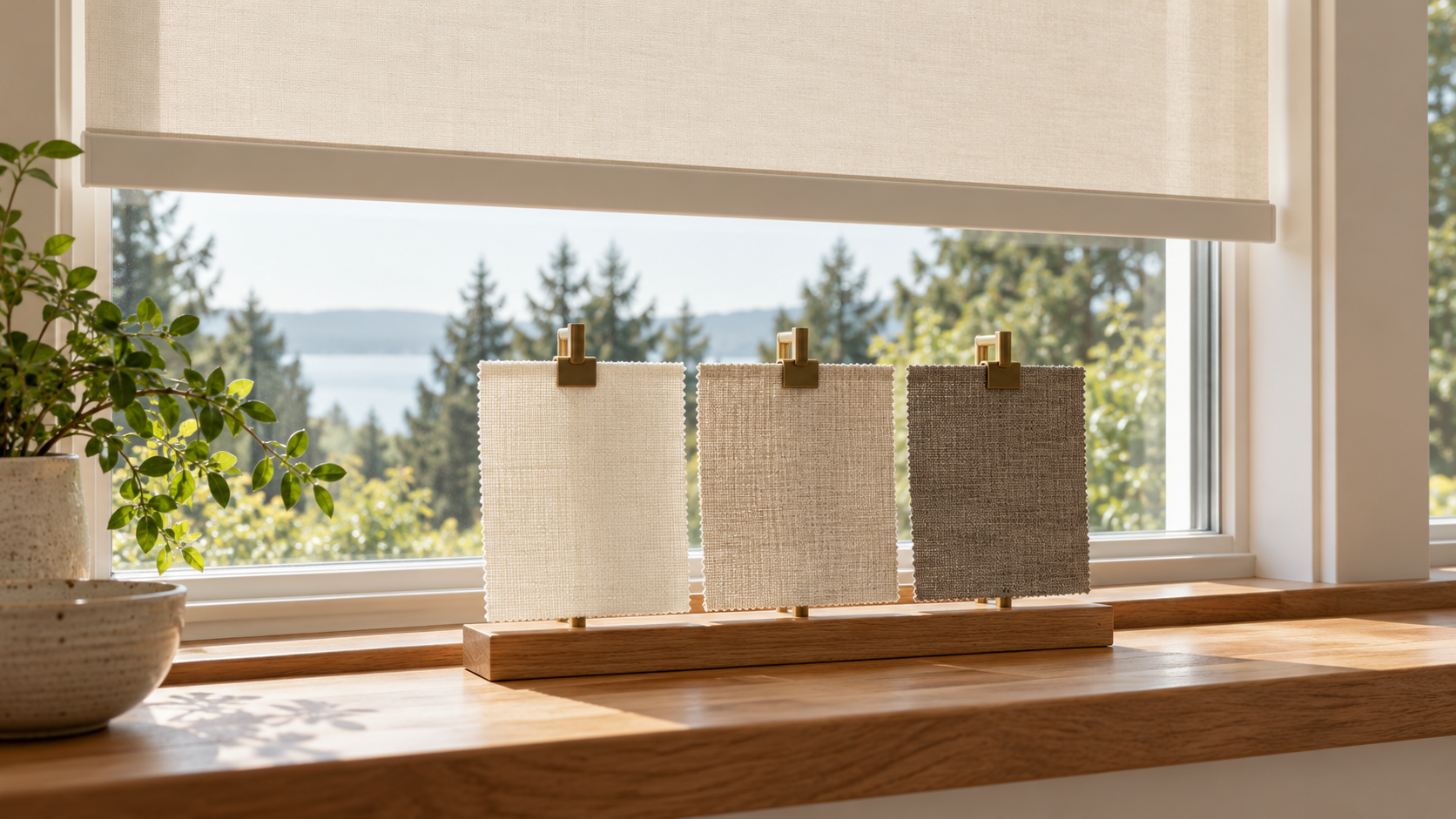
A shade fabric can look quiet and solid on a sample card, then become brighter or more textured when daylight passes through it. Before choosing, look at the actual sample upright at the window where the shade will go. Compare its room-facing appearance with its backlit appearance, then check it under the lighting you use in the evening.
For an Auburn living room or a Kent home office, that simple comparison is more useful than choosing from an online photo. Here is a practical way to test your shortlist without asking a small swatch to tell you more than it can.
Quick takeaways
- Compare the same sample with light falling on its face and with daylight behind it.
- Check your favorites at the times you actually use the room.
- Treat a swatch as a fabric preview, not proof of finished privacy, glare control, or room darkness.
- Write down what you observed and what still needs a larger sample or product demonstration.
1. Start with a manageable shortlist
Choose two or three fabrics that could meet the room's main need. If you are still deciding between light filtering and blackout, keep that distinction visible rather than treating every sample as a color choice.
Check which side faces the room and whether the sample includes the proposed lining or backing. A decorative fabric shown without its intended liner is not the complete selection.
Rainier's indoor shade options include light-filtering and blackout rollers, cellular shades, zebra shades, and other configurations. Begin with suitable products, then use the samples to narrow the fabric choice.
2. Make two separate comparisons at the window
First, look at the room-facing surface with light falling on it. Hold the sample upright beside the opening against a solid background. Notice the color, texture, and any sheen. Then look from your normal seat or standing position, not only from a few inches away.
Next, move that same sample in front of the clear glass so daylight can pass through it. Keep the intended room-facing side toward you. Compare the glow, visible weave, and any change in apparent color.
Repeat with each candidate in the same spot. Comparing one sample in direct sunlight with another in shadow makes it harder to tell whether the difference comes from the fabric or the lighting.
If the sample is fixed to a card or book, ask how it can be viewed with light behind it. Don't cut or peel it off without permission. A temporary background helps you inspect the surface, but it does not substitute for the actual lining.
3. Revisit your favorites during your normal routine
Check the samples when the room matters most to you. For a home office, that may be the afternoon when the window feels brightest. For a living room, include the evening with your usual lamps on.
An overcast autumn afternoon around Auburn can be useful for judging the softer daylight you want to keep. If direct sun is the problem you are trying to solve, mark that check as unfinished until you can compare under those conditions.
Use simple observations: “looks warmer with the lamps on,” “texture becomes more noticeable against the glass,” or “prefer the softer surface from the sofa.” Photos can help you remember the arrangement, but make the final color comparison in person.
You do not need a fixed testing schedule. You need a few checks that reflect how you use that particular room. If you want to compare after the consultation, ask whether samples can be left with you or another viewing can be arranged.
4. Know what a small swatch cannot prove
A sample is useful for comparing material. Several important questions still belong to the full shade and window.
Nighttime privacy: A hand held behind a swatch is not a reliable test of what someone could see through a finished shade from outside. Ask about the exact fabric, lining, viewing angles, and indoor lighting. For open-weave solar fabrics, Phifer's privacy guidance explains that view-through depends on fabric color, openness, and the contrast between indoor and outdoor light. Interior lighting can reverse daytime visibility after dark.
Bedroom darkness: Blackout fabric and a completely dark room are different things. A swatch cannot show the light that may enter around the sides, top, bottom, or between shades. Review the mounting plan alongside the fabric, as explained in our bedroom blackout guide.
Glare and room brightness: Most of the window remains uncovered when you hold up a small sample. It cannot recreate how a full-width shade will affect a screen, a reading chair, or the whole room. Use it to compare candidates, then discuss the actual window and your expectations.
Finished texture and shape: A flat cutting does not show how a complete shade looks folded, raised, or with overlapping layers. Ask to see a representative product sample when those details matter.
5. Keep a short comparison note
Use one note for each finalist. This makes a second look easier and keeps an unresolved question from turning into an assumption.
- Room and window:
- Fabric name or code, with proposed lining:
- Surface appearance beside the window:
- Appearance with daylight behind it:
- Evening appearance with normal room lighting:
- Still need to see or confirm:
- Decision: shortlist, set aside, or request a larger sample.
“Prefer the daylight color; need to confirm nighttime privacy” is a useful result. It tells you exactly what to ask next without pretending the sample answered everything.
Frequently asked questions
Should I request a larger fabric sample?
Ask whether one is available if a small cutting leaves you uncertain about a pattern, texture, or backlit appearance. A larger piece can give you more to inspect, but it still will not demonstrate the final mount, edge gaps, or operation.
Can the same fabric look different at two windows?
Yes. Compare it at each important opening rather than assuming one window represents the whole room. Different light and surroundings can change how the material appears.
Compare the options in your own home
Rainier Blinds brings fabric samples, measures your windows, and prepares pricing for your selections. Book an in-home consultation to compare indoor shades where you will use them.
Consultations are free within 60 driving miles of Auburn, WA, with no obligation to order. Farther-away projects are considered individually, with any consultation fee quoted before booking and credited toward your order if you proceed.