
Our available controls: Rainier Blinds offers Roman and woven wood shades with motorized operation only. All other shade styles are available with manual, motorized, or smart control. Your consultation confirms the controls and power options for your product.
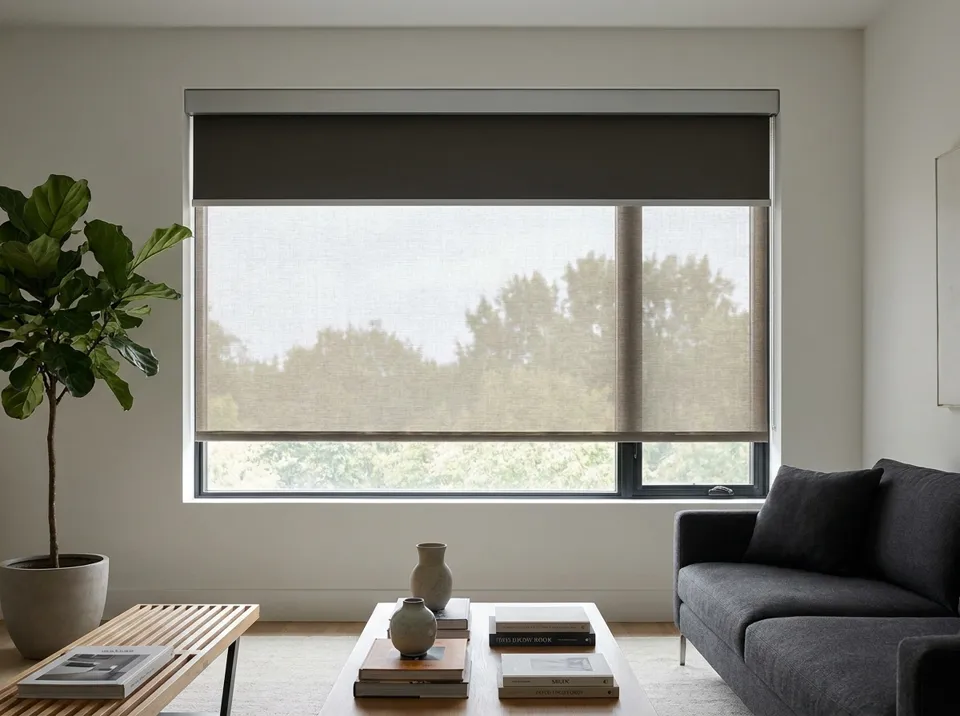
Custom window treatments in Newcastle, WA come down to one local problem: west-facing hillside glass that holds a Seattle skyline view and pours hard afternoon sun through the same opening. This 2026 buyer guide covers the product lines that fit Newcastle homes — roller shades in sunscreen, light-filtering, and blackout fabric, cellular, zebra, day/night, and dual shades, woven wood, roman, skylight, trapezoid, arched, and outdoor shades, plus drapery — with room-by-room picks that work on Coal Creek, China Creek, Hazelwood, Lake Boren, and the Highlands lots. Coverage and scheduling details sit on the custom blinds and shades in Newcastle service area page.
TL;DR
- Custom window treatments Newcastle WA: dual shades are the 2026 Buy on west-facing hillside glass.
- Sunscreen and light-filtering roller shades keep the skyline view; blackout roller shades are the bedroom Buy.
- Cellular shades earn their spot where insulation matters as much as the view.
- Motorized shades fit the tall stairwell and great-room glass Newcastle hillside homes tend to have.
- Rainier Blinds measures your windows, has custom shades made by established suppliers, and installs them with our own crew.
Why this matters
Newcastle sits on west-facing hills above Lake Washington, and the view is the reason people buy these lots. The same orientation is the problem. From mid-afternoon into evening, low western sun comes straight through the great-room and deck-facing glass, and by about four o'clock the skyline view is glare you watch television through. In winter, the same windows are the coldest surfaces in the house.
No single fabric fixes both halves. A blackout shade kills the glare and the view together. A sheer that keeps the view does nothing at dusk, when the interior lights come on and the room faces the hillside street. That trade — view against privacy against darkness — is the real buying decision in a Newcastle home, and it repeats room by room.
The houses add a second constraint: tall glass. Hillside builds run two-story entries, stairwell windows, and great-room walls well above arm's reach, so the operation plan — cordless, crank, or motor — matters as much as fabric choice in 2026.
Rainier Blinds serves Newcastle from its Auburn home base with an in-house measure and install crew, so the plan in this guide gets built and hung by the same local team.
Who this guide is for
This guide is for Newcastle homeowners replacing dated window coverings, finishing a remodel, furnishing a newly purchased hillside home, or solving one problem opening — a two-story stairwell, a west-facing great room, a skylight — where a stock size will not fit. It is for buyers who want measurement and installation handled locally instead of forcing a catalog chart onto a real frame.
It also applies when the project has different jobs in different rooms: a dual-shade job on the west wall, true blackout in bedrooms, motorized up the stairwell, a woven wood or drapery finish in the dining room. Good custom work turns those separate problems into one room-by-room plan and one quote.
What to look for in custom window treatments for Newcastle homes
Start with the exposure, not the sample book
West- and northwest-facing glass drives most Newcastle decisions. Walk the house at the hour the room fails and note which openings take direct sun and for how long. Then measure properly: three widths and three heights per opening, casing depth, cranks, handles, and anything that blocks a headrail. A quarter-inch error decides whether an inside-mounted shade clears the frame or binds at the side, and hillside frames are rarely perfectly square.
Match opacity to the room's job
Roller shades offer three practical fabric choices, and the room picks the fabric:
- Sunscreen cuts glare and UV while keeping the view. It is the starting point on skyline-facing glass where the whole point of the window is what you see through it.
- Light-filtering softens daylight and holds daytime privacy. The default for kitchens, offices, family rooms, and dining rooms.
- Blackout darkens bedrooms and media rooms. Fabric alone does not remove every side gap — side channels or a tight outside mount are what make blackout genuinely dark.
One opacity throughout the house fails somewhere. Light-filtering is useful in a living space and wrong in a bedroom that needs real darkness at 5:00 AM in June.
Give insulation its own decision
Cellular shades trap an insulating air layer at the glass. On tall west-facing windows that cook in July and dump heat in January, they pull double duty, and blackout cellular covers both jobs in one product for sleep rooms. Check mounting depth before ordering a deeper cell — a clean outside mount beats a headrail forced into shallow trim.
Use adjustable systems where the light changes
This is the Newcastle default. Zebra shades rotate alternating sheer and solid bands for stepless control between view and privacy. Day/night shades combine a lighter and a darker fabric layer on one headrail. Dual shades stack two full fabrics — typically sheer and blackout — so a west window can be open and clear at midday and covered by evening. Dual shades solve this more often than anything else in Newcastle, because a single hillside window frequently needs to do two different jobs six hours apart.
Plan motorization before the order
Tall stairwell and great-room glass is where motorization earns its cost. On the current services page, the Motorized package adds $100 per shade and the Smart package $200 per shade over the standard package. Choose before the supplier order — motor type, power method, and headrail depth all affect the fit. Smart shades can also close on a schedule as the sun drops, which is exactly what a west-facing great room wants on a July evening.
Set specialty and exterior requirements early
Skylight, trapezoid, and arched openings need an on-site check of shape, mounting surface, and operating clearance before anything is ordered — a specialty opening gets one chance to be made correctly. Outdoor shades on patios and decks use steel-wire guided or zipper-track systems, and the patio structure and wind exposure get checked before the fabric is chosen.
Finish rooms with woven wood, roman, or drapery
Woven wood shades and roman shades add texture and a tailored fabric face that flat rollers cannot copy — the pick for dining rooms, dens, and craftsman-style interiors. Custom drapery frames wide openings and layers over a shade when a room needs both daily light control and a darker, softer evening. Measure the shade headrail and the drapery rod together so the two products clear each other at the header.
Know who does each part of the job
Ask three direct questions: who measures the windows, who makes the treatment, and who installs it? Rainier Blinds handles consultation, measurement, and installation with its own crew. Your shades are custom-made to your exact measurements by an established wholesale supplier. The full product range we measure and install is on the services page.
Top picks for Newcastle homes
The view pick: sunscreen or light-filtering roller shades on the west wall
Buy. Sunscreen fabric holds the skyline and cuts the worst of the late-afternoon glare, which is the whole job on the glass you bought the lot for. Light-filtering fabric is the pick when the room sits close to the street and daytime privacy matters more than the view. Custom-made to measured dimensions after an on-site visit, not cut from a stock chart.
The two-jobs pick: dual shades and day/night shades
Buy where one room lives two lives. Sheer at midday, blackout by evening, one headrail, one control. This is the most common west-wall solve in Newcastle because the window that shows the skyline at noon faces the same hillside at dusk. Zebra shades are the alternative when you want finer adjustment instead of two fixed states.
The comfort pick: cellular shades
Buy when insulation is the first job. Cellular shades add the honeycomb air layer older and taller glass needs, in light-filtering or blackout fabric. They suit great rooms, upstairs rooms, and any opening where cold glass or direct sun makes the room uncomfortable regardless of how it looks.
The tall-glass pick: motorized roller shades
Buy for stairwells and two-story entries. Battery and hardwired motors remove the ladder from the weekly routine and pair with remotes, phones, and schedules. Motorization is an access decision, not a light-control one — the fabric still does that work. Budget it on the openings you actually adjust, not every window in the house.
The bedroom pick: blackout roller or cellular shades
Buy for sleep rooms. Pacific Northwest summer sunrises land early, and top-floor bedrooms on a hillside catch first light before anyone wants it. Blackout fabric with side channels or a tight outside mount, on a roller or a cellular shade, is the honest dark-room answer. A zebra or dual shade filters — it does not blackout — so sleep rooms get a dedicated product.
The finish pick: woven wood, roman, or drapery
Buy when the room should feel finished. Woven wood brings natural texture, roman shades bring tailored folds, and drapery frames the window and layers over a shade for a softer evening. These are appearance-led picks — keep the room's light job covered by the layer underneath and let the finish product be the face.
What to avoid
Ordering from one self-measurement
A single center measurement misses uneven frames, casing depth, cranks, and motor clearance. A custom treatment is made to those numbers, and custom-made to bad numbers is rarely returnable. Get the opening measured before fabric and hardware are approved.
Choosing the product before the mount
A cellular, dual, roman, or motorized headrail may fit the width and not the casing depth. Outside mount is not a second-best choice when it improves operation and edge coverage. Set the mount on measure day, before the supplier order.
One fabric for every room in the house
Blackout is right in a bedroom and wrong in a day room. Sunscreen is right on the skyline wall and wrong where evening privacy is the priority. Matching each room to its actual failure is the core of a 2026 custom project; one-fabric orders undo it.
Skipping the reach plan on tall glass
A stairwell shade you cannot reach is a shade you never adjust. Decide cordless, crank, or motorized per opening during the measure visit, not after the ladder comes out. Tall glass without an operation plan is the most common regret on hillside builds.
Verdict comparison
| Option | Best Newcastle use | Main job | Verdict |
|---|---|---|---|
| Sunscreen roller | Skyline-facing west glass | Glare control, view intact | Buy |
| Light-filtering roller | Kitchens, offices, family rooms | Soft daylight, daytime privacy | Buy |
| Dual or day/night shades | West rooms used day and night | Two settings on one headrail | Buy |
| Cellular shades | Tall glass, cold-weather comfort | Insulating air layer | Buy |
| Blackout roller or cellular | Bedrooms, media rooms | Darkness with planned edge coverage | Buy |
| Motorized roller | Stairwells, two-story entries | Reach and scheduled control | Buy for tall glass |
| Woven wood, roman, drapery | Living and dining rooms | Texture, folds, layered finish | Buy when finish matters |
| Stock self-measure online | Settled or tall openings | Fixed chart sizes | Skip |
How the Newcastle measure-and-install process works
Rainier Blinds keeps the sequence direct:
- Consult: define the light, privacy, comfort, reach, and view problem in each room — which windows hold the skyline, which rooms go dark by 4 PM, which glass nobody can reach.
- Measure: the local crew checks opening dimensions at three widths and three heights, mount choices, casing depth, obstructions, specialty shapes, and exterior mounting surfaces.
- Select and order: choose product, fabric, operation, and hardware. The confirmed measurements go to a wholesale supplier that custom-makes the treatment.
- Install: Rainier Blinds' own crew mounts the finished treatment, checks clearance and operation, and handles motor and smart-home setup when selected.
Quote requests receive a response within 1 business day, and most projects are installed within 3 to 4 weeks of ordering. Standard rectangular windows start from $275, and every package carries a warranty of up to 5 years depending on the package. The free quote starts with an in-home measure visit, not a showroom appointment.
FAQ
What are the best custom window treatments in Newcastle, WA for 2026?
What window treatments work best on west-facing windows with a view?
How much do custom window treatments cost in Newcastle, WA?
Are dual shades better than zebra shades for west-facing rooms?
Can you motorize shades on tall stairwell windows in Newcastle homes?
What is the difference between dual shades and day/night shades?
Does Rainier Blinds manufacture the shades in-house?
How long does custom window treatment installation take in Newcastle?
One last thing
Schedule the consultation for late afternoon if you can. The west sun that defines a Newcastle summer shows you in ten minutes which rooms fail at four o'clock and which fabrics actually hold the skyline — more than any swatch held up under showroom lights. Watch where the light lands, decide the fixed states per room, and book the free in-home quote with the sun still on the glass.