
Our available controls: Rainier Blinds offers Roman and woven wood shades with motorized operation only. Available controls and power options for other products are confirmed at your consultation.
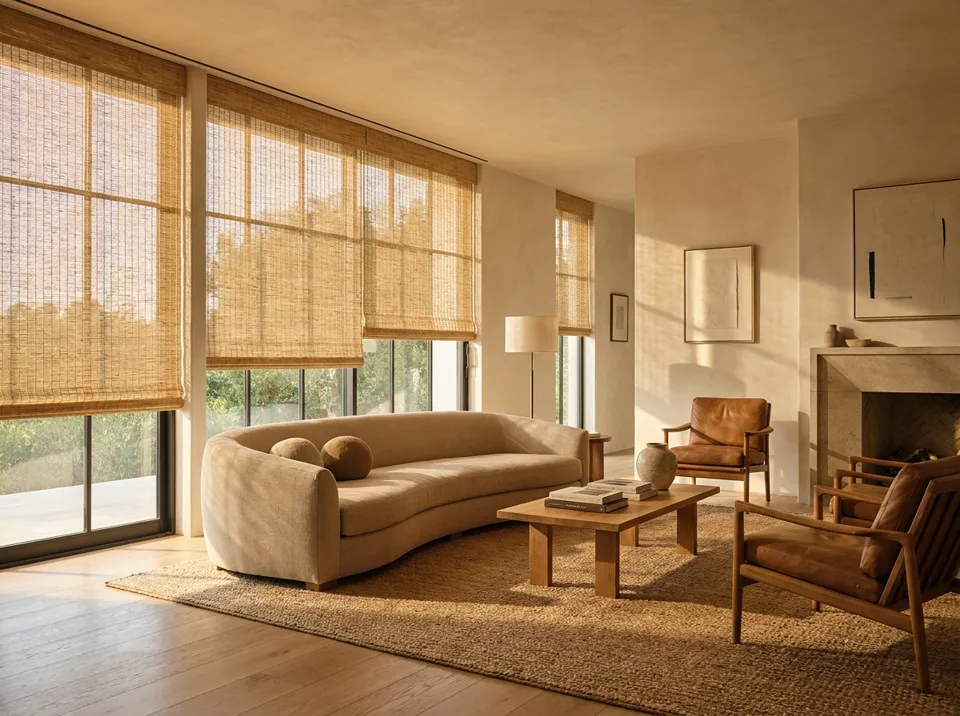
Custom window treatments in Lakeland Hills, Auburn, should solve the room's actual problem: glare, privacy, cold glass, sleep, or a hard-to-reach shape. This 2026 guide compares the treatment lines Rainier Blinds measures, has custom-made by a supplier, and installs with its own crew across Auburn and South King County.
TL;DR
- Custom window treatments Lakeland Hills buyers can start with light-filtering roller shades for main rooms, Buy.
- Cellular shades win when insulation or bedroom darkness matters; blackout fabric is the better fit.
- Zebra, day/night, and dual shades earn consideration when one window needs two light settings.
- Rainier Blinds measures on-site, has shades custom-made by a supplier, and installs locally; manufacturing is handled by the supplier.
Why this matters
Lakeland Hills buyers are not choosing a treatment for an abstract room. They are dealing with a specific window that gets afternoon glare, faces a neighboring home, sits over a sink, or needs to stay dark when the rest of the house is awake. A product that works in one Auburn room can be the wrong answer in the next one.
Custom means the treatment is selected and sized for the opening. The measure checks width, height, depth, trim, handles, cranks, furniture clearance, and the way the treatment needs to operate. Start with Rainier Blinds' Auburn service area if the project is in Lakeland Hills; the local context matters, but the window still decides the product.
Who this is for
This guide is for Lakeland Hills and Auburn homeowners replacing builder-grade coverings, finishing a remodel, moving into a new home, or solving one difficult opening. It also fits buyers in South King County who want a local measure, custom-made shades, and installation by a crew that stays accountable for the finished fit.
What to look for in custom window treatments for Lakeland Hills homes
1. An on-site measure that checks the whole opening
A custom treatment starts with measurements, not a product photo. Width should be checked at the top, middle, and bottom; height should be checked at the left, center, and right. The smallest usable measurement usually controls the order so the treatment does not bind.
A 1/4-inch error can show up as side light, a shade that rubs the frame, or a panel that does not stack cleanly. Depth matters too: a cellular headrail, dual shade, Roman shade, or motor may need more room than a slim roller. The measure should record those constraints before the supplier order is placed.
2. Fabric opacity matched to the room
Do not choose one opacity for every window. Sunscreen roller shades reduce glare and preserve more of the view. Light-filtering shades soften daylight and provide more daytime privacy. Blackout shades are the starting point for bedrooms, media rooms, and anyone who sleeps after sunrise.
3. Mount type and window shape confirmed before ordering
Inside mount keeps the treatment within the casing when depth and clearance allow it. Outside mount overlaps the trim, creates more room for deeper hardware, and can reduce side gaps. Neither mount is automatically better; the frame decides.
Specialty shapes need the same discipline. Skylight shades must account for the roof-glass angle and reach. Trapezoid shades follow a sloped opening. Arched shades are planned around the usable coverage area and the way the arch meets the treatment below it. If the shape is unusual, measurement is part of the product decision, not a final formality.
4. Operation chosen for the way you use the window
Manual cordless operation is direct and dependable for easy-to-reach windows that you adjust occasionally. Motorized operation earns its place on tall glass, skylights, stairwell windows, openings behind furniture, and windows you want to schedule together.
Choose operation before the supplier order. A motor changes headrail space, power planning, and access to the control. In 2026, the best motorized shade is not the one with the most app features; it is the one people will actually use on the window that is inconvenient to reach.
5. The supplier order and installation responsibilities are clear
Ask who measures, who sends the specifications to the supplier, and who installs the finished treatment. One accountable process prevents a third-party installer from discovering a clearance issue at the end.
Rainier Blinds measures the windows, has the selected treatment custom-made for your home, and installs it with its own crew. Rainier Blinds does not manufacture the shades in-house. The local value is the consultation, the measurement, the order coordination, and the installation, stated plainly, with no confusion about who makes the product.
Top picks for Lakeland Hills homes in 2026
The day-room default: light-filtering and sunscreen roller shades
The safe pick. A light-filtering roller shade gives living rooms, kitchens, offices, and hallways a clean profile with softened daylight. A sunscreen roller shade is the better version when afternoon glare is the main problem and keeping more of the view matters.
The key spec is fabric openness and opacity, not a decorative label. Choose the fabric that controls the actual glare line, then confirm whether the opening needs an inside or outside mount. Rainier Blinds lists the broader window treatment services range for buyers comparing roller, cellular, specialty shades, and drapery. Verdict: Buy light-filtering rollers for most day rooms; choose sunscreen when glare and view control lead.
The comfort pick: cellular shades for bedrooms and colder glass
The insulation pick. Cellular shades use honeycomb pockets to create an air layer at the glass. Single-cell and double-cell constructions serve different depth and comfort needs, so the measure should confirm which headrail the opening can accept.
Pair light-filtering cellular shades with day rooms that need softer daylight and blackout cellular shades with bedrooms that need deeper darkness. Do not force a deep double-cell product into a casing that cannot hold it; an outside mount or a different construction can be the cleaner answer. Verdict: Buy cellular shades when insulation or bedroom darkness is the first job.
The changing-light pick: zebra, day/night, and dual shades
The flexible pick. Zebra shades use alternating sheer and solid bands. Day/night shades switch between lighter and darker layers. Dual shades put two fabrics on one roller system, such as sunscreen for the day and blackout for the evening.
The memorable detail is the two-setting decision: if the same opening needs filtered daylight before dinner and deeper privacy after dark, one fixed-opacity shade forces a compromise. If you rarely change the setting, simpler roller or cellular hardware is the better buy. Verdict: Consider zebra shades for adjustable privacy; Buy day/night or dual shades when both settings will be used every day.
The finished-room pick: woven wood, Roman shades, and drapery
The finish pick. Woven wood shades add a textured surface. Roman shades give a tailored fabric face. Drapery or curtains frame a wide opening and can layer over a shade when the room needs a softer finish or another privacy setting.
The spec that matters is stack height and lining. A treatment that stacks into the view or uses the wrong lining can disappoint even when the fabric looks right in a sample. Plan the finished stack, panel clearance, and room opacity at the measure. Verdict: Buy woven wood, Roman shades, or drapery when finish and layering are part of the room's job.
The problem-window pick: specialty and outdoor shades
The fit pick. Skylight, trapezoid, and arched shades solve openings that standard rectangles cannot. Outdoor shades solve a separate exposure problem: a covered patio may need a steel-wire guide, while a more enclosed opening may call for a zipper-track system.
The key spec is the opening and exposure. Confirm the mounting surface, guide clearance, wind, rain, and reach before choosing hardware. Verdict: Buy specialty or outdoor shades after an on-site check confirms the shape and exposure.
What to avoid
Self-measuring from one number
One width and one height miss an out-of-square frame, trim depth, handle clearance, and the space a cassette or motor needs. Measure at three points in each direction and record the mount before ordering. A custom product is not return-friendly when the opening was guessed.
Choosing one opacity for the whole house
Blackout is useful in a bedroom and often excessive in a bright living room. Sunscreen can preserve a daytime view and still fail a sleeper who needs darkness. Match the fabric to the room's schedule instead of buying every window in one opacity.
Treating local service as local manufacturing
A local installer can measure and install without manufacturing the product in the same building. Rainier Blinds uses the supplier for manufacturing and keeps measurement and installation with its own crew. That is the model to expect here; clear responsibility matters more than a vague local label.
Verdict comparison
| Treatment | Best Lakeland Hills use | Spec that matters | Verdict |
|---|---|---|---|
| Light-filtering roller | Living rooms, kitchens, offices | Opacity and mount | Buy |
| Sunscreen roller | Glare-prone day rooms | Fabric openness | Buy |
| Cellular shade | Bedrooms and colder glass | Cell construction and depth | Buy |
| Zebra shade | Adjustable privacy | Sheer/solid band alignment | Consider |
| Day/night or dual shade | Day-to-evening changes | Two layers on one opening | Buy when used daily |
| Woven wood, Roman, or drapery | Finished rooms and wide glass | Stack height and lining | Buy for finish |
| Specialty or outdoor shade | Angled, roof, or exterior openings | Shape, guide, and exposure | Buy after measure |
How the local measure, supplier order, and install works
Rainier Blinds keeps the process simple:
- Consult: identify the rooms, light problems, privacy needs, window shapes, and manual or motorized preference.
- Measure: check each opening at three points in each direction, then confirm depth, trim, obstructions, mount, and control access.
- Order: confirm the treatment, fabric, operation, and hardware; Rainier Blinds sends the specifications to the wholesale supplier for production.
- Install: Rainier Blinds' own crew mounts the finished shades or drapery, checks movement and clearance, and completes the selected controls.
This order of operations matters in 2026 because the supplier cannot correct a bad measurement after the product has been made. If the project is outside Auburn, the Kent service area shows the same local measure-and-install model for another South King County market. When the room plan is ready, use the quote request to start with the window count and the main problem each room needs fixed.
FAQ
What are the best custom window treatments for Lakeland Hills homes in 2026?
Are roller shades or cellular shades better for Auburn homes?
How much do custom window treatments cost in Lakeland Hills?
Do I need blackout shades in an Auburn bedroom?
Can motorized shades cover skylight or specialty windows?
Does Rainier Blinds manufacture custom shades in-house?
One last thing
The best 2026 plan starts with three decisions: what the room needs, what the opening can hold, and how the treatment will operate. Color comes after those choices.