Our available controls: Rainier Blinds offers Roman and woven wood shades with motorized operation only. Available controls and power options for other products are confirmed at your consultation.
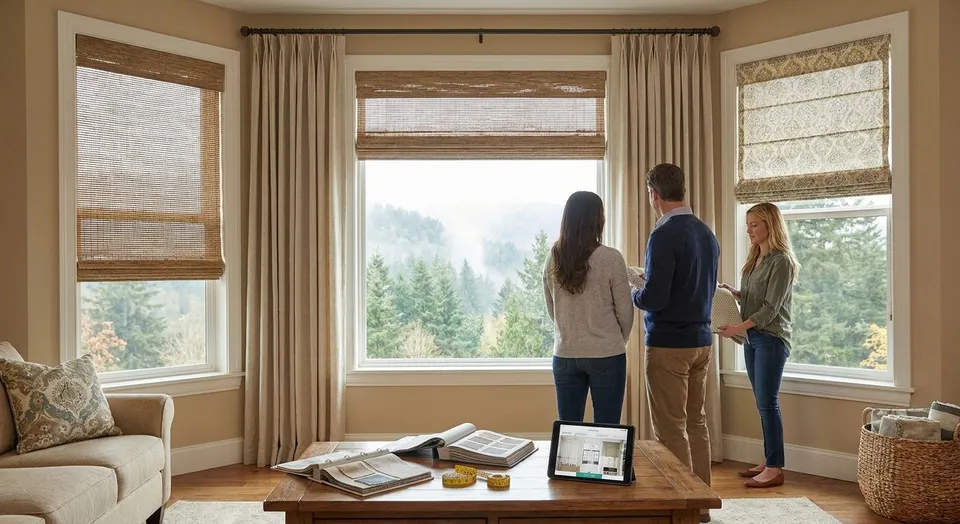
Orting sits at the foot of Mt. Rainier in Pierce County, and its window treatment problems are specific: new-construction developments with builder-grade mini blinds, farmhouse-style homes with oversized windows facing the mountain, and a wet season that runs six months a year. This guide covers what actually holds up for Orting homeowners shopping custom window treatments in 2026, not generic blind advice.
- Cellular shades win for Orting's foothill temperature swings. Buy for R-value, not looks.
- Custom Roman shades fit Orting's new-construction window sizes better than stock big-box blinds.
- Skip faux wood and aluminum blinds in 2026. They don't insulate against Pierce County's wet winters.
- Zebra shades are the wildcard pick for mountain-view rooms that need adjustable glare control.
- Local measure-and-install beats online ordering for Orting's odd trim depths in newer builds.
Why this matters
Orting has grown fast over the past decade, and most of that growth is track-built neighborhoods pushing toward the Rainier foothills. New-construction homes here typically ship with vinyl mini blinds or nothing at all, which means most homeowners are buying window treatments for the first time within a year or two of closing.
The climate adds a second variable. Pierce County winters bring sustained damp cold, and homes with west- or south-facing rooms toward Mt. Rainier deal with sharp glare for months at a stretch. A window treatment that ignores either factor is the wrong purchase for 2026, no matter how it looks in a showroom.
Who this is for
This guide is built for two Orting buyer profiles: homeowners in newer developments near the foothills replacing builder-grade blinds, and owners of older farmhouse-style homes with taller, non-standard window openings. If you're comparing Rainier Blinds against a big-box retailer or an online blind kit, the criteria below apply either way.
What to look for in custom window treatments for Orting homes
Glare control that doesn't kill the view
Rooms facing Mt. Rainier get direct, low-angle sun for a good chunk of the year. A treatment that blocks glare without going fully opaque, like a light-filtering roller or a zebra shade, keeps the view usable instead of forcing a choice between glare and blackout.
Moisture tolerance for a wet climate
Pierce County runs damp from October through April most years. Fabric shades near kitchen sinks, bathrooms, or slider doors need moisture-tolerant materials, or they'll warp and discolor faster than the rest of the house.
Fit for new-construction window specs
Many Orting track-built homes use standard window sizes but inconsistent trim depths. A stock online blind ordered to the exact opening width often binds or leaves a gap. Custom measurement solves this before install day, not after.
Cordless or motorized operation for families
Exposed window-covering cords can create a strangulation hazard. CPSC recommends cordless coverings where young children are present. Cordless controls avoid exposed operating pull cords. Follow the product safety instructions and keep beds, furniture, and other climbing objects away from windows.
Energy performance across seasonal swings
Foothill homes see bigger day-to-night temperature swings than homes closer to Puget Sound. Cellular shades trap air in honeycomb pockets and measurably reduce heat loss through glass, which matters when heating bills spike every winter.
Local install versus online ordering
A local installer measures the actual opening, catches trim or drywall issues before cutting fabric, and stands behind the install. An online order ships to spec sheet measurements you took yourself, with no fix if the numbers are off.
Top picks for Orting homeowners
Cellular shades, the energy pick. Honeycomb-style cellular shades trap insulating air pockets against the glass, which is the single biggest lever for cutting heat loss in a foothill home with big temperature swings. Read the full breakdown in cellular shades for energy savings in Rainier-area homes. Buy if your home has single-pane or older double-pane windows and a winter heating bill that spikes noticeably.
Custom Roman shades. The new-construction pick. Track-built Orting homes tend to have clean, boxy window openings that Roman shades tailor to well, and the fabric options run from blackout liner to sheer linen. See the specifics in custom Roman shades for Orting new construction homes. Buy for living rooms and dining rooms where you want a finished look without heavy drapery.
Zebra shades. The mountain-view wildcard. Alternating sheer and solid bands let you dial glare up or down in seconds without losing the Rainier view entirely. Consider this pick for any room where the sightline toward the mountain is the reason you bought the house.
Outdoor shades, the patio pick. Steel-wire and zipper-track outdoor shades extend usable season on a covered patio by blocking wind-driven rain and cutting afternoon sun. Consider if outdoor living space gets regular use April through October.
Blackout shades, the safe pick for bedrooms. Full opacity fabric blocks early summer sunrise, which starts well before 6 a.m. in the Pacific Northwest by June. Buy for any bedroom facing east, especially kids' rooms where sleep schedules matter.
Get a real Orting quote in 2026
On-site measure and pricing from a local crew, not a subcontractor.
What to avoid
- Faux wood or aluminum blinds: they don't insulate against Pierce County's cold snaps and are exactly what most track-built homes already ship with. Replacing one set of poor-insulating blinds with another isn't an upgrade.
- Exact-width online orders without a site measure: inconsistent trim depths in newer Orting builds mean a shade cut to the listed window width can bind against uneven casing.
- Corded operation in any home with kids under six: cordless and motorized options exist at every price point in 2026, so there's no reason to default to corded.
"If a shade doesn't handle both glare toward the mountain and moisture from six months of rain, it's the wrong shade for Orting."
Verdict comparison table
| Treatment | Best for | Glare control | 2026 Verdict |
|---|---|---|---|
| Cellular shades | Energy-conscious homes | Good | Buy |
| Custom Roman shades | New-construction living rooms | Good | Buy |
| Zebra shades | Mountain-view rooms | Excellent | Consider |
| Outdoor shades | Covered patios/decks | Excellent | Consider |
| Blackout shades | East-facing bedrooms | Excellent | Buy |
| Faux wood/aluminum blinds | Nothing specific to Orting | Poor | Skip |
FAQ
What's the best window treatment for a Mt. Rainier-facing room in Orting?
Zebra shades are the strongest pick for mountain-view rooms in 2026 because the alternating sheer and solid bands adjust glare without fully blocking the view. Roller shades in a light-filtering fabric are a close second if you want a simpler mechanism.
Are cordless blinds worth it for Orting families with kids?
Exposed window-covering cords can create a strangulation hazard. CPSC recommends cordless coverings where young children are present. Cordless controls avoid exposed operating pull cords. Follow the product safety instructions and keep beds, furniture, and other climbing objects away from windows.
Is custom window treatment installation better than ordering online for new-construction homes?
For most Orting track-built homes, yes, because trim depths and opening squareness vary even within the same development. A local measure catches those issues before the fabric is cut, which an online order to self-reported measurements can't.
How much do custom window treatments cost in Orting, WA?
Pricing depends on window count, fabric choice, and whether shades are manual or motorized, so get an on-site quote for accurate numbers. Budgeting guidance is covered in a separate resource for readers planning a whole-house project.
Do cellular shades actually help with heating costs in foothill homes?
Cellular shades trap insulating air pockets against the glass, which reduces heat loss through windows more than flat fabric or blinds. This matters most in homes with older double-pane glass and noticeable winter-to-summer temperature swings, common in the Rainier foothills.
Should Orting homeowners choose Roman shades or roller shades for new builds?
Roman shades give a more finished, tailored look for formal living and dining spaces, while roller shades are simpler and better suited to kitchens or high-traffic rooms. Both fit standard new-construction window openings well when custom-measured.
Are outdoor shades practical for Orting's rainy season?
Steel-wire and zipper-track outdoor shades block wind-driven rain and extend how many months a covered patio stays usable. They're a seasonal-use upgrade rather than a year-round necessity, best suited to patios already used regularly from spring through fall.
What window treatments should Orting homeowners avoid in 2026?
Faux wood, real wood, and aluminum blinds are the weakest performers for insulation and are already common in builder-grade new construction. Replacing one low-performing blind with another doesn't solve the glare or cold problem most Orting homes actually have.
One last thing
Most Orting homes built in the last five years still have the original builder-grade mini blinds hanging in at least one room, usually the primary bedroom or a secondary living space that wasn't part of the initial upgrade budget. Swapping just that one room to a cellular or blackout shade is often the highest-impact single change a homeowner makes in 2026, before touching the rest of the house.