
Our available controls: Rainier Blinds offers Roman and woven wood shades with motorized operation only. Available controls and power options for other products are confirmed at your consultation.
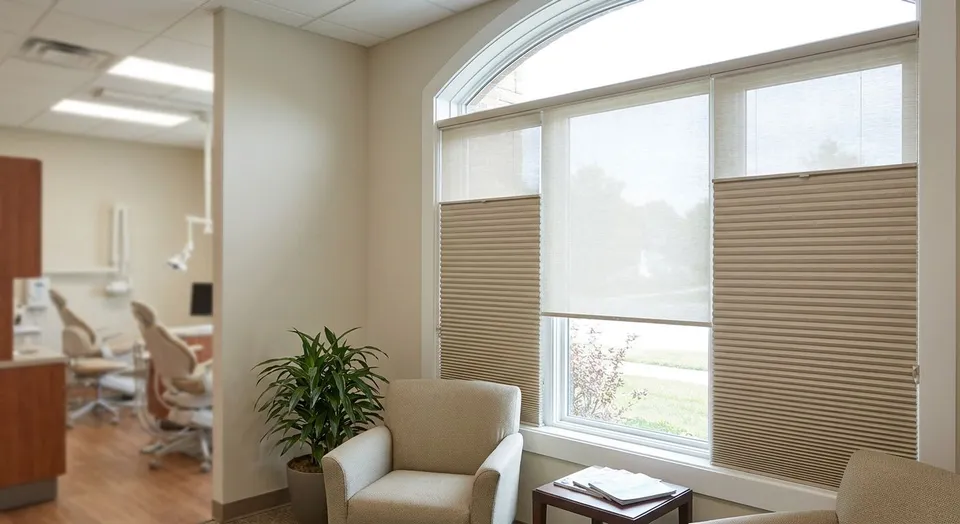
Medical and dental offices need window treatments that hold up to daily cleaning, control glare on monitors and screens, and give patients visual privacy without turning exam rooms into caves. The best window treatments for medical offices in 2026 combine motorized operation for infection control, opaque backing for procedure rooms, and wipeable fabric that survives commercial-grade cleaning schedules.
Best overall: motorized cellular shades. Best for waiting rooms: light filtering roller shades. Best for procedure rooms: blackout shades. Best for reception desks: zebra shades. Best for consultation offices: woven wood roman shades.
- Motorized cellular shades win overall for exam rooms because staff never touch a wand or cord between patients.
- Light filtering roller shades handle waiting room glare and wipe clean fast during daily rounds.
- Blackout shades belong only in rooms with monitors, imaging or ultrasound screens, not the whole building.
- Zebra shades solve the open-or-closed privacy problem at a front desk with one fabric roll.
- Woven wood roman shades soften consultation rooms but are harder to disinfect than a smooth roller fabric.
Why this matters
A residential blind picked for looks will not survive a clinic that runs from 7am to 7pm with a cleaning crew running a disinfectant wipe over every horizontal surface each night. Medical offices also carry HIPAA-adjacent privacy expectations that a typical living room window never has to meet. Getting the shade opacity for privacy and natural light wrong in a consult room means patients either feel exposed to the parking lot or the office loses daylight it needs during Pacific Northwest winters.
The stakes are different room by room. A pediatric dental waiting area needs something bright and easy to wipe down. An imaging suite needs total light block so a technician can read a screen at 2pm in July. A single shade choice for the whole building rarely satisfies both.
What makes the best window treatments for medical offices
- Cleanability: smooth, vinyl-backed fabric wipes down with disinfectant; woven or textured fabric does not.
- Light control by room type: waiting rooms need diffused light, imaging rooms need near-total blackout.
- Touch-free operation: motorized lift reduces shared contact points between exam room turnovers.
- Durability under daily use: commercial hours mean thousands of lift cycles a year, more than any home window sees.
- Professional appearance: patients read a clean, current window treatment as a sign the practice is well run.
- Room-by-room flexibility: the right answer is rarely one product for the entire building.
Medical office window treatments at a glance
| Shade type | Best for | Standout feature | Key limitation |
|---|---|---|---|
| Motorized cellular shades | Exam and procedure rooms | Touch-free lift between patients | Needs power access at each window |
| Light filtering roller shades | Waiting rooms and lobbies | Wipes clean fast, diffuses glare | Doesn't block outside view at night |
| Blackout shades | Imaging and screen-heavy rooms | Near-total light block | Feels closed-in if used everywhere |
| Zebra shades | Reception and check-in desks | Slides open-to-closed on one fabric | Sheer band still passes some UV |
| Woven wood roman shades | Consultation and admin offices | Natural texture, softens the space | Harder to disinfect than a flat fabric |
1. Motorized cellular shades: best window treatment for exam and procedure rooms
Motorized cellular shades use a honeycomb-shaped fabric cell that traps air for insulation, and the motorized lift means nobody touches a wand or cord walking between patients. That single detail matters more in a clinic than almost anywhere else in the building. Motorized shades built for corporate office buildings follow the same logic commercial tenants already use for shared spaces, and the operation tier transfers cleanly to a medical suite.
Motorized cellular shades pros:
- Hands-free lift cuts a shared contact point during patient turnover
- Honeycomb construction adds insulation, easing HVAC load in rooms that run heat or AC nonstop
- Programmable schedules keep light levels consistent without a staff member adjusting cords all day
Motorized cellular shades cons:
- Each window needs power access, either hardwired or battery-based
- Higher upfront investment than a manual roller shade in the same room
- Standard cellular fabric alone will not fully black out a room; a blackout liner is a separate add-on
Best for: exam rooms and procedure areas where staff cannot stop to touch a cord between patients. Verdict: Buy for any room with regular patient turnover in 2026.
2. Light filtering roller shades: best window treatment for waiting rooms
Roller shades use one flat panel of fabric that rolls up cleanly with no folds to trap dust. Light filtering fabric softens direct glare through a west-facing lobby window without dropping the room into shadow, which keeps a waiting area comfortable through a full afternoon.
Light filtering roller shades pros:
- Flat fabric wipes down fast during nightly cleaning rounds
- Diffused light reduces glare on phone screens and check-in tablets
- No cords pooling on the floor, which matters in a space with wheelchairs and strollers
Light filtering roller shades cons:
- Fabric does not block outside sightlines once interior lights are on after dark
- Manual versions still need a cord or wand unless upgraded to motorized operation
Best for: waiting rooms and reception lobbies with heavy daily foot traffic. Verdict: Buy.
3. Blackout shades: best window treatment for imaging and procedure rooms
Blackout shades use a coated backing that stops nearly all light transfer, which matters in any room where a technician reads a monitor, an X-ray viewer, or an ultrasound screen. Daylight washing out a diagnostic image is a real problem in a south-facing room by early afternoon.
Blackout shades pros:
- Full light block keeps diagnostic screens readable regardless of the hour
- Opaque fabric also blocks street-level sightlines into a procedure room
- Pairs with motorized track for one-touch room prep between patients
Blackout shades cons:
- Total blackout is unnecessary, and often unwanted, in a general exam room
- Darker fabric can make a small room feel closed in if used building-wide
Best for: rooms with screens, monitors, or imaging equipment sensitive to glare. Verdict: Buy for the specific rooms that need it, Skip for general-use areas.
4. Zebra shades: best window treatment for reception and check-in desks
Zebra shades alternate sheer and solid bands of fabric on a single roll, so front-desk staff slide the shade to shift between an open view and full privacy without swapping treatments during the day. That flexibility fits a check-in counter better than a fixed-opacity fabric. Zebra shades sized for office spaces use the same dual-layer mechanism a reception desk needs, just scaled to a commercial window.
Zebra shades pros:
- One shade covers both privacy and visibility needs at a front desk
- Layered fabric filters direct sun without going fully dark
- Reads as more current at an entrance than a dated fixed-slat treatment
Zebra shades cons:
- The sheer band still passes some UV, so paperwork or plants near the window can fade over time
- Costs more per window than a basic roller shade in a comparable fabric grade
Best for: front desks and reception counters that need adjustable privacy throughout the day. Verdict: Buy.
5. Woven wood roman shades: best window treatment for consultation and admin offices
Woven wood roman shades stack into soft folds and bring a natural material into rooms where patients sit for a longer conversation, like a dentist's treatment-planning office or a physician's private consult room. The material softens what is otherwise a clinical space.
Woven wood roman shades pros:
- Natural texture softens a consult room without a residential look
- Full retraction lets in complete daylight during longer meetings
- Liner options add light filtering without going to full blackout
Woven wood roman shades cons:
- Harder to disinfect than a smooth, vinyl-backed roller fabric, so it fits low-touch rooms better
- Folds collect more dust than a flat shade, meaning more frequent cleaning
Best for: consultation and administrative offices, not high-turnover exam rooms. Verdict: Buy for consult rooms, Hold for exam rooms.
“If a technician can't read the monitor at 2pm without squinting, the room needs blackout, not light filtering.”
How we ranked these window treatments
Each shade above was measured against the six criteria listed earlier: cleanability, light control by room type, touch-free operation, durability under commercial-hour use, professional appearance, and room-by-room flexibility. No single product wins on all six, which is why the ranking splits by room type instead of naming one universal winner. A practice that installs one shade type everywhere usually ends up compromising in at least two of those rooms.
Which window treatment should you choose for your practice?
For a mixed-use medical or dental office in 2026, motorized cellular shades in exam rooms, light filtering roller shades in the waiting area, and blackout shades limited to imaging rooms covers the building without over-specifying any single space. Reception gets zebra shades for the open-or-closed flexibility a check-in desk actually uses, and a consultation office gets woven wood roman shades if the room sees longer patient conversations rather than quick exams. Skip a single building-wide product and match the shade to what happens in that specific room.
Get a walkthrough for your practice
A in-home or on-site consultation covers every room, not just one window.
FAQ
What's the best window treatment for a medical office waiting room?
Light filtering roller shades work best in waiting rooms because the flat fabric wipes clean fast and diffuses glare without darkening the room. Motorized versions add hands-free adjustment for staff during busy hours.
Are motorized shades worth it for a dental office?
Yes, motorized shades reduce shared touch points between patient visits, which matters more in a clinical setting than a typical home. The lift also runs on a schedule so staff don't adjust cords throughout the day.
What window treatments work best for exam rooms with imaging equipment?
Blackout shades are the right choice for rooms with monitors, X-ray viewers or ultrasound screens because daylight washes out a diagnostic image by early afternoon. Limit blackout to those specific rooms rather than the whole building.
How do you keep window shades clean in a medical office?
Smooth, vinyl-backed fabrics like roller and cellular shades wipe down fast with standard disinfectant. Textured fabrics such as woven wood hold more dust and take longer to clean, so they fit lower-touch rooms better.
Are zebra shades good for a reception desk?
Yes, zebra shades let front-desk staff slide between an open view and full privacy on one fabric roll, which fits the changing needs of a check-in counter throughout the day.
Can you install blackout shades in only some rooms of a medical building?
Yes, and that's the recommended approach. Reserve blackout for imaging or screen-heavy rooms and use light filtering or cellular shades everywhere else so the building doesn't feel closed in.
Do medical offices need commercial-grade window treatments?
Medical offices run longer hours and see far more lift cycles per year than a residential window, so a shade built for daily commercial use holds up better than one sized for a home.
What's the difference between light filtering and blackout shades for a clinic?
Light filtering fabric softens glare while still letting daylight through, which suits waiting rooms and consult offices. Blackout fabric blocks nearly all light and belongs in rooms with screens or imaging equipment sensitive to glare.
One last thing
The most common mistake practices make in 2026 isn't picking the wrong shade, it's picking one shade for the entire building. A front office that installs blackout everywhere to solve one imaging room's glare problem ends up with a waiting area that feels like a basement by 10am. Match the room, not the building, and the two or three rooms that actually need blackout will be the only ones that get it.
Related guides
In-home consultations are free within 60 driving miles of Auburn. Farther projects are considered individually; any consultation fee is quoted before booking and credited toward your order.