
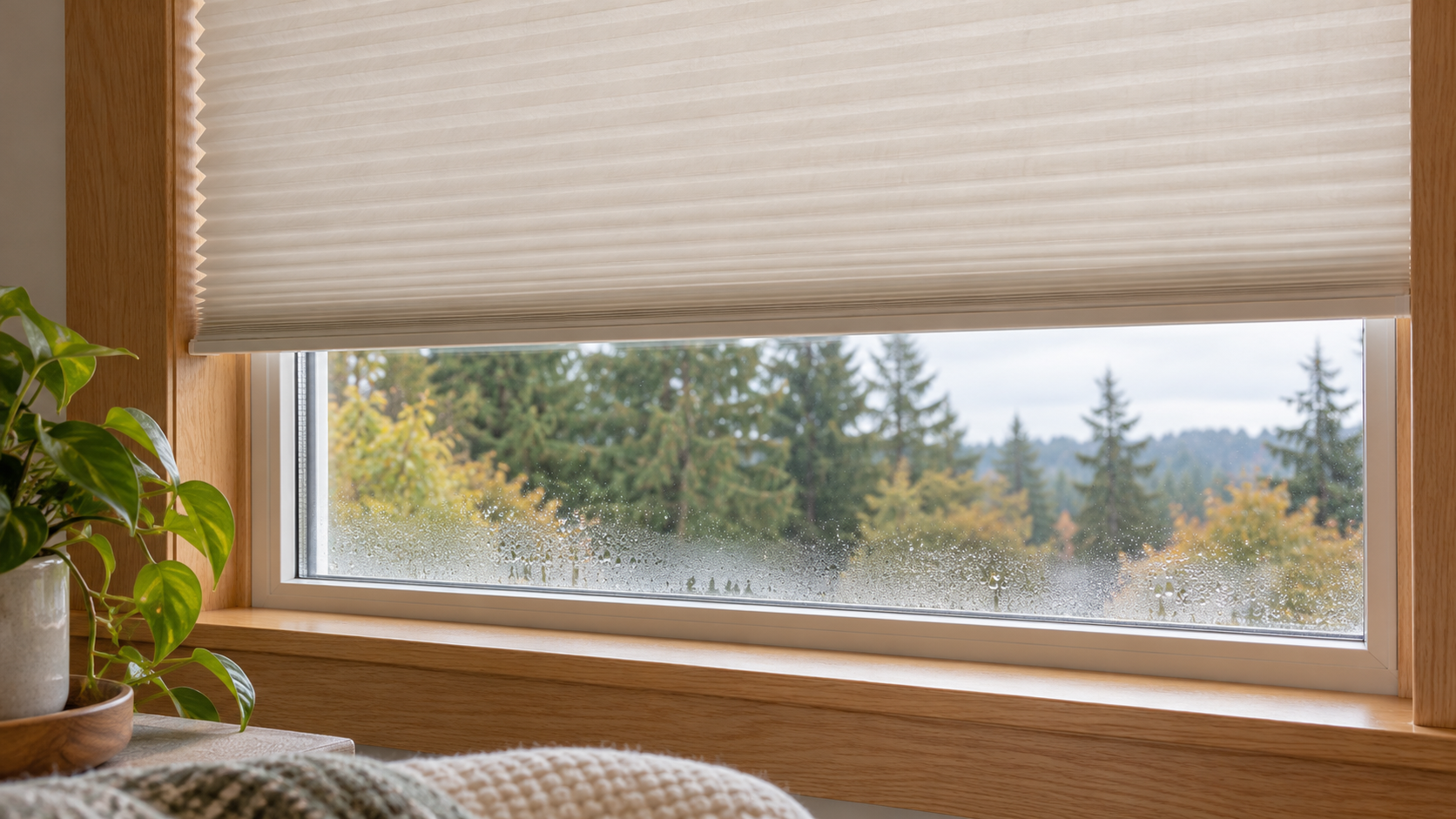
If you lift a shade on a cold morning and find wet glass, start by checking where the water is forming. Room-side condensation calls for a look at indoor moisture and airflow. Fog inside a sealed glass unit needs a window professional’s assessment. Buying a different shade should come after you understand the moisture problem.
For Auburn and Greater Seattle homeowners, this is a useful check before keeping window coverings closed longer through winter.
Quick takeaways
- Identify whether moisture is on the room side, outside, or between sealed panes.
- Dry wet surfaces promptly and look for a recurring pattern.
- Check humidity and give warm room air a chance to reach the glass.
- Choose shades for light, privacy, and everyday use without expecting them to solve a moisture problem.
Find the moisture before choosing a fix
Raise the shade and look closely at the glass and sill. If you can wipe the droplets from the room-facing surface, you are dealing with interior moisture. Condensation forms when humid air meets a surface cold enough for water vapor to become liquid.
Outdoor dew can also make a window look foggy, particularly after a cool night. Moisture trapped inside a sealed double- or triple-pane glass unit is different: it can indicate a seal problem. Ask the window manufacturer or a qualified window professional to assess it before assuming the entire window needs replacement. Andersen’s condensation guide explains these distinctions.
Water entering around the frame during rain also deserves investigation. Tell the professional where it appears and when, rather than describing every wet window as condensation.
Understand what a closed shade changes
A shade can change the conditions next to a window. Natural Resources Canada explains that closed blinds and drapes can block warm room air from reaching the glass, allowing cooler air to collect there.
That helps explain moisture behind coverings that stay closed for hours. Adding a thicker covering is not a reliable moisture remedy.
If the problem began after you installed shades, record that timing. It is useful information, but it does not establish that the shade is defective. Consider the weather, indoor moisture, and how the covering is being used together.
Make a short morning check
For a few mornings, check the affected window before opening the shade. Take a photo and jot down:
- Which room and window are affected
- Whether you see light fog, droplets, or water collecting on the sill
- Whether the shade was fully closed overnight
- The room’s humidity reading, if you have a meter
- Recent showers, cooking, or humidifier use
Then open the covering and check again later. Compare other windows too, including any in the same room with different coverings. Bring your observations to a professional if the problem continues.
Dry ordinary surface condensation promptly using a method appropriate for the window finish. The EPA’s moisture guidance recommends drying wet surfaces and reducing the moisture source. If shade fabric is damp or stained, check its manufacturer’s care instructions before cleaning it.
Check humidity and everyday ventilation
A small humidity meter, or hygrometer, can help you see what is happening. EPA’s general household guidance is to keep relative humidity below 60 percent, ideally between 30 and 50 percent. Those figures are not a guarantee of dry windows: condensation also depends on glass temperature and air movement.
Use the readings alongside what you see at the window. If moisture keeps returning, consult the window manufacturer’s cold-weather guidance or an HVAC professional about a suitable approach for your home.
Andersen’s interior-condensation advice includes checking ventilation, reviewing humidifier settings, and opening blinds or curtains during the day. Run bathroom exhaust when showering. A kitchen exhaust fan that vents outdoors can help remove moisture from cooking, as Pella’s homeowner guide explains.
Follow the equipment instructions, and have ineffective ventilation checked.
Build window access into your shade routine
Where privacy and daylight needs allow, open coverings during the day so room air can reach the glass. Check that your normal routine lets you inspect and dry the sill without a struggle.
When comparing indoor shades, think through a typical morning. Can you comfortably reach the controls? Can you raise the shade enough to see the window? Will you actually use that position each day?
Cellular shades use air-trapping construction for insulation, and they come in light-filtering or blackout fabric options. Consider them for comfort and light control, without expecting the glass behind them to stay dry. Discuss fit, access, fabric care, and available controls for the specific product before ordering.
Know when to get help
Arrange an assessment if water keeps returning despite basic changes, you suspect a leak, or you find damaged finishes, a persistent musty smell, or visible mold. Repeatedly wiping the sill does not resolve the underlying source. For suspected mold or extensive water damage, consult an appropriate moisture or remediation professional.
A window professional can assess glazing and window concerns; an HVAC professional can investigate persistent indoor humidity or ventilation issues. If you rent, report moisture problems to your property manager promptly.
Frequently asked questions
Does interior condensation mean my window has failed
Interior condensation alone does not establish glass failure. Start with humidity, temperature, and airflow. Moisture inside a sealed glass unit needs a different assessment from droplets you can wipe off indoors.
Will motorized shades prevent condensation
Motorization changes how you operate a shade. It may make opening a hard-to-reach covering more convenient, but it does not remove indoor moisture or repair a window seal.
Do I need to keep every shade open all winter
Start with the affected windows and allow daytime airflow where practical. If wet glass keeps returning, investigate the cause rather than relying on one shade position as a complete solution.
Plan shades around how you use the room
Once you have a plan for the moisture issue, we can help you compare shade fit, fabrics, and everyday operation. Book an in-home consultation with Rainier Blinds.
In-home visits are free within 60 driving miles of Auburn, WA. If you live farther away, we consider your project individually and quote any consultation fee before you book. That fee is applied toward your order. See our consultation FAQs for details.