Solar Shades for Condo Balconies and Rooftop Decks

Condo boards restrict what goes on balconies and rooftop decks, and most off-the-shelf shades either violate HOA rules or fall apart in the first windstorm. Solar shades for condo balconies built on steel wire or zipper track systems solve both problems in the Puget Sound climate, and picking the wrong system means a rejected HOA application or a shade that's shredded by spring.

TL;DR
  • Zipper track solar shades for condo balconies win on windy rooftop decks in 2026. Buy for HOA-compliant installs.
  • Steel wire solar shades cost less upfront but flutter more in Seattle-area gusts. Consider for sheltered balconies.
  • Skip indoor-rated roller fabric outdoors; UV and moisture warp it within one Pacific Northwest winter.
  • Motorized versions keep operation simple on tall or hard-to-reach balcony openings.
  • Rainier Blinds measures and installs every outdoor shade with its own crew, not a subcontractor.

Why this matters

A condo balcony or rooftop deck in Seattle, Bellevue, or Tacoma gets more direct sun exposure than a ground-floor patio, and more wind. HOA boards in South King County are also getting stricter about what mounts to a shared exterior wall in 2026, which means the shade system matters as much as the fabric.

Get the mount type wrong and you're looking at a rejected variance request or a shade that rips out of its bracket during a windstorm. Get it right and you cut glare, block afternoon heat, and keep the deck usable through August without an HOA fight.

Who this is for

This guide is for condo owners, rooftop deck tenants, and HOA property managers across the Greater Seattle Area who need shade that survives wind, satisfies board approval, and doesn't require drilling into a shared structure. If you manage multiple units, the compliance and installation questions matter more than fabric color.

What to look for in solar shades for condo balconies

Mount system: steel wire vs. zipper track

Steel wire cable systems anchor the shade fabric on a tensioned cable and cost less to install, but the fabric can flutter and pull at the edges in sustained wind. Zipper track systems lock the fabric edges into a channel on both sides, which keeps the shade flat and quiet even on a rooftop deck with no wind break. For anything above the third floor, the zipper track is the safer bet.

HOA and building compliance

Most condo associations require a variance or architectural review before anything mounts to an exterior wall or railing. A shade system that clamps to the railing without permanent fasteners is far easier to get approved than one that requires drilling into stucco or brick. Ask about the HOA approval process for custom blinds in South King County communities before you move forward.

Fabric openness factor

Solar shade fabric is rated by openness factor, typically 1%, 3%, 5%, or 10%. A 1% or 3% openness fabric blocks more glare and heat but limits your view; a 5% or 10% openness fabric keeps the sightline open but lets in more direct sun. West-facing decks in the Puget Sound region do better with 3% or 5% openness.

Motorization and no-drill options

If you're a renter or can't modify the exterior wall, motorized shades with battery-powered lift mechanisms avoid hardwired installation and satisfy most HOA no-alteration clauses. Check the motorized shade options built for Tukwila condos if that's your situation.

UV and fade protection

Direct western sun fades outdoor furniture cushions and deck flooring within a couple of seasons if there's no barrier. A properly rated solar shade fabric is built to block UV over years, not weeks, and the fabric matters more than the color for this job. Full detail is in the guide on solar shades that prevent furniture and flooring fade.

Wind rating and hardware

Any outdoor shade you install above ground level needs hardware rated for repeated wind load, not a residential window bracket repurposed for exterior use. Ask your installer directly what the bracket and cable are rated for before you sign off on an install.

Top picks for condo balconies and rooftop decks

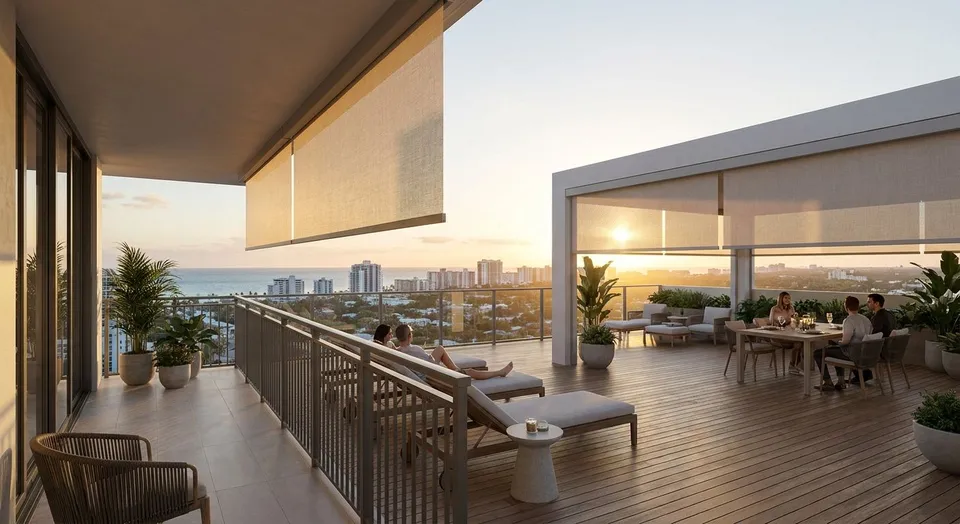
The HOA-safe pick: zipper track outdoor shades Zipper track systems lock fabric on both edges into a channel, which keeps the shade flat in wind and looks intentional to a board reviewing an architectural request. The clamp-style railing mount avoids drilling into shared exterior walls, which speeds up approval. Buy for rooftop decks and any unit above the third floor. See the outdoor shades built for decks and patios for the full spec rundown.

The budget pick: steel wire cable shades Steel wire systems tension the fabric between two cables and cost less to install than zipper track, and they work fine on a sheltered ground-floor or second-floor balcony with a wind break. They flutter more on an exposed rooftop deck, so this is a location call, not a quality call. Consider for low-exposure balconies; Skip for anything above the third floor or fully exposed to prevailing wind.

The condo-specific pick: motorized outdoor shades Motorized lift avoids a hardwired connection to the building's exterior, which keeps most HOA no-alteration clauses satisfied, and it solves the problem of raising a heavy outdoor shade one-handed while holding a coffee. Battery packs need periodic charging, covered in the guide on maintaining motorized window shade batteries. Buy if you're a renter or your HOA restricts permanent hardware.

The wildcard: dual-purpose indoor/outdoor zebra fabric Some zebra shade fabrics are rated for covered, semi-exposed installs like a recessed balcony under an overhang, giving you the alternating sheer-and-solid privacy control indoors and outdoors don't usually offer together. This only works under real cover, not on an open rooftop deck exposed to rain. Consider for a covered balcony; Skip for anything without an overhang.

What to avoid

  • Indoor-rated roller shade fabric mounted outside. It's not treated for UV or moisture and warps or discolors within one Pacific Northwest winter.
  • Aluminum or wood-look blinds marketed as "outdoor." These slats crack in freeze-thaw cycles and aren't built for exterior wind load regardless of what the listing claims.
  • Any mount that requires drilling into a shared HOA wall without a signed variance. You'll be removing it at your own cost if the board didn't sign off first.

Get a real quote for your balcony

In-house measure and install across the Greater Seattle Area, no subcontractors.

Get a quote

Verdict comparison

System Best for Wind performance HOA approval ease Verdict
Zipper track outdoor shade Rooftop decks, exposed balconies Best Easy (clamp mount) Buy
Steel wire cable shade Sheltered ground-floor balconies Moderate Moderate Consider
Motorized outdoor shade Renters, no-drill units Best (with zipper track) Easy Buy
Covered zebra fabric Recessed, overhung balconies only Poor if exposed Moderate Consider
Indoor roller fabric outdoors Nothing outdoor Poor Denied Skip

FAQ

What are the best solar shades for condo balconies in 2026?

Zipper track outdoor solar shades are the best solar shades for condo balconies in 2026 because the fabric locks into a channel on both edges, keeping it flat in wind and easy to get past HOA architectural review. Steel wire systems work fine on sheltered, lower-floor balconies but flutter more on exposed rooftop decks.

Do condo HOAs allow solar shades on balconies?

Most HOAs allow solar shades with an approved architectural variance, especially clamp-mount systems that don't require drilling into shared walls. Check your association's exterior alteration policy before moving forward, since rules vary by building and by association in South King County.

Is motorized or manual better for a condo balcony shade?

Motorized is better for renters and units where drilling into exterior walls isn't allowed, since the lift mechanism runs on battery power instead of a hardwired connection. Manual systems cost less and work fine if you're comfortable operating a crank or pull cord daily.

How much wind can an outdoor solar shade handle?

Zipper track systems handle sustained wind far better than steel wire cable systems because the fabric is locked on both edges instead of just tensioned between two points. Rooftop decks above the third floor should always default to a zipper track mount.

What fabric openness is best for a west-facing balcony?

A 3% or 5% openness factor fabric is the best balance for west-facing balconies in the Puget Sound region, blocking most direct glare while keeping some sightline through the fabric. Tighter 1% openness blocks more heat but limits the view almost completely.

Can I install solar shades on a rooftop deck without drilling?

Yes, clamp-mount zipper track systems and most motorized outdoor shades attach to railings without drilling into the building's exterior structure. This is usually the fastest path to HOA approval since it avoids permanent alteration.

Will solar shades protect balcony furniture from sun fade?

A properly rated outdoor solar shade fabric blocks UV exposure that fades cushions and deck flooring over repeated seasons of direct sun. The fabric's UV rating matters more than its color for this specific job.

How long do outdoor solar shades last on a Seattle-area balcony?

Outdoor-rated fabric on a zipper track or steel wire system is built to handle years of UV and moisture exposure, unlike indoor-rated fabric which degrades within a single Pacific Northwest winter outdoors. Hardware rated for wind load extends the working life of the whole system.

One last thing

The detail most condo owners miss in 2026 isn't the fabric, it's the bracket. A zipper track shade with cheap hardware still fails in a rooftop windstorm, and a steel wire shade with marine-grade cable outlasts a mismatched premium fabric. Ask what the hardware is rated for before you ask about fabric color.

Related guides