Outdoor Shades Lake Tapps WA: Wind-Rated Picks for 2026

Outdoor shades in Lake Tapps, WA solve two problems most inland South King County homes never face: wind funneled across the water and hard afternoon glare bouncing off the lake surface. This 2026 guide covers zipper-track vs steel-wire-guide hardware, fabric and openness choices for lakeside glare, motorized options for wide patios, mounting on rafters and posts, and how a local crew that measures, has shades custom-made by a supplier, and installs keeps the fabric from becoming a flag on the first August blow.

TL;DR

  • Outdoor shades Lake Tapps WA homes need first hold fabric steady in cross-lake wind.
  • Zipper-track systems lock fabric edges into side channels, the wind pick for exposed docks and patios.
  • Steel-wire cable guides suit covered porches with moderate breeze and a lower budget.
  • Rainier Blinds measures, has shades custom-made by a supplier, and installs with our own crew.

Key numbers

~10 miles
Lake Tapps shoreline
Mostly lakefront homesites
1-10%
Solar screen openness range
Common outdoor fabric range
2-4 weeks
Typical supplier lead time
After the order is placed
~20 mph
Wind where fabric should retract
Common manufacturer guidance

Why this matters

Lake Tapps is a roughly 4.5-square-mile reservoir with about 10 miles of shoreline wrapped in lakefront and near-water homes. The water is the reason people move there. And the reason outdoor shades fail when they are bought wrong. Wind coming straight down the lake in the afternoon gets under a loose fabric panel and turns it into a sail. Glare off the surface bounces under brims and into eyes sitting at patio tables, at a lower angle than any wall-mounted interior shade is designed to handle. West-facing patios take it hardest from late spring through early fall.

Covered porches have a different job. The roof cuts the glare angle but not the side gusts, and the evening sun still rakes under the eaves at 6 or 7 p.m. in July. An indoor-grade roller on a covered porch fades and mildews within a couple of Pacific Northwest winters because it was never built for dew, spray off the dock, or morning condensation. Outdoor-grade fabric and stainless or coated hardware are the baseline, not the upgrade.

The hardware decision matters more here than anywhere else in the service area. A steel-wire cable guide holds fabric in moderate breeze on a sheltered porch. A zipper track locks the fabric edge inside a side channel the whole way down, which is what keeps a wide shade quiet and square when the wind swings. Picking cable guides for an exposed dock-side patio is the most common expensive mistake, and it shows up as a bowed, slapping panel within the first season.

If the inside of the house is the open question, heat through the glass, not glare on the patio. Start with our cellular shades Auburn WA guide for the interior side, then come back here for the outside.

Who this is for

Lake Tapps, Bonney Lake, and Sumner-area homeowners with a patio, deck, covered porch, dock-adjacent seating area, or ground-floor glass wall that takes sun and wind off the water. If you eat dinner outside in summer and the table turns into a squint contest by 5 p.m., or your porch furniture fades two shades lighter every year, this guide applies.

It is also for buyers who have already priced catalog outdoor shades online and keep getting one-size hardware charts that never ask which way the wind comes across their section of the lake. It is not for renters hanging a temporary panel, and it is not a catalog of products outside the shade and drapery range Rainier Blinds measures and installs.

What to look for in outdoor shades for Lake Tapps homes

Wind control: zipper track vs steel-wire guide

This is the decision that decides whether the shade survives its first real windstorm.

  • Zipper track (zipper-guide) systems: the fabric edge zips into an aluminum side channel from headrail to bottom rail. The fabric cannot blow out of plane, rattle, or detach. This is the right call on exposed lakefront patios, wide openings over 10 feet, motorized outdoor shades, and anywhere the wind comes straight down the lake.
  • Steel-wire cable guides: thin stainless cables run through the fabric hem on each side. They hold the panel reasonably square in light breeze and cost less, but the fabric still flexes and can slap in gusts. Right for covered porches, carport-adjacent seating, and spots shielded by the house or tall fencing.

Manufacturers commonly advise retracting outdoor shades in sustained winds above roughly 20 mph, and every system ships with that caveat. The practical read for Lake Tapps: the closer your patio sits to open water with a straight run down the lake, the further you move toward zipper track.

Fabric type and openness for lake glare

Outdoor solar screen fabric is specified by openness factor, how much light passes through the weave, most commonly in the 1% to 10% range. Lower numbers mean a tighter weave, harder glare cut, and less visibility through the panel. The glare bouncing off Lake Tapps is low-angle and directional, so the fix is a dense-enough weave on the sunward side while keeping enough openness to see the water and watch kids at the dock.

  • 1-3% openness: the wind-and-glare workhorse for west-facing lakefront patios where afternoon sun sits right on the water. Strong privacy after dark.
  • 5% openness: the balanced pick for covered porches and decks that keep a view priority while still cutting the worst bounce.
  • 10% openness: soft glare reduction where wind is mild and the view is the whole point. Least common on true lakefront; fine on inland sides of the same homes.

A solid outdoor fabric (no openness) suits total privacy needs, but on a lake lot it usually sacrifices the one view the property was bought for. Solar screen in the 1-3% band is the standard 2026 lakefront pick.

UV fade is the quiet cost. Dock furniture, cedar decking, and outdoor rugs bleach fast under unfiltered lake glare. Any reputable outdoor screen fabric carries a UV-rejection spec on its data sheet. Ask for that number at the measure visit and put the densest weave on the elevations that fade first.

Mounting: rafters, fascia, or dedicated posts

Covered porches usually mount the headrail to the rafter tail or fascia, strong wood, straightforward brackets, done in one visit. Open patios without an overhead structure need somewhere for the side tracks and headrail to land. When nothing structural sits where the shade needs to be, the answer is dedicated posts or a steel header, and that framing decision belongs on the measure visit, not on install day.

Concrete or paver patios also change the plan. Side tracks that need ground anchoring want a surface that takes hardware cleanly. A crew that measures in person checks rafter span, stud locations, and surface material before quoting, the same discipline that keeps interior fits tight on out-of-square frames.

Motorization for wide runs and daily use

Wide patio openings are exactly where manual outdoor shades fail in daily use. A 14-foot panel on a clutch chain fights the wind on the way down, and the family that has to wrestle it stops using it by mid-July. Battery motors cover most retrofit jobs without an electrician; hardwired motors suit new construction or remodels where outdoor circuits are already planned. Wind sensors pair with motorized units to retract the fabric automatically when gusts spike, a meaningful option on exposed lakefront sections.

See the full motor and control options on the smart shades page for how outdoor units pair with the interior motorized range.

Water, mildew, and Pacific Northwest exposure

Outdoor shades here live through dew, drizzle, dock spray, and winter wet. Outdoor-grade acrylic and polyester screen fabrics hold up; interior-grade fabric does not, and mildew shows up in the weave by the second season. Hardware should be stainless steel or coated aluminum, bare steel streaks and seizes. Ask what happens when the fabric gets soaked and then freezes: a panel that dries square and rolls clean is the difference between a five-year and a fifteen-year product on a Lake Tapps porch.

Sizing, gaps, and the daylight leak at the edges

A patio shade with an 8-inch daylight gap on each side does almost nothing against low-angle lake glare. The light comes in around the fabric, not through it. Zipper track closes the sides completely by design. Cable-guide panels can be ordered wider than the opening so the fabric overlaps the posts; the measure visit decides how much overlap each elevation takes. Wide spans past roughly 10 to 12 feet also need larger tube diameters so the fabric does not telescope or bow in the middle, same rule as wide interior glass, applied to a fabric that weighs more.

Top picks for Lake Tapps and the surrounding shore

The safe pick: zipper-track solar screen for exposed lakefront

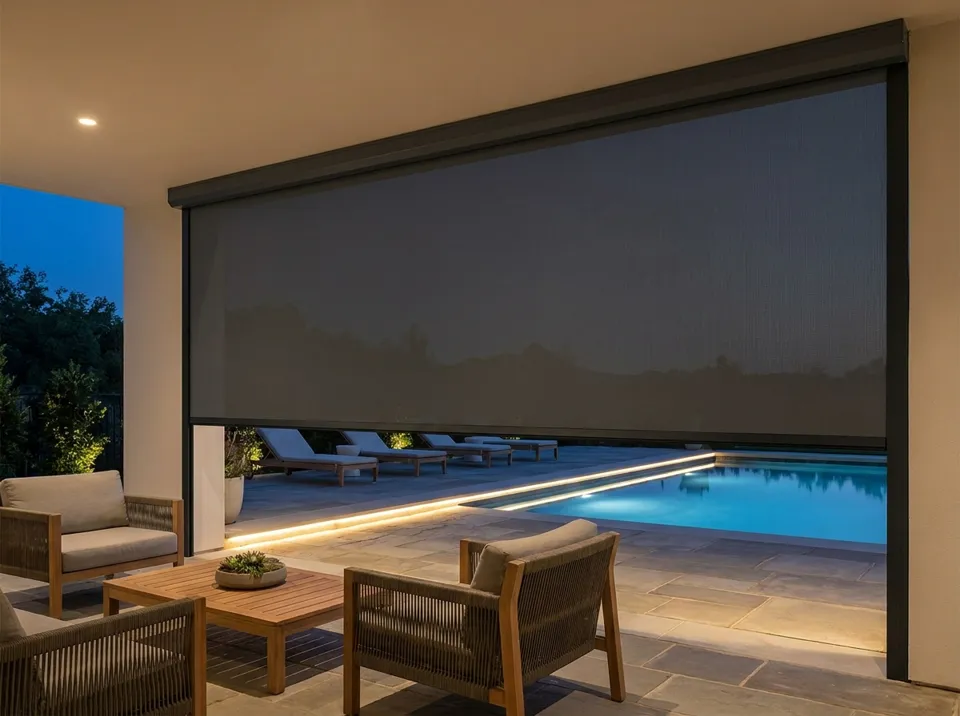
The wind pick. Zipper track with 1-3% openness solar screen fabric holds a wide panel square in cross-lake wind, kills the bouncing glare, and keeps the water in view. Buy for lakefront patios, dock-side seating, and any elevation with a straight wind run down the lake. Custom-made to your exact measurements by the supplier after on-site measure. Not cut from a stock chart.

The porch pick: steel-wire guides on covered structures

The value pick. Covered porches cut the wind load, so cable guides do the job at a lower price. Pair with 5% openness where the view matters, 1-3% where the evening sun rakes under the eaves. Buy for covered porches, verandas, and carport seating that faces the water at an angle rather than straight down the lake. Skip it on wide open runs. The fabric will slap.

The big-patio pick: motorized zipper track

The daily-use pick. Motorization on a wide zipper-track shade means the panel actually goes down every afternoon instead of staying up because the crank is a chore. Battery motors fit most retrofit installs; wind sensors add automatic retraction. Consider for patios wider than 12 feet, two-story openings, and homes that host summer evenings outside three or more days a week.

The privacy pick: solid outdoor fabric for street-side sections

The screen pick. Not every elevation faces the lake. Patios that face a neighbor's deck or the road want a solid outdoor fabric panel. Full privacy, full glare block, no view owed to anyone. Buy for those elevations only; putting solid fabric on the water side defeats the point of the property.

The skip pick: stock roll-up shades from the big-box rack

The false economy. Stock widths never match the opening on custom patios, the hardware is indoor-grade in everything but the marketing, and cable-less roll-ups detach in the first real gust. In 2026 the price gap between a stock panel and a measured-and-installed custom unit is smaller than one replacement season. Skip.

What to avoid

Cable guides on exposed water runs

Cable guides flex by design. On a patio that takes wind straight off the water, that flex becomes fabric slap, bowed hems, and eventually a pulled-out cable anchor. The hardware upgrade to zipper track costs less than one fabric remake.

Interior-grade fabric outside

Showroom samples of indoor screen fabric and outdoor acrylic look nearly identical. Two winters of dew and dock spray separate them completely. Confirm the fabric is rated for outdoor exposure before signing. This is a spec-sheet question, not a sample question.

Mounting to trim or soffit that was never structural

Fascia boards and soffit panels carry the weight of a fabric panel only until the first wind load. Headrails belong in rafters, structural headers, or dedicated posts. A crew that measures in person catches this before the order, not after the first sag.

One opacity for every elevation

The water side wants 1-3% screen. The street side wants solid. The covered porch wants 5%. Picking one fabric house-wide is the same mistake that drives interior remakes, applied to hardware that costs more per opening.

Verdict comparison

OptionBest forKey specVerdict
Zipper track + 1-3% screenExposed lakefront patiosFabric locked in side channelBuy
Steel-wire cable guidesCovered porches, mild breezeLower cost, flexes in gustsBuy
Motorized zipper trackWide runs, daily useBattery or hardwired, wind sensor optionConsider
Solid outdoor fabricStreet-side privacy elevationsFull glare block and privacyBuy
Stock big-box roll-upNothing on a lake lotIndoor-grade hardwareSkip

How local measure, custom-make, and install works

Rainier Blinds is a measure-and-install company based in Auburn. The crew that measures your patio is the same crew that comes back to hang it. Manufacturing stays with the wholesale supplier; measurement and installation stay in-house. That split is intentional. You get supplier fabric and hardware ranges with local accountability on fit.

  1. Consult and measure: on-site, elevation by elevation, noting wind direction across the water, mounting structure, span widths, and surface material.
  2. Quote on the spot: real pricing for fabric grade, openness, track hardware, manual or motorized, and opening count. No showroom visit required.
  3. Custom-made to your measurements: shades are built by the supplier to the exact numbers. Lead time is typically 2-4 weeks.
  4. Install: usually one visit. Motors get paired and travel limits set before the crew leaves.

Coverage details and the full local service map sit on the Lake Tapps service area page. For the complete range of what gets measured and installed, the custom window treatments page covers every product line.

FAQ

What are the best outdoor shades for Lake Tapps WA homes in 2026?
Zipper-track solar screen shades are the best pick for exposed lakefront patios, and steel-wire cable guides work well on covered porches with moderate wind. Choose hardware by how much wind the elevation takes, then choose fabric openness for glare and view.
Can outdoor shades handle wind off the lake?
Zipper-track systems hold the fabric edge inside a side channel the full height of the panel, which keeps it square and quiet in cross-lake wind. Cable-guide panels still flex, and manufacturers commonly advise retracting any outdoor shade in sustained winds above roughly 20 mph.
How much do outdoor shades cost in Lake Tapps, WA?
Price depends on opening count, span width, track hardware, fabric grade, and motorization. Rainier Blinds gives real pricing on the spot after measuring. No showroom visit required.
What fabric openness is best for lake glare?
Solar screen openness in the 1-3% range cuts the low-angle glare bouncing off the water hardest, while 5% keeps more view for covered porches. The denser the weave, the more glare and UV it blocks and the less you see through it.
Can outdoor patio shades be motorized?
Yes. Battery motors fit most retrofit patios without an electrician, and hardwired motors suit new construction or remodels with planned outdoor circuits. Wind sensors can pair with motorized units to retract the fabric automatically in gusts.
How long do outdoor shades last in the Pacific Northwest?
Outdoor-grade acrylic and polyester screen fabrics with stainless or coated hardware are built for years of dew, drizzle, and dock spray. Interior-grade fabric is the one that mildews and fails by the second season.
Do I need zipper track or are cable guides enough?
Cable guides are enough on covered or shielded porches where wind is moderate. Choose zipper track for exposed lakefront runs, wide openings over 10 feet, and motorized shades. Anywhere the wind comes straight across open water.
Does Rainier Blinds make the shades in-house?
No. Rainier Blinds measures your outdoor openings, has custom shades made to your exact measurements by a wholesale supplier, and installs them with our own crew. Manufacturing is at the supplier; measure and install are local.

One last thing

The detail most lakefront owners miss in 2026 is where the wind actually comes from at 4 p.m. in August versus where it comes from in a November storm. The afternoon breeze down the lake is what the shade fights daily; the winter front is what pulls anchors out. A crew that measures both elevations and asks which one matters more saves a hardware swap later.

Walk your patio at the hour it fails, the squint hour, not the realtor-photo hour, and stand where the table sits. Whatever the glare and wind are doing right then is the spec the shade has to meet for the next fifteen years.

Related guides