
Our available controls: Rainier Blinds offers Roman and woven wood shades with motorized operation only. All other shade styles are available with manual, motorized, or smart control. Your consultation confirms the controls and power options for your product.
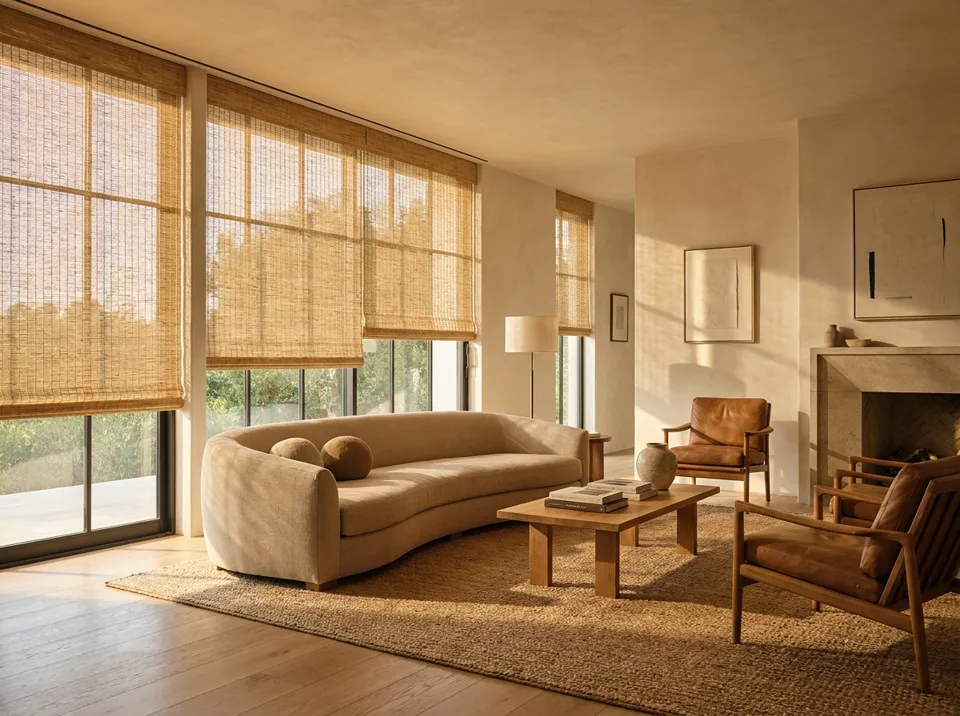
Lake Tapps homes are built around the water, and the water builds your window problems. Walls of glass facing the lake mean glare bouncing off the surface by mid-afternoon, UV quietly fading hardwood floors and furniture, and two-story great rooms where the top row of windows sits fifteen feet above the couch nobody wants to climb with a cord. Stock treatments from a big-box aisle are built for a standard bedroom rectangle, not for a waterfront great room in Tapps Island or a west-facing deck on the shoreline. This 2026 guide breaks down what actually works for Lake Tapps homes room by room, what each option costs, what to skip, and how custom window treatments from a local measure-and-install crew handle glass the catalogs don't plan for.
TL;DR
- Sunscreen roller shades are the workhorse for lake glare — they cut reflection and UV while keeping the view.
- Motorized lifts earn their cost on tall great-room glass you cannot reach.
- Day/night and zebra shades give view windows adjustable light without losing the water.
- Cellular blackout shades fix lakefront bedrooms where summer sun rises before 5:30 AM.
- Outdoor steel-wire and zipper-track shades turn a west-facing deck into usable evening space.
Why this matters
Waterfront light is a different problem from ordinary neighborhood glare. The lake acts like a mirror: sun that has already bounced off the water hits your windows a second time, which doubles the glare and pushes UV exposure on your floors, rugs, and furniture well past what a shaded inland home takes. On clear June and July days, the reflected light lands hardest from early afternoon through evening, exactly the hours a Lake Tapps living room gets used most.
Then there is the geometry. Many shoreline builds, from the older cabins on the east shore to the newer construction on Tapps Island, run two-story great rooms with clerestory rows of windows above the main glass. A manual shade on that top row is a shade that never gets adjusted, which means it either stays down and blocks the view permanently or stays up and does nothing.
And the season matters here. Around the June solstice, Puget Sound sunrises land before 5:30 AM and sunsets stretch past 9:00 PM. That is a very long photoperiod for bedrooms and for west-facing decks, and it is why light control, not decoration, is the real purchase decision for most Lake Tapps windows in 2026.
Who this is for
This guide is for Lake Tapps homeowners, including Tapps Island and the shoreline neighborhoods near Sumner and Bonney Lake, who are furnishing a new build, replacing failed stock shades, or finally solving a glare problem they have lived with for years. It fits three common situations: a great room with tall or clerestory windows that never get covered, bedrooms that the early summer sunrise wakes too early, and a lakeside deck that becomes unusable by late afternoon.
If your home is inland in the Lake Tapps area with standard-height windows, the same product logic applies room by room; only the motorization question changes.
What to look for in custom window treatments for Lake Tapps homes
Glare and UV control without losing the view
The window you paid for is the view. The right fabric handles three things at once: cuts the reflected glare off the water, stops the UV that fades floors and upholstery, and keeps the lake visible. Sunscreen (solar) roller fabrics are rated by openness — how much light and view they pass. A tighter weave cuts more glare for rooms that get hammered; a more open weave holds more view for windows that only need taming. Judge fabric in your own light, not under showroom fluorescents, which is why every real quote should happen at your home with samples in hand.
Reach: motorization on tall glass
Any window above about eight feet, behind furniture, or in a two-story wall is a motorization candidate. Battery-powered lift means the top row of great-room windows actually gets used — lower them for the afternoon, raise them for the evening, or put them on a schedule so the house handles it. Manual cordless lifts are fine on standard-height windows; stretching to a wand on clerestory glass is how shades end up permanently down.
True blackout where you sleep
Lakefront bedrooms face the full photoperiod problem. A roller or cellular shade sold as "blackout" still leaks a bright halo around the edges unless the order includes side channels or a tight inside-mount fit. Ask specifically how the light gap is handled — that detail is the difference between a dark room and a dim one at 5:00 AM in July.
Adjustable light on view windows
Rooms where you want bright morning light and private evenings need two modes in one window. That is what day/night dual shades and zebra shades do: shift between a filtered view and a closed position without swapping products. They suit view windows in great rooms, dens, and kitchens where full blackout would waste the asset.
Insulation for shoulder-season comfort
Lakefront homes lose heat through glass faster than the calendar suggests — cool evenings run late into spring here. Cellular (honeycomb) shades trap air in their cells and are the strongest insulator of the common shade fabrics, which matters on large expanses of glass and in bedrooms over unheated spaces.
Outdoor shades that hold up to wind and weather
A patio shade is a different product from an indoor shade. Steel-wire-guided outdoor shades keep the fabric tracking straight in a breeze; zipper-track versions seal the sides against wind and bugs, which is what makes a covered deck usable on a cool evening, not just a sunny one. Anything mounted outside takes real weather, so the mounting structure and fabric weight matter more than color.
Top picks for Lake Tapps homes
The lake-glare pick: sunscreen roller shades
The view pick. A sunscreen roller shade on every lake-facing window cuts the reflected glare and the UV load while the water stays in full view. Openness around 3-5% is the everyday sweet spot for waterfront glass. Buy for great rooms, kitchens, and any window that stares at the water. This is the single most-installed product on Lake Tapps view walls, and the service-area page for Lake Tapps leads with it for good reason.
The tall-glass pick: motorized roller or cellular shades
The reach pick. Battery-powered lift on the clerestory row and behind-couch glass means every window gets used, controlled from one remote or your phone alongside the rest of the house. On new construction, wiring for hard-wired motors during the build is the cleanest path; retrofit battery motors handle existing homes without electricians. Buy for any window above reach; consider it optional on standard-height windows where a cordless lift does the same job for less.
The view-window pick: day/night dual or zebra shades
The adjustable pick. Dual shades layer a light-filtering band and a room-darkening band in one roller, so mornings stay bright and movie nights go dark. Zebra shades alternate sheer and opaque stripes for continuous dimming of glare. Buy for view windows and open living spaces where you want one product that does both jobs, and pair with smart-shade motorization on tall installations.
The bedroom pick: cellular blackout shades
The sleep pick. Double-cell cellular fabric with a real blackout liner and side channels gets lakefront bedrooms genuinely dark against a 5:00 AM summer sunrise, and the honeycomb structure insulates the same glass through the shoulder seasons. Buy for primary suites and kids' rooms; add top-down/bottom-up lift when you want daylight above and privacy below.
The deck pick: outdoor steel-wire or zipper-track shades
The evening pick. A west-facing lakeside deck takes direct sun until it drops behind the hills after 8:00 PM in midsummer. An outdoor shade on the west face drops the sun and the temperature without closing off the water — steel-wire guides for breezy exposure, zipper track when wind and bugs are the problem. Buy for any deck you abandon by late afternoon; this is the change that moves the usage, not the furniture.
The finishing picks: drapery, woven woods, and shaped glass
Drapery panels over a roller shade soften the hard lines of a wall of glass and handle the acoustic bounce of hard-surface great rooms — see the drapery line for fabric-weight options. Woven wood and Roman shades suit dens, offices, and craftsman interiors where a flat roller reads too commercial. And for the shaped windows that show up in lakefront builds — arches, trapezoids, skylights — custom builds traced on site are the only path; stock programs stop at rectangles. Our indoor shades range covers all of these on one order.
What to avoid
Off-the-shelf shades cut to "close enough"
A stock shade an inch off on a lake-facing window is a bright stripe of reflected glare down one side, every afternoon, forever. Large glass tolerates no fitting slop. Custom-sized to the quarter inch or don't order.
Manual hardware on two-story glass
Every unserviceable cord and wand over a stair rail or couch becomes permanent decor within a month. If you cannot reach it standing flat on the floor, motorize it or skip it.
"Blackout" shades without edge treatment
Fabric alone never delivers blackout. Side channels or a precise inside-mount fit are required line items on the order. A shade quoted as blackout with no mention of light gaps is not a blackout shade.
Interior shades doing an exterior job
A deck problem is not solved from inside the glass. Pulling a room-darkening shade all afternoon to save the deck darkens the room you actually sit in. Shade the deck outside and leave the interior in view mode.
Verdict comparison
| Option | Best for | Key detail | Verdict |
|---|---|---|---|
| Sunscreen roller shades | Lake-facing view walls | Cuts glare and UV, keeps view | Buy |
| Motorized roller/cellular | Tall and clerestory glass | Battery or wired lift | Buy |
| Day/night dual or zebra shades | View windows, open living | Two light modes in one shade | Buy |
| Cellular blackout shades | Bedrooms, primary suites | Side channels for true dark | Buy |
| Outdoor steel-wire/zipper shades | West-facing decks | Seals against wind and bugs | Buy |
| Stock big-box shades on lake glass | None | Light gaps on every edge | Skip |
How local measure and install works
We bring fabric samples to your home and judge them against your actual light and the reflection off the water — a fabric that looks neutral in a showroom can read pink or gray against lake glare. Your shades are custom-made to the measurements our crew takes, built by our wholesale supplier to exact window dimensions, and installed by our own team, not a subcontractor.
- Consult: walk the house together; we flag the glare windows, the reach problems, and the rooms that need darkness.
- Measure on site: every window measured to the sixteenth, mount depth checked, obstacles like cranks and trim logged.
- Quote on the spot: real pricing before we leave, on every window in the project. Standard rectangular windows start from $275, with warranty coverage of up to 5 years depending on package.
- Custom-made and installed: shades typically arrive 2-4 weeks after measurements are confirmed; one visit hangs them, with motors paired and limits set before the crew leaves.
We also cover the neighbors: see the Bonney Lake and Sumner pages for the same measure-and-install process nearby.
FAQ
What are the best window treatments for lake glare in Lake Tapps?
How much do custom window treatments cost in Lake Tapps, WA?
Do you serve Tapps Island?
What shades work best for tall two-story great room windows?
Can you put shades on a lakeside deck or patio?
Are motorized shades worth it for waterfront homes?
How dark do blackout shades get a bedroom?
How long does it take to get custom shades installed?
One last thing
The detail most Lake Tapps homeowners miss: the afternoon sun moves, and a shade tuned for July glare is the wrong answer in November. Sunscreen fabrics that hold the view in summer leave the room cold and exposed on a dark winter afternoon. The fix is planning each view wall as a pair — sunscreen for the bright season, a cellular or blackout layer behind it for dark evenings and cold months — instead of forcing one fabric to do both jobs.
Ask how each window behaves at 4:00 PM in July and 4:00 PM in January when you book the free in-home quote. The answer decides the fabric faster than any catalog.