
Our available controls: Rainier Blinds offers Roman and woven wood shades with motorized operation only. Available controls and power options for other products are confirmed at your consultation.
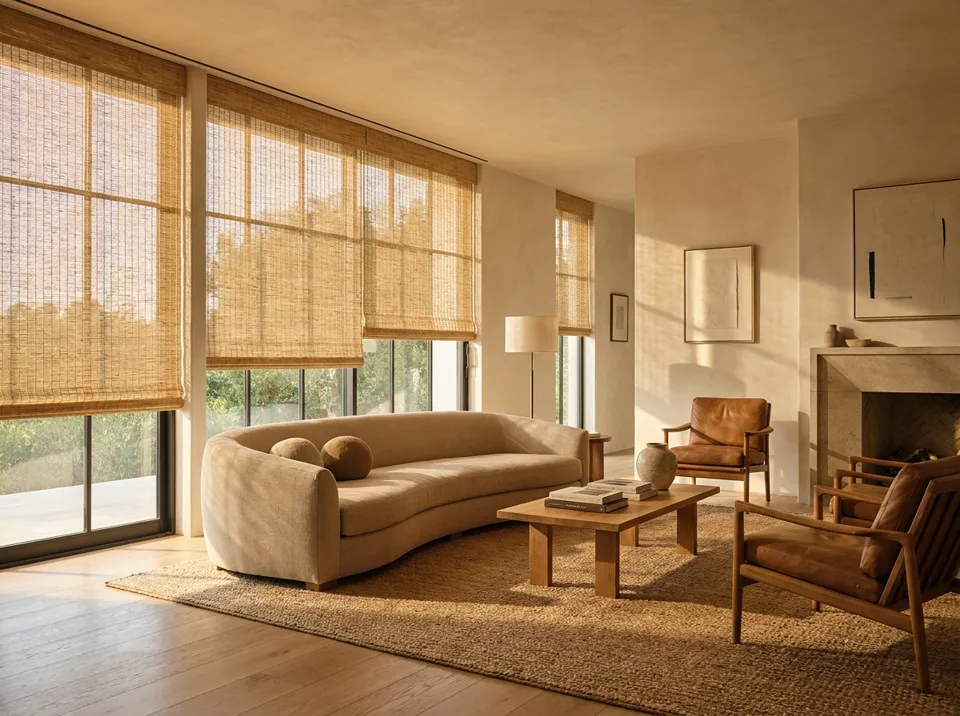
Custom window treatments in Downtown Auburn, WA should fit the opening and the room's job, whether that job is glare control, privacy, darkness, comfort, or easier operation. This 2026 buyer guide compares approved shade and drapery options and explains the local measure, supplier-order, and installation process through the Auburn service area.
TL;DR
- Custom window treatments Downtown Auburn WA: light-filtering roller shades are the default Buy for most day rooms in 2026.
- Cellular shades win when comfort at the glass matters; blackout roller or cellular shades win for bedrooms.
- Zebra, day/night, and dual shades earn Consider or Buy when one opening needs two daily light settings.
- Rainier Blinds measures locally, orders from a supplier, and installs the finished treatment with its own crew.
Why this matters
Downtown Auburn homes and nearby South King County neighborhoods rarely have one window problem repeated in every room. A front-facing room may need privacy after dark, a living room may collect afternoon glare, a bedroom may need darkness, and a high opening may need motorized operation. Treat the job as a room-by-room decision, not a single product order.
The 2026 buying decision also needs a clear line between local service and manufacturing. Rainier Blinds measures the windows, sends the confirmed specifications to a supplier, and installs the finished treatment; the supplier makes the product. That process gives you one local team responsible for the measure and install without claiming the shades are manufactured in Downtown Auburn.
Who this guide is for
This guide is for Downtown Auburn homeowners replacing dated coverings, finishing a remodel, moving into a new home, or fixing one opening that never worked well. It also fits South King County homeowners comparing an in-home local process with stock-size shopping online.
You will get the most from this guide if you have more than one type of window or more than one problem to solve. Start with the room that is too bright, too exposed, too cold at the glass, or simply too difficult to operate.
What to look for in custom window treatments for Downtown Auburn homes
Measure every opening before selecting a product
Custom window treatments begin with the actual frame, not a catalog width. The measure should check the opening at more than one point and confirm height, casing depth, trim, handles, locks, nearby furniture, and room for the headrail or motor.
Those details determine whether an inside mount has enough depth, whether an outside mount will cover the edges cleanly, and whether a specialty shape has enough mounting surface. A product can be right for the room and still be wrong for the opening if the measure is incomplete.
Match opacity to the room's actual job
Sunscreen roller shades reduce glare while keeping more of the view. Light-filtering roller shades soften daylight and support daytime privacy. Blackout roller shades are the direct starting point for bedrooms, media rooms, and rooms used for daytime sleep.
Do not force one fabric across every room in a Downtown Auburn home. A west-facing office may need sunscreen, a living room may need light filtering, and a bedroom may need blackout. The 2026 choice should follow the worst light and privacy problem in each room.
Set mount depth and side coverage before ordering
Inside mount keeps the treatment within the casing when the frame has enough depth. Outside mount overlaps the trim, gives deeper hardware more room, and can improve edge coverage. Neither mount is automatically better; the frame, product, and desired light control decide.
Cellular, Roman, dual, and motorized systems can need more room than a slim roller shade. Settle the mount during measurement, before the supplier receives the specifications, so the finished treatment clears the frame and moves properly.
Decide manual, motorized, or Smart operation early
Manual cordless operation fits reachable windows that are adjusted occasionally. Motorized operation earns its place on tall glass, skylights, stairwell windows, windows behind furniture, and openings that need a daily schedule. Smart operation fits a home where app, voice, or automation control will actually be used.
Compare the package options for manual, motorized, and smart controls; your measured quote confirms the selected configuration. Operation changes the hardware, power plan, control access, and mounting plan, so include it in the first quote rather than adding it after the order.
Treat specialty shapes and exterior windows as separate projects
Skylight shades solve overhead glass and difficult reach. Trapezoid shades follow angled openings, and arched shades are planned around the usable shape of an arched window. Outdoor shades address exterior sun and weather and require a separate check of structure, exposure, and guide hardware.
Steel-wire and zipper-track outdoor systems suit different mounting conditions. A specialty opening is not a standard rectangle with a different fabric; measure the actual shape and mounting surface before approving the product.
Top picks for Downtown Auburn homes in 2026
Roller shades: the clean-profile default
Spec that matters: opacity. Sunscreen roller shades are the right starting point when afternoon glare is the problem and the view still matters. Light-filtering roller shades soften daytime light and give a practical privacy balance. Blackout roller shades are the direct choice for bedrooms and darker media rooms.
Rainier Blinds includes these options in its custom window treatment services.Compare the package options for manual, motorized, and smart controls; your measured quote confirms the selected configuration. Verdict: Buy roller shades when a clean profile and room-specific light control matter most.
Cellular shades: the comfort-at-the-glass pick
Spec that matters: cell construction and mount depth. Cellular shades use a pocketed structure that creates an insulating air layer at the window. They are the stronger fit when a bedroom, office, or living room feels uncomfortable at the glass and the casing can support the selected construction.
Choose light-filtering cellular shades for day rooms and blackout cellular shades for bedrooms. Rainier Blinds' published warranty packages run 1 year, 3 years, and 5 years across Standard, Motorized, and Smart options. Verdict: Buy cellular shades when comfort belongs in the same decision as light control.
Zebra, day/night, and dual shades: the changing-light pick
Spec that matters: layer configuration. Zebra shades use alternating sheer and solid bands for adjustable privacy. Day/night shades combine lighter and darker layers, while dual shades pair two fabrics, such as sunscreen and blackout, on one system.
These treatments make sense when one opening needs two daily settings instead of one fixed opacity. They also require a careful check of headrail depth, controls, and clearance. Verdict: Consider zebra shades for adjustable privacy; Buy day/night or dual shades when both settings will be used every day.
Woven wood shades, Roman shades, and drapery: the finish-and-layering pick
Spec that matters: stack height, lining, and clearance. Woven wood shades add texture, Roman shades create a tailored fabric face, and drapery or curtains frame a wide opening or add a second privacy layer. These choices are about how the room should finish as well as how it should function.
Check where the shade stacks when raised, where a rod or track will sit, and whether fabric clears doors, furniture, and trim. Verdict: Buy woven wood, Roman, or drapery options when texture, softness, and layering are part of the room's job.
Skylight, trapezoid, arched, and outdoor shades: the problem-opening pick
Spec that matters: shape, mounting surface, and operating clearance. Skylight shades address overhead windows, trapezoid shades follow angled tops, and arched shades fit the usable portion of an arch. Outdoor shades need exterior-rated fabric and hardware selected for the actual structure and exposure.
The correct treatment starts with a site measure, not a guess from a photo. Verdict: Buy after measure for specialty and outdoor openings; the on-site fit check is part of choosing the product.
What to avoid
Ordering from one self-measurement
One center width does not show whether the frame is square, whether trim changes the mount, or whether a handle blocks the shade. A stock-size assumption can leave gaps, binding, or a headrail that does not clear the opening. Have every opening checked before approving the supplier order.
Choosing one opacity for the whole house
Blackout can be correct for a bedroom and wrong for a living room. Sunscreen can solve a west-facing office problem and still leave a bedroom too bright. Map each room's worst light and privacy condition before you choose the fabric.
Assuming local installation means local manufacturing
Rainier Blinds is not an in-house manufacturer. The supplier manufactures the selected shade or drapery; Rainier Blinds handles the consultation, measurement, order coordination, and installation with its own crew. That division is straightforward: the product comes from the supplier, and the local team owns the field work.
Downtown Auburn comparison table
| Treatment | Best fit | Main specification | Verdict |
|---|---|---|---|
| Sunscreen roller shade | Glare-heavy day rooms | View and glare balance | Buy |
| Light-filtering roller shade | Living rooms, kitchens, offices | Daylight and privacy | Buy |
| Blackout roller or cellular shade | Bedrooms and media rooms | Edge coverage and opacity | Buy |
| Cellular shade | Comfort-focused rooms | Cell construction and depth | Buy |
| Zebra shade | Adjustable privacy | Sheer and solid alignment | Consider |
| Day/night or dual shade | Two light jobs at one opening | Layer pair and headrail depth | Buy when used daily |
| Woven wood, Roman, or drapery | Finished rooms and wide glass | Stack, lining, and clearance | Buy for finish |
| Specialty or outdoor shade | Angled, overhead, arched, or exterior openings | Shape and mounting surface | Buy after measure |
How the local measure, supplier-order, and install process works in 2026
Rainier Blinds keeps a Downtown Auburn project to four clear stages:
- Consult: describe the rooms, glare and privacy problems, opening count, difficult shapes, and preferred operation. Bring up motorized or Smart control before the product is selected.
- Measure: the local crew checks every opening, depth, trim, obstacle, mount option, specialty shape, and outdoor mounting surface. Those measurements become the specifications for the supplier order.
- Order from the supplier: choose the product, fabric, operation, and hardware. Rainier Blinds sends the confirmed measurements to the supplier, which manufactures the finished treatment. Rainier Blinds does not claim to manufacture shades in-house.
- Install: Rainier Blinds' own crew mounts the finished shade or drapery, checks movement and clearance, and completes the selected motor or Smart setup.
Standard, Motorized, and Smart packages carry 1-, 3-, and 5-year warranties respectively. Production and installation timing depend on the selected product, fabric, hardware, supplier availability, and project scope. We confirm the current schedule for your order before you plan around a completion date.
When the room priorities and opening count are ready, use the quote request. Exact project pricing depends on the measured openings, product, fabric, mount, operation, and number of windows; the supplier order should follow the confirmed specifications, not an online guess.
FAQ
What are the best custom window treatments in Downtown Auburn, WA for 2026?
How much do custom window treatments cost in Downtown Auburn?
Are cellular shades better than roller shades for Auburn homes?
What shade is best for a west-facing Downtown Auburn window?
Can custom shades fit skylight, trapezoid, and arched windows?
Should I choose manual or motorized window treatments?
Does Rainier Blinds manufacture custom shades in-house?
How quickly can I get a custom window treatment quote in Downtown Auburn?
One last thing
Test the room when it is actually failing. Stand in the living room during afternoon glare, check the bedroom at early light, and look at a street-facing window after dark with the room lights on. That short check tells you more than matching one fabric across every opening.
In 2026, the best value is not the most complicated treatment. It is the shade or drapery that matches the room, clears the frame, operates the way the household will use it, and is ordered from measurements confirmed before manufacturing begins.