
Our available controls: Rainier Blinds offers Roman and woven wood shades with motorized operation only. Available controls and power options for other products are confirmed at your consultation.
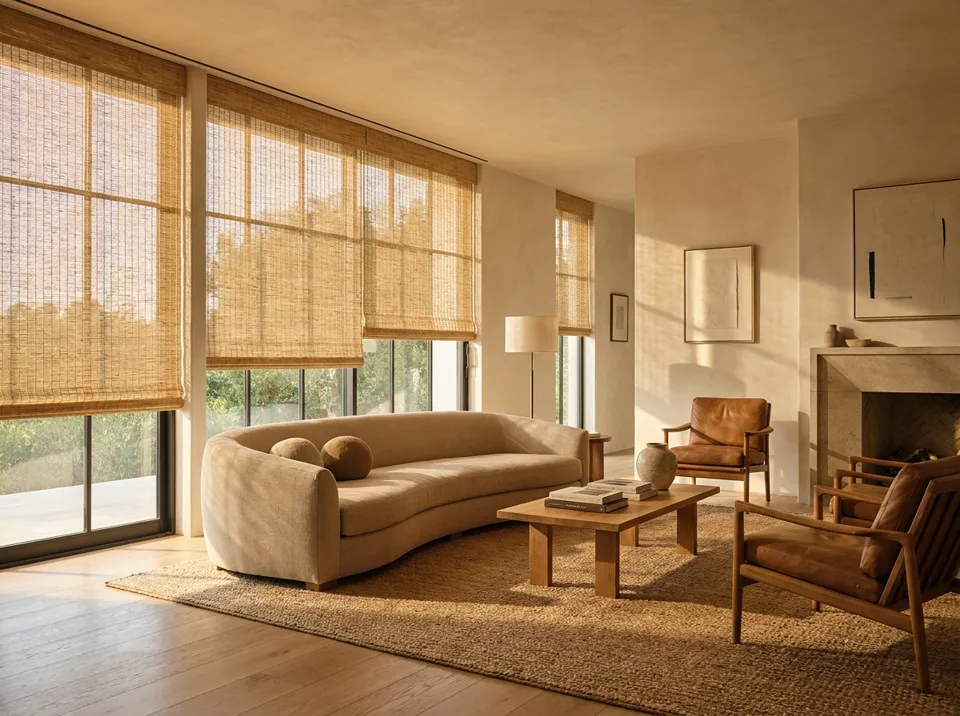
Custom window treatments in Covington, WA should solve the exact problem at each opening: afternoon glare, early light, privacy, cold glass, hard-to-reach windows, or an exposed patio. This 2026 guide compares roller, cellular, zebra, woven wood, Roman, day/night, dual, specialty, outdoor, and drapery options, then explains how Rainier Blinds measures, has treatments custom-made to your exact measurements, and installs. Start with the Covington service area if the project is local.
TL;DR
- Custom window treatments Covington WA: light-filtering roller shades are the day-room default, Buy.
- Cellular shades win when insulation is the first job; blackout roller or cellular shades win for bedrooms.
- Zebra, day/night, and dual shades earn their place when one room needs two light settings. Consider.
- Rainier Blinds measures, has treatments custom-made to your exact measurements, and installs with its own crew; it does not manufacture in-house.
Why this matters
Covington is about 15 minutes from Rainier Blinds' Auburn home base, and the local housing stock creates a clear window-treatment problem: newer construction, open floor plans, two-story great rooms, and wide west-facing sliders. Those openings need different answers from a standard bedroom window. A shade that works in one room can sit too deep, leave a bright edge, or become difficult to operate in the next.
The right 2026 buying decision starts with the room's failure, not with a color sample. Name the problem first: glare on a screen, privacy after dark, early morning light, cold glass, an opening you cannot reach safely, or sun and wind on a covered outdoor space. Then choose the product and operation that fix that problem.
Rainier Blinds keeps the local process direct. The crew measures the opening, the treatment is custom-made to your exact measurements, and Rainier Blinds installs it. That distinction matters in 2026 because custom fit depends on accurate measurements and a clean installation, not on a stock-size package that leaves the homeowner to solve the difficult parts.
Who this guide is for
This guide is for Covington homeowners replacing builder-grade treatments, finishing a remodel, outfitting a newer home, or solving one difficult opening. It is also useful for homeowners along the Kent-Kangley corridor and in nearby South King County communities who want roller, cellular, zebra, woven wood, Roman, specialty, outdoor, or drapery options without guessing at measurements.
It fits buyers who want manual shades where they are practical and motorized or smart operation where height, reach, or daily scheduling makes a real difference. It does not assume that one product belongs on every window. A whole-house project should be a room-by-room plan.
What to look for in custom window treatments for Covington homes
Start with the room's main failure
Stand in the room at the time it becomes uncomfortable. If the living room is unusable after the afternoon sun reaches the glass, start with glare and heat control. If a bedroom is bright at dawn, start with blackout coverage. If a front window needs privacy but still needs daylight, start with an adjustable or light-filtering option.
Write one job beside each opening before choosing a treatment. That simple 2026 room map prevents a common mistake: choosing the same opacity and operation across the house because the first sample looked good in a showroom.
Match opacity to the room
Roller shades offer three straightforward fabric lanes. Sunscreen fabric reduces glare while keeping more of the view. Light-filtering fabric softens daylight and supports daytime privacy. Blackout fabric is the direct starting point for bedrooms, media rooms, and daytime sleep.
Cellular shades, zebra shades, day/night shades, dual shades, Roman shades, and drapery also need a room-specific light decision. Light-filtering is useful in a living room that should stay bright. Blackout is useful where darkness is the point. Do not ask one mid-opacity fabric to perform both jobs.
Privacy also changes after sunset. A fabric that feels private in daylight can show silhouettes when the room is lit at night. Test the sample in the actual room or discuss the nighttime sightline during measurement instead of relying only on a daytime view.
Set the mount after the opening is measured
Inside mount keeps the treatment within the casing when depth allows it. Outside mount overlaps the trim, gives a deeper headrail or cassette more room, and can reduce side light. Neither mount is automatically better; the frame, hardware, and treatment decide it.
A proper measure checks width at the top, middle, and bottom, then checks height, casing depth, handles, locks, trim, and furniture. Those three width readings matter on older or settled openings and on wide Covington glass where even a small error can create binding or a visible light line.
Mounting depth matters even more when the plan includes cellular construction, a dual shade, a motor, a Roman shade, or a layered drapery treatment. Choose the mount before the treatment is custom-made. Changing it after the treatment arrives usually means changing the hardware plan as well.
Decide manual, motorized, or smart operation early
Manual cordless operation is practical for reachable windows that you adjust occasionally. Motorization earns its place on two-story glass, skylights, stairwell openings, windows behind furniture, and rooms that need a daily schedule. It also removes the need to reach over a desk or climb for a window that is simply too high.
Rainier Blinds lists a Motorized package at +$100 per shade and a Smart package at +$200 per shade on its services page. The right choice is not to motorize every window by default. Motorize the openings where access and routine justify the cost, and keep manual operation on easy openings when it does the same job.
The power plan belongs in the first conversation. Battery operation suits many existing homes. Solar, hardwired, and Power over Ethernet options are also listed for the available packages. The headrail, wiring, and mounting depth can change with the operation choice, so decide before the treatment is custom-made.
Match the material and shape to the opening
Roller shades keep a clean profile and cover the full range from sunscreen to blackout. Cellular shades add honeycomb construction when insulation matters. Zebra shades use alternating sheer and solid bands for adjustable privacy. Woven wood shades, Roman shades, and drapery/curtains add texture and a softer finished layer.
Specialty windows need a specialty plan. Skylight shades address roof glass and difficult reach. Trapezoid shades follow angled openings. Arched shades cover the usable portion below an arch. These are measurement decisions because the shape, mounting surface, and usable coverage vary from window to window.
An exterior-rated shade can help with sun and glare. Select the exact system for the opening, mounting structure, and exposure. Follow its documented wind limits and retraction instructions; neither cable guides nor zipper tracks guarantee protection from wind, rain, or storms.
Confirm who measures, has treatments made, and installs
Ask three plain questions before approving the project: Who measures the windows? Who has the treatment custom-made? Who installs and handles follow-up?
We bring fabric samples to your home and help you choose the weave, texture, and finish in your own light. Your shades are custom-made to your measurements, and our local crew handles measuring and installation.
The site lists warranty coverage of up to 5 years, depending on the package. Confirm what applies to the product, motor, and installation before the project is final. Clear responsibility is more useful than a vague promise that someone will help after delivery.
Top picks for Covington homeowners
The everyday pick: light-filtering and sunscreen roller shades
The safe pick. The key spec is opacity: sunscreen for glare and view, light-filtering for soft daylight and privacy, or blackout for darkness. That three-lane choice makes roller shades work across living rooms, kitchens, offices, and bedrooms without pretending every room has the same light problem.
Choose sunscreen on west-facing glass when afternoon glare hits a screen or floor and the view still matters. Choose light-filtering for day rooms that should stay bright. Choose blackout for a bedroom or media room where light control is the main job. Buy when a clean profile and clear fabric choice matter more than layered texture.
The insulation pick: cellular shades
The comfort pick. Cellular shades are the direct choice when cold glass, uneven room comfort, or an exposed bedroom is the first problem. The honeycomb construction adds an insulating air layer, while light-filtering and blackout fabrics let you set the light level separately.
The important spec is cell construction and mounting depth. A deeper shade can add insulation but may require outside mount when the casing is shallow. Confirm the frame depth before the treatment is custom-made and use blackout fabric where sleep depends on darkness. Buy for bedrooms, drafty rooms, and openings where insulation matters more than a flat profile.
The changing-light pick: zebra, day/night, and dual shades
The adjustable pick. Zebra shades use alternating sheer and solid bands. Day/night shades combine lighter and darker layers, while dual shades put two fabrics on one system, such as sunscreen for the day and blackout for the evening. The shared advantage is two distinct light settings without asking one fabric to do everything.
Use zebra shades in living rooms and front windows that need a view by day and privacy after dark. Use day/night or dual shades in bedrooms, media rooms, and rooms that need filtered daylight plus deeper evening control. The extra hardware is justified when both settings get used. Consider when the room genuinely has two daily light jobs.
The texture pick: woven wood, Roman, and drapery
The finished-room pick. Woven wood shades add natural texture, Roman shades add tailored fabric folds, and drapery/curtains add a wider frame around the opening. The important spec is the functional layer behind the look: light-filtering, privacy, or blackout lining based on the room.
A Roman shade can handle the window while drapery frames the wall, but the brackets, rod or track, shade depth, and panel stack must be measured together. A two-layer plan is useful when the room needs both light control and a softer finish. Buy when texture and framing are part of the brief, not as an afterthought.
The specialty and outdoor pick: shape-specific coverage
For skylights, shaped windows, and exterior openings, check the actual shape, mounting surface, access, and exposure before ordering. Choose an exterior-rated system for outdoor sun and glare; confirm its operating limits.
Choose steel-wire outdoor guidance for a covered space with moderate exposure and zipper-track guidance when enclosed side tracks are the better answer. Choose motorization for a skylight or high specialty opening when manual access is unsafe or unrealistic. Buy after an on-site measure because the opening determines the product.
What to avoid
Self-measure first, custom order second
A phone photo or one centerline measurement misses out-of-square frames, casing depth, handles, locks, and motor clearance. Custom treatments are made to those numbers. Measure the opening in person before comparing final fabric and hardware.
One opacity across the whole house
Blackout can be right for a bedroom and wrong for a bright living room. Sunscreen can be right for a west-facing office and wrong for a room that needs darkness. Assign the fabric to the time and problem that make each room fail.
Choosing a second layer without measuring the first
Drapery over a shade, a Roman shade under curtains, or a dual treatment beside a door handle all need coordinated clearance. If the rod, track, shade cassette, or panel stack collides, the room loses function. Measure the layers together before the treatment is custom-made.
Verdict comparison
| Option | Best Covington use | Main decision | Verdict |
|---|---|---|---|
| Light-filtering roller | Living rooms, kitchens, offices | Daylight and privacy | Buy |
| Sunscreen roller | West-facing glass | Glare and view control | Buy |
| Blackout roller or cellular | Bedrooms and media rooms | Darkness and edge coverage | Buy |
| Cellular shade | Cold or uneven rooms | Insulation and mount depth | Buy |
| Zebra, day/night, or dual | Changing light conditions | Two settings in one system | Consider |
| Woven wood, Roman, or drapery | Finished living and dining rooms | Texture and layering | Buy |
| Specialty or outdoor shade | Angled, roof, or exterior openings | Shape and exposure | Buy after measure |
How the Covington measure-and-install process works
Rainier Blinds keeps the process to four practical steps:
- Consult: describe each room's glare, privacy, insulation, darkness, access, and smart-home needs.
- Measure: the local crew checks every opening, mount option, depth, obstacle, specialty shape, and outdoor mounting surface.
- Custom-make: the treatment is custom-made for your home to the confirmed measurements.
- Install: Rainier Blinds' own crew installs the treatment, checks movement and clearance, and handles motor or smart-home setup when that package is selected.
Covington is close to the Auburn home base. The Auburn service area page gives more local context, while the process stays the same: measure locally, have the treatment custom-made to your exact measurements, and install with the local crew. Rainier Blinds' work does not depend on a homeowner assembling the treatment after delivery.
Rainier Blinds reviews the project details before confirming the quote and next available appointment. Use the quote request with the city, rooms, approximate opening count, and the main problem in each room. Exact pricing depends on the product, fabric, dimensions, mount, and operation package.
FAQ
What are the best custom window treatments in Covington, WA for 2026?
How much do custom window treatments cost in Covington?
Are roller shades or cellular shades better for Covington homes?
What window treatment is best for a west-facing Covington window?
Can I motorize custom window treatments in an existing Covington home?
Can custom shades fit skylight, trapezoid, and arched windows?
Does Rainier Blinds manufacture custom window treatments in-house?
How quickly can I get a custom window treatment quote in Covington?
One last thing
Choose the failure before you choose the color. Stand in the room when the glare is worst, when privacy matters, when the bedroom is too bright, or when the window is impossible to reach. That moment tells you whether the answer is sunscreen, light-filtering, blackout, cellular insulation, adjustable bands, a second layer, a specialty shape, or motorization.
In 2026, measured fit is not a cosmetic extra. It decides whether the treatment clears the hardware, sits at the right depth, closes the useful edges, and gets used every day. The supplier can manufacture the treatment, but the local measure and installation decide whether the finished result works in the actual Covington home.