
Our available controls: Rainier Blinds offers Roman and woven wood shades with motorized operation only. Available controls and power options for other products are confirmed at your consultation.
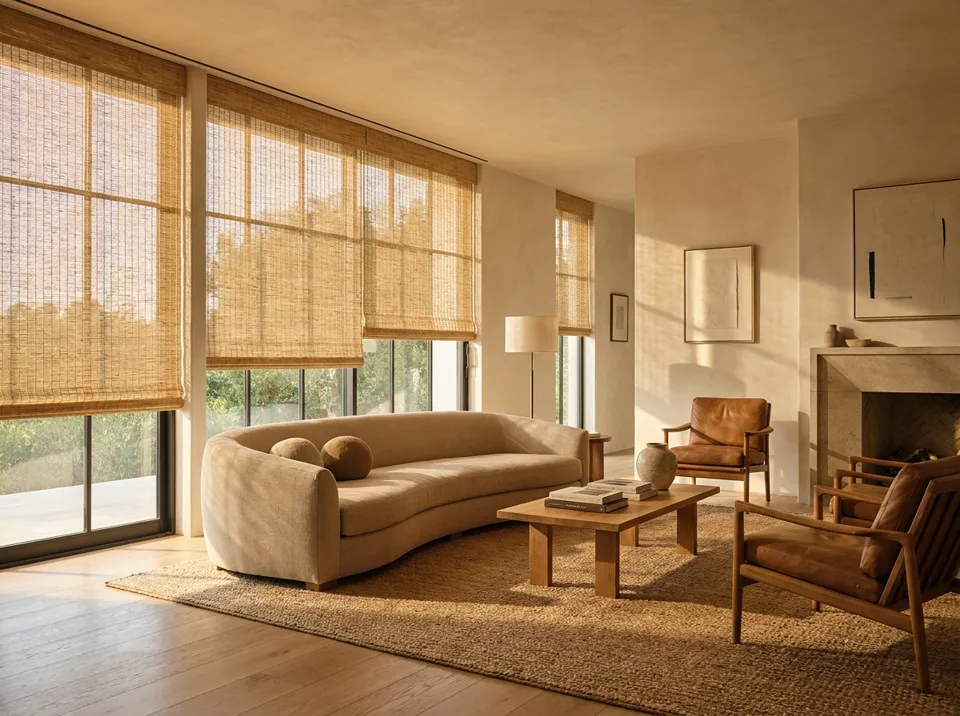
Custom window treatments for Auburn, WA new construction should be planned with the window schedule, room use, and operating method-not added after the house is finished. This 2026 guide compares roller shades, cellular shades, zebra shades, woven wood shades, Roman shades, day/night shades, dual shades, skylight shades, trapezoid shades, arched shades, outdoor shades, and drapery/curtains, then explains Rainier Blinds' measure, supplier-order, and installation process through custom window treatments in Auburn, WA.
TL;DR
- Custom window treatments Auburn WA new construction: light-filtering roller shades are the Buy for most day rooms.
- Cellular shades are the Buy when comfort at the glass matters; blackout rollers are the Buy for bedrooms.
- Motorized shades are the Buy for tall, high, or scheduled windows; manual cordless is the Buy for reachable openings.
- Rainier Blinds measures, sends specifications to a supplier for custom production, and installs the finished product with its own crew.
Why this matters
New construction gives you a useful advantage: the window plan is still visible before furniture, trim, and daily routines hide the real constraints. That is the right time to decide which rooms need filtered daylight, privacy, darkness, insulation, or a control you can operate without reaching across the room.
Auburn projects can include standard windows, wide glass, tall openings, patio doors, skylights, and specialty shapes under one roof. Treating every opening the same creates predictable problems: glare in a home office, too much morning light in a bedroom, or a headrail that does not clear the finished trim. In 2026, choose the treatment by the job each opening must perform.
Who this guide is for
This guide is for Auburn homeowners building a new home, adding a room, or replacing temporary coverings before move-in. It also fits buyers in nearby South King County communities who want the new-construction decisions handled in a measured order rather than purchasing stock sizes and solving fit problems later.
The right plan can mix products. A living room may need sunscreen roller shades, bedrooms may need blackout or cellular shades, and a tall stairwell or skylight may need motorization. Woven wood shades, Roman shades, day/night shades, dual shades, and drapery/curtains can finish the rooms where texture and layering matter.
What to look for in custom window treatments for Auburn new construction
Review the window schedule before choosing fabric
Start with the builder's window list, elevations, or room plan, then verify the actual openings on site. Note width, height, sill position, casing depth, handles, locks, nearby doors, and any opening that will be difficult to reach after furniture arrives.
A drawing tells you where the glass is; an in-home measure tells you how the finished treatment must operate. Rainier Blinds can use the consultation to separate standard openings from tall, angled, roof, and exterior openings before a supplier order is placed.
Match opacity to each room's hardest hour
Roller shades give you three clear fabric directions: sunscreen, light-filtering, and blackout. Sunscreen roller shades reduce glare while keeping more of the view, light-filtering roller shades soften daylight, and blackout roller shades support deeper darkness.
Choose the fabric around the moment the room fails. If afternoon light hits a monitor, sunscreen is the stronger starting point; if the room needs comfortable daylight, choose light-filtering; if sleep or presentations require darkness, choose blackout. Do not make the whole house use one opacity just because the color matches.
Decide motorization before finishes are final
Manual cordless shades are practical on reachable windows that move occasionally. Motorized shades make more sense on tall glass, high windows, skylights, windows behind furniture, and rooms where a schedule will be used every day.
Make the operating decision before trim and power planning are complete. Motorization can affect headrail depth, clearance, control location, and whether battery or wired power is the cleaner fit. If a new-construction opening is difficult to reach now, it will not become easier after the room is furnished.
Coordinate the mount with trim and hardware
Inside mount keeps a treatment within the casing when depth allows it. Outside mount overlaps the trim and can provide more room for a deeper headrail or better edge coverage. The correct choice depends on the window, product, handles, and the finished trim package.
Do not ask only whether a shade fits the glass. Ask whether it clears the handle, opens with the window, avoids the adjacent door, and leaves space for the selected operation. A precise measure protects the look and the daily use of the new room.
Group windows by problem, not only by room
A new home order is easier to manage when you build a simple problem map. Mark each opening as glare control, privacy, darkness, insulation, reach, specialty shape, or outdoor exposure, then choose the treatment that answers that label.
Two windows in one room can need different fabrics if one faces a bright view and the other faces a neighboring property. Coordinating color and headrail finish keeps the room consistent without forcing every opening into the same product.
Include specialty and exterior openings early
Skylight shades address roof glass and difficult reach. Trapezoid shades follow angled openings, while arched shades cover the usable area below an arch. These products need the shape, mounting surface, coverage, and operating method confirmed before the supplier order.
Outdoor shades solve a separate exterior problem. A steel-wire system and a zipper-track system use different side guidance, so the patio structure, wind exposure, and desired coverage should be checked before hardware is selected. Add these openings to the plan instead of treating them as a later project.
Top picks for Auburn new construction in 2026
Light-filtering roller shades: the day-room default
The safe pick. Light-filtering roller shades are the practical starting point for living rooms, kitchens, dining areas, and home offices that need usable daylight without a bare window. The specification that matters most is the fabric's light behavior: it should soften the room without pretending to create blackout conditions.
Roller shades are also straightforward to coordinate across a new home because the profile stays clean and the fabric choice can change by room. Rainier Blinds lists roller shades within its custom window treatment services. Verdict: Buy light-filtering roller shades for most Auburn day rooms in 2026.
Sunscreen roller shades: the glare-and-view pick
The screen-safe pick. Sunscreen roller shades are the better choice when direct daylight creates glare on a monitor, television, or polished surface and the outside view still matters. The key specification is the fabric's openness and glare performance, which should be reviewed at the actual window rather than judged from a small sample in a hallway.
Use sunscreen on the openings that need view retention and daytime comfort. It is not the right answer when the room needs deep darkness or strong evening privacy without another layer. Verdict: Buy sunscreen roller shades for bright Auburn glass where glare is the main complaint.
Cellular shades: the comfort pick
The insulation-first pick. Cellular shades use honeycomb construction to create an insulating air space at the glass. They are the direct choice when the goal is a more comfortable room near the window, especially in bedrooms, nurseries, or rooms that feel different from the rest of the house.
Cellular shades can be selected in light-filtering or blackout directions, so comfort and opacity should be decided separately. Confirm casing depth before the order, particularly when a deeper headrail or motor is included. Verdict: Buy cellular shades when comfort at the glass is the project's first priority.
Zebra, day/night, and dual shades: the changing-light pick
The flexible pick. Zebra shades use alternating sheer and solid bands for adjustable privacy. Day/night shades and dual shades create two distinct light settings, which is useful when the same opening must support filtered daylight during the day and stronger privacy or darkness later.
This is a two-setting decision, not a default upgrade for every window. Extra operating complexity earns its place when both settings are used regularly; a simple roller is easier when the room has one clear light problem. Verdict: Consider zebra shades for adjustable privacy and Buy day/night or dual shades when both light levels are part of the daily routine.
Woven wood, Roman shades, drapery, and curtains: the finished-room pick
The texture pick. Woven wood shades add natural texture, Roman shades bring a tailored fabric face, and drapery or curtains frame wide openings or add a second layer. These choices work well in living rooms, dining areas, primary bedrooms, and studies where the finished room matters alongside light control.
The specification to settle is the lining and clearance, not only the fabric color. A privacy or light-filtering lining supports a day room; blackout lining supports a bedroom. Brackets, rods, and shade headrails must be measured together so the layers operate without collision. Verdict: Buy these treatments when the room needs texture, framing, or a layered finish.
Specialty and outdoor shades: the difficult-opening pick
The problem-window pick. Skylight, trapezoid, and arched shades are designed around openings where a standard rectangle leaves unusable gaps or creates a reach problem. Outdoor shades are designed around exterior sun, rain, wind, and the structure available for side guidance.
The memorable detail is the opening itself: a shape or exposure problem cannot be solved by choosing a prettier fabric. Verdict: Buy after an on-site measure for specialty and outdoor openings.
What to avoid
Waiting until move-in to measure
Temporary coverings hide the opening's real depth, hardware, and control needs. Measure before the room is full so the supplier receives accurate dimensions and the installation plan accounts for trim, furniture clearance, and access.
Repeating one opacity everywhere
A bedroom, living room, office, and skylight do different work. Light-filtering may be correct for the living room, blackout may be correct for sleep, and sunscreen may be correct for a view-facing office. Match the treatment to the room's hardest hour.
Treating motorization as an afterthought
A tall window can look finished and still be frustrating if the control method was never planned. Decide manual or motorized operation before the order, then confirm power, headrail depth, control location, and any smart-home requirements during the measure.
Assuming a local installer manufactures the product
Rainier Blinds does not manufacture the treatments in-house. The selected shade or drapery is custom-made to your exact measurements after the measurements are confirmed, and Rainier Blinds handles the consultation, measurement coordination, and installation with its own crew. That is the model to compare: custom-made product, local measurement, and local installation.
Verdict comparison
| Treatment | Best new-construction use | Main job | 2026 verdict |
|---|---|---|---|
| Light-filtering roller shade | Living rooms, kitchens, offices | Soften daylight and support privacy | Buy |
| Sunscreen roller shade | Bright glass and view-facing rooms | Reduce glare while keeping more view | Buy |
| Blackout roller or cellular shade | Bedrooms and presentation rooms | Create deeper darkness | Buy when needed |
| Cellular shade | Comfort-first rooms | Add an insulating air space at glass | Buy |
| Zebra shade | Adjustable daytime privacy | Move between sheer and solid bands | Consider |
| Day/night or dual shade | Rooms with two daily light settings | Combine two fabric directions | Buy when both are used |
| Woven wood, Roman, or drapery | Finished rooms and wide openings | Add texture, framing, or a second layer | Buy for finish |
| Specialty or outdoor shade | Angled, roof, or exterior openings | Solve shape, reach, sun, and exposure | Buy after measure |
How the Auburn process works
Rainier Blinds keeps a new-construction project in four clear stages:
- Consult: identify the rooms, window schedule, glare and privacy problems, desired opacity, and manual or motorized operation.
- Measure: check each opening, mount option, casing depth, handle, trim condition, specialty shape, and exterior mounting surface.
- Choose and order: select the product, fabric, operation, and hardware. Your exact measurements are sent to the supplier, which custom-makes the treatment for your project.
- Install: Rainier Blinds' own crew mounts the finished shade or drapery, checks movement and clearance, and completes the selected motor or smart-home setup.
Production and installation timing depend on the selected fabric, hardware, supplier availability, and project scope. We confirm the current estimate for your order before you plan around a completion date.
Rainier Blinds serves Auburn and nearby South King County communities. The Kent service area page is a useful reference for nearby homeowners using the same local measure-and-install model. The quote request is the right next step once the number of openings and the main problem for each room are clear.
FAQ
What are the best custom window treatments for Auburn WA new construction?
When should I choose window treatments for a new construction home?
Are sunscreen or light-filtering roller shades better for a new Auburn home?
Are cellular shades worth choosing for new construction?
Should I install motorized shades in a new construction home?
Can custom shades cover skylight, trapezoid, and arched windows?
How much do custom window treatments cost in Auburn, WA?
How long does it take to get custom window treatments installed in Auburn?
One last thing
The decision that saves the most rework is not the fabric color; it is the operating plan. Mark every opening that will be high, hidden, heavy, or scheduled before the house is furnished, then reserve motorization for those openings and keep reachable windows simple.
In 2026, the best new-construction result is a coordinated plan that still treats rooms differently: sunscreen for glare and view, light-filtering for day rooms, blackout for sleep, cellular for comfort, layered products for changing light, and specialty treatments for unusual shapes. Let the in-home measure settle the mount and hardware before the supplier order.