
Our available controls: Rainier Blinds offers Roman and woven wood shades with motorized operation only. Available controls and power options for other products are confirmed at your consultation.
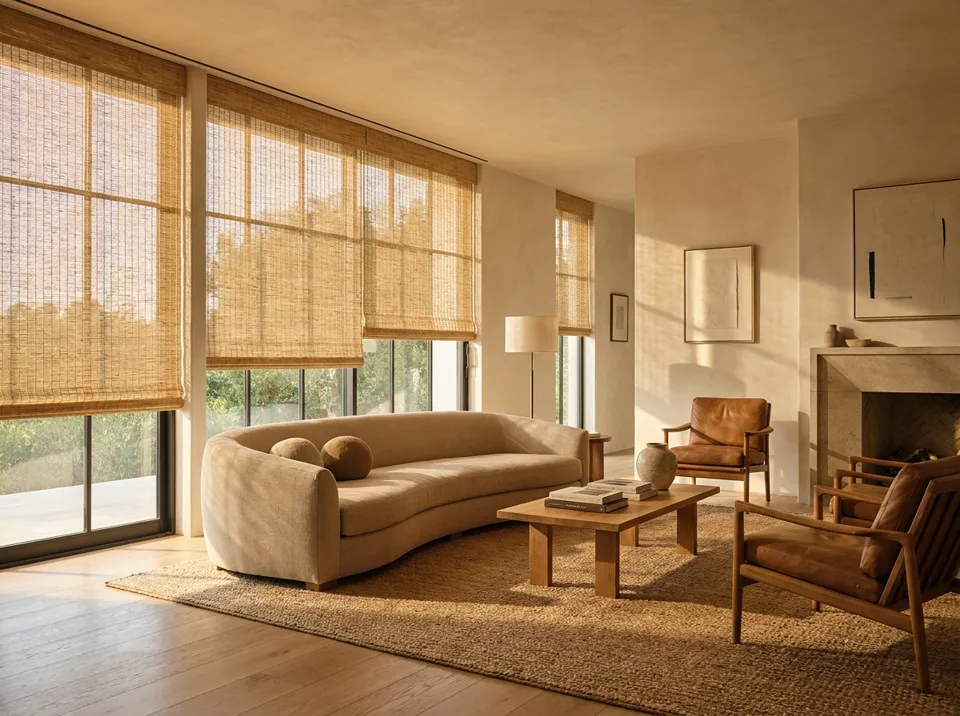
Custom window treatments Auburn Valley WA homeowners choose in 2026 should solve a room problem first-glare, privacy, insulation, darkness, reach, or an unusual opening. This guide compares the right products and explains how Rainier Blinds measures, has shades custom-made by a supplier, and installs locally; start with the Auburn service area for coverage.
TL;DR
- Custom window treatments Auburn Valley WA: light-filtering roller shades are the day-room default, Buy.
- Blackout roller or cellular shades win for bedrooms; sunscreen rollers win when the view matters.
- Zebra, day/night, dual, woven wood, Roman, specialty, outdoor, and drapery earn Consider when the opening needs them.
- Rainier Blinds measures, has shades custom-made by a supplier, and installs with its own crew, no in-house manufacturing.
Why this matters
Auburn and nearby South King County homes do not share one window shape or one light problem. Casing depth, trim, handles, glass size, and room use change from opening to opening. A treatment that works in one room can bind, gap, or block too much light in the next.
Start the 2026 project with the failure you want to fix. Is the living room too bright for a screen? Does the bedroom need darkness? Is a high window hard to reach? Is an angled or roof opening impossible to cover with a standard rectangle? The answer points to the product before color enters the decision.
Who this is for
This guide is for homeowners searching Auburn Valley, Auburn, and nearby South King County communities who are replacing builder-grade treatments, finishing a remodel, or solving one difficult room. It is also for buyers who want a measured fit without guessing at a stock size first.
Rainier Blinds covers roller shades, cellular shades, zebra shades, woven wood shades, Roman shades, day/night shades, dual shades, skylight shades, trapezoid shades, arched shades, outdoor shades, and drapery or curtains. The right choice is different for a bedroom, a street-facing window, a sunny office, and a covered patio.
What to look for in custom window treatments for Auburn Valley homes
Name the room problem first
Stand in the room when it fails and write down the main issue: glare, heat, privacy, darkness, insulation, reach, or finish. One room can have several symptoms, but one primary problem keeps the selection practical.
In 2026, this short room map prevents a common mistake: repeating one fabric across the whole house because it looked good in a sample. Choose the treatment that fixes the opening at the time it causes trouble.
Choose opacity by time of day
Roller shades give you three useful fabric lanes. Sunscreen fabric reduces glare while keeping more of the view. Light-filtering fabric softens daylight and supports daytime privacy. Blackout fabric is the starting point for bedrooms, media rooms, and daytime sleep.
Do not treat a light-filtering fabric as a bedroom blackout solution. After dark, a fabric that feels private in daylight can still show silhouettes, so discuss the nighttime sightline during the measure.
Set the mount after measuring
Measure width at the top, middle, and bottom of every opening, then check height, casing depth, trim, handles, locks, and nearby furniture. Record the dimensions to the nearest ⅛ inch when the tape allows it. A ¼-inch side gap is visible on a dark bedroom, especially when the opening faces early morning light.
Inside mount keeps the treatment within the casing when depth allows. Outside mount overlaps the trim and gives the headrail, cassette, or brackets more room. Outside mount is often the correct fit for an older or out-of-square opening; it is not a fallback.
Decide manual or motorized operation early
Manual cordless operation works well on reachable windows that you adjust occasionally. Motorization earns its place on tall glass, skylights, stairwell openings, windows behind furniture, and rooms that need a daily schedule.
Choose the operating system before the treatment is ordered. A motor can change headrail depth, battery access, and bracket clearance. For an existing home, discuss access to power and how often the shade will move instead of adding motorization to every opening by default.
Match the product to the shape
A standard rectangular treatment is not the right answer for every Auburn Valley opening. Skylight shades address roof glass and hard-to-reach windows. Trapezoid shades follow angled openings. Arched shades cover the usable area below an arch.
Specialty work starts with the shape, mounting surface, and usable coverage-not a catalog size. Outdoor shades need the same discipline: check the patio structure, guide hardware, sun, wind, and rain exposure before choosing between a steel-wire guide and a zipper-track system.
Plan materials and layers together
Woven wood shades add natural texture. Roman shades add a tailored fabric layer. Drapery or curtains widen the frame and can add privacy or room-darkening when paired with the right lining. These are finish decisions, but they still affect clearance and operation.
If you want two treatments at one window, measure them together. Shade depth, rod or track projection, door handles, furniture, and the panel stack all share the same space. The best-looking layer is still a poor choice if it cannot open cleanly.
Top picks for Auburn Valley and South King County homes
The safe pick: light-filtering roller shades
Buy. Light-filtering roller shades are the day-room default for living rooms, kitchens, offices, dens, and hallways. They soften daylight without making the room feel closed, and the flat profile works when the window needs a straightforward finish.
The spec that matters is opacity. Choose light-filtering when you want bright daytime light with less glare; choose a darker fabric only when the room needs stronger control. See the custom window treatment services page for the product range, then settle fabric and mount after measurement.
The view-and-glare pick: sunscreen roller shades
Buy. Sunscreen roller shades suit a room with two competing needs: reduce direct glare and keep the outside view. They are a strong starting point for sunny living rooms, offices, and windows where the screen or floor gets hit by afternoon light.
The spec that matters is the fabric's openness and sightline. A more open screen preserves more view and a more closed screen gives stronger glare control. Decide in the room at the time the sun is actually a problem, not from a sample under showroom lighting.
The comfort pick: cellular shades
Buy. Cellular shades win when cold glass, uneven room comfort, or bedroom darkness is the first problem. The honeycomb construction adds an insulating air space, while light-filtering and blackout fabrics let you separate comfort from light control.
The spec that matters is cell depth and headrail clearance. A deeper construction or motor can require outside mount when the casing is shallow. Confirm that depth at the measure before the supplier receives the order.
The two-setting pick: zebra, day/night, and dual shades
Consider. Zebra shades, day/night shades, and dual shades earn their extra hardware when one room needs two distinct light settings. Zebra shades alternate sheer and solid bands; day/night shades combine lighter and darker layers; dual shades place two fabrics on one system.
The spec that matters is how often you will use both settings. Choose these options for a living room that changes from open view to evening privacy, or a bedroom that needs filtered daylight and deeper darkness. If you will use only one position, a simpler treatment is the better buy.
The finish and specialty pick: woven wood, Roman, drapery, and specialty shades
Buy after the opening is measured. Woven wood shades, Roman shades, and drapery or curtains earn their place when texture, framing, or layering matters. Skylight, trapezoid, arched, and outdoor shades earn their place when the opening shape or exterior exposure rules out a simple indoor treatment.
The spec that matters is clearance. Two treatment layers need room to stack, a specialty shade needs a secure mounting surface, and an outdoor system needs guides that match the structure. Choose the look after the opening can support it.
What to avoid
One opacity across the whole house
Blackout can be right for a bedroom and wrong for a bright living room. Sunscreen can be right for a west-facing office and wrong for a room that needs darkness. Assign the fabric to the room's main failure.
Self-measuring before deciding the mount
One centerline measurement misses an out-of-square frame, casing depth, a handle, or motor clearance. The treatment is ordered to the recorded dimensions, so measure the opening and choose inside or outside mount before finalizing the product.
Ordering a product before checking clearance
A deep cellular shade, dual system, Roman shade, or drapery track can collide with trim, a door, or furniture even when the width is correct. Make clearance part of the decision, not a repair after the supplier order.
Verdict comparison
| Option | Best Auburn Valley use | Main job | Verdict |
|---|---|---|---|
| Light-filtering roller | Living rooms, kitchens, offices | Daylight and privacy | Buy |
| Sunscreen roller | Sunny glass and offices | Glare control with view | Buy |
| Cellular shade | Bedrooms and cold glass | Insulation plus opacity | Buy |
| Zebra, day/night, or dual | Changing light conditions | Two settings in one system | Consider |
| Woven wood, Roman, or drapery | Finished rooms and layered windows | Texture and framing | Buy after measure |
| Specialty or outdoor shade | Angled, roof, or exterior openings | Shape and exposure control | Buy after measure |
How the local measure, order, and install process works
Rainier Blinds keeps the process direct:
- Consult: describe the room, the time of day it fails, privacy needs, access issues, and any smart-home plans.
- Measure: the local crew checks each opening at three points, reviews mount depth, confirms obstructions, and identifies specialty shapes or outdoor mounting surfaces.
- Custom-made by supplier: the selected treatment is custom-made by a supplier to the confirmed measurements. Rainier Blinds does not manufacture the treatment in-house.
- Install: Rainier Blinds' own crew installs the finished treatment, checks movement and clearance, and completes motor setup when that option is selected. The work is not handed to a subcontractor.
Bring the room map and approximate opening count to the consultation. Product, fabric, dimensions, mount, operation, and the number of openings determine the project price. Use the quote request when the priorities are ready; the useful starting point is the problem in each room, not a stock-size estimate.
FAQ
What are the best custom window treatments in Auburn Valley, WA?
How much do custom window treatments cost in Auburn Valley?
Are roller shades or cellular shades better for Auburn homes?
What is the best shade for a sunny Auburn Valley window?
Can custom shades fit skylight, trapezoid, and arched windows?
Can I motorize custom window treatments in an existing home?
How does the Rainier Blinds window treatment process work?
Does Rainier Blinds manufacture custom window treatments in-house?
One last thing
The costly mistake is usually not choosing the wrong color. It is choosing the product before checking how the opening works. A ¼-inch gap, a shallow casing, a door handle, or a high window can turn a good-looking sample into a treatment that does not get used.
In 2026, start with the room's failure, confirm the mount, and then choose the fabric. That sequence gives the supplier accurate dimensions and gives the local crew a clear installation plan. Rainier Blinds' value is practical: local measurement, supplier ordering, and installation with its own crew.